House Price Portugal - A Complete Guide to the Market
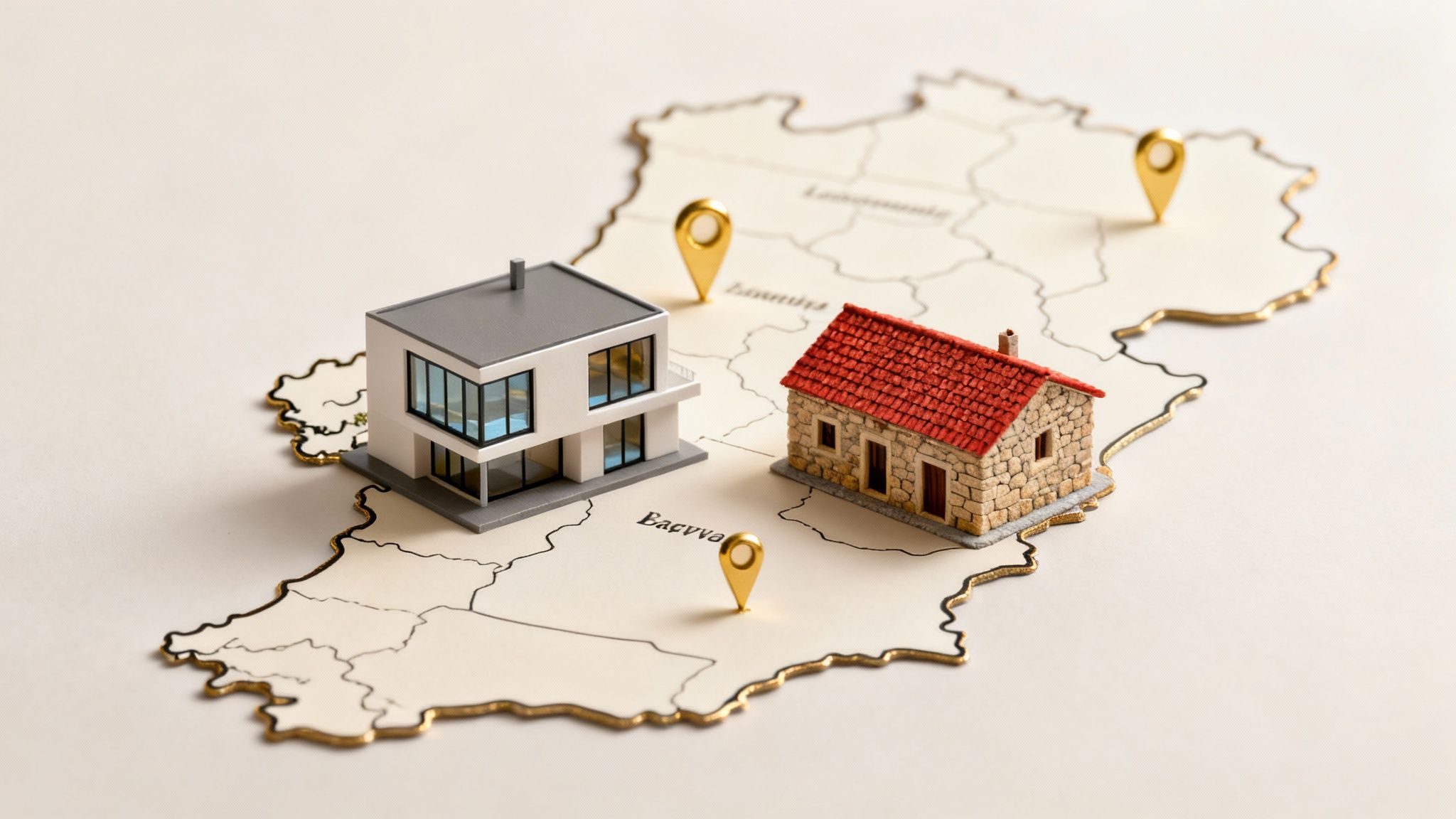
Trying to pin down a single average house price in Portugal is a bit like trying to describe the average cost of a meal—it completely depends on where you are. In sought-after spots like Lisbon or the sunny Algarve, you could be looking at prices from €2,500 to over €6,000 per square meter. But head into the countryside, and you'll find homes for a fraction of that cost.
A Deep Dive into the Portuguese Property Market
Over the last ten years, Portugal’s property market has gone through an incredible evolution, turning it into one of Europe's hottest spots for international buyers. This wasn't a fluke. It's the result of a powerful combination of high demand, a booming tourism sector that makes rental properties incredibly attractive, and a real housing shortage in major cities.
You can think of the market like a prized vineyard with a limited supply of its best vintages. Prime locations—Lisbon, Porto, the Algarve—are the award-winning bottles. They're rare, everyone wants one, and they carry a premium price tag. Just as a fine wine gets better (and more valuable) with age, property values in these areas have steadily climbed, drawing in both investors and people looking to relocate.
Why Prices Continue to Climb
The upward trend in Portuguese house prices isn't random; it’s powered by a few key forces. Getting a handle on these drivers is the first step for anyone thinking about buying, whether it’s for an investment or a place to call home.
Here’s what’s fueling the market:
- Intense International Demand: Expats, retirees, and investors from all over the world are flocking to Portugal. They're drawn by the fantastic quality of life, sunny weather, and the fact that it’s still more affordable than many other Western European countries.
- Tourism's Powerful Influence: Portugal's status as a top travel destination creates a huge appetite for short-term rental properties, which naturally pushes up home values, especially along the coast and in historic city centers.
- Urban Housing Shortages: In the big cities, there simply aren't enough homes to go around. The supply hasn't kept up with the influx of new residents, creating a classic supply-and-demand scenario that keeps prices high.
The official numbers tell the story loud and clear. According to the House Price Index, if we set the baseline at 100 back in 2015, the index for existing homes has shot up to over 234.5. That means prices have more than doubled in less than a decade.
The appeal of living in Portugal is about so much more than just property. It's about a different rhythm of life, wrapped in a market that offers both a desirable lifestyle and strong investment potential.
Whether you’re picturing a modern villa overlooking the ocean or a rustic country farmhouse, understanding these core market dynamics is where your journey begins.
New Builds vs. Existing Homes: What Drives Value?
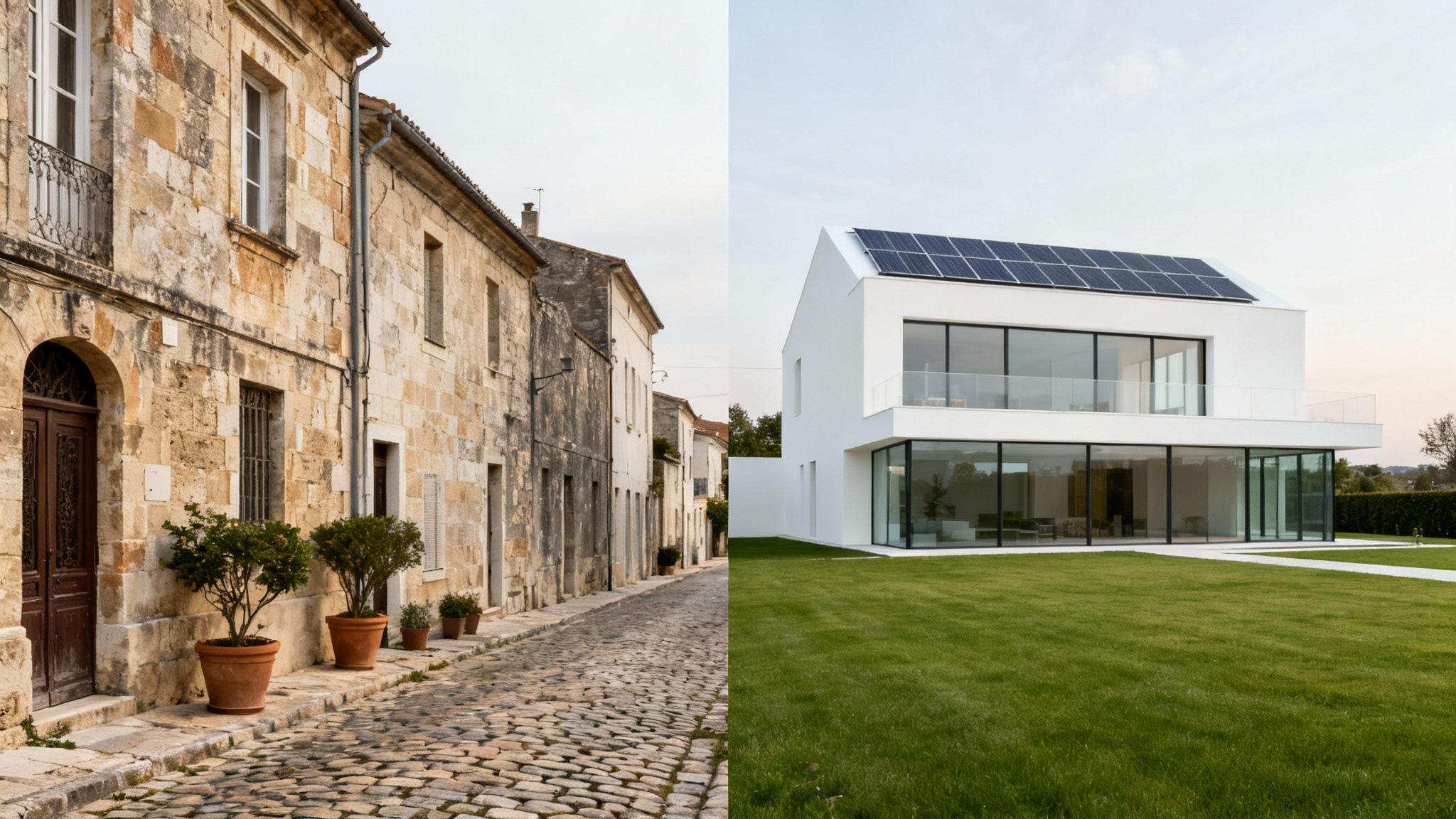
When you start looking at property in Portugal, you’ll quickly run into a major decision: should you buy a brand-new home or an existing one? This isn't just about modern design versus old-world charm; it’s a choice that fundamentally shapes your investment, lifestyle, and future costs. The two paths offer completely different experiences.
I like to think of it like choosing between a classic, restored car and a brand-new electric vehicle. The classic car—like a centuries-old townhouse in a historic center—is all about character, story, and the unique thrill of owning something irreplaceable. The EV, on the other hand, is the new build: efficient, packed with the latest tech, and ready to go with zero fuss. Both are fantastic options, but they appeal to different people for very different reasons.
This is a particularly important distinction in Portugal, where the market for new and old properties can feel like two separate worlds.
The Allure and Risks of Existing Homes
Homes with a bit of history, especially those tucked away in sought-after historic centers, tend to appreciate in value very quickly. It's simple supply and demand. Their locations are often unbeatable, and you can’t exactly build new properties in these protected areas—or if you can, it’s a slow, bureaucratic, and expensive ordeal. That scarcity alone drives up the price.
Of course, buying an older home isn't without its potential headaches. You have to be prepared for the possibility of significant renovation costs. It’s not uncommon to uncover issues like outdated plumbing, old wiring, or even structural problems once you start peeling back the layers. Plus, navigating the local councils for building permits can be a notoriously slow and frustrating process, turning a dream project into a long-term burden if you aren't ready for it.
The relentless climb in Portugal's house prices is a story of a decade-long recovery since the 2008 financial crisis, making it a hot spot for global investors. The Portugal Housing Index shows a staggering rise from its lowest point, with existing homes consistently leading the charge and outpacing the growth of new builds.
The Case for New Construction
New builds offer a different kind of value: peace of mind. They come with modern kitchens and bathrooms, high energy efficiency ratings (which means much lower utility bills), and are usually covered by builder warranties. There are no hidden surprises from decades of wear and tear or questionable DIY projects from previous owners.
The trade-off? Location. New developments are often built on the outskirts of cities, so you might be sacrificing a central address for modern comforts. While they offer a clean slate, some can feel a bit uniform, lacking the unique character and soul that draws so many people to Portugal in the first place.
So, when you’re deciding, you need to be honest about your priorities. Are you looking for the turnkey convenience and efficiency of a modern home? Or are you drawn to the charm and prime location of an older property, even if it means rolling up your sleeves for a renovation?
To help you sort it out, here’s a quick breakdown of the key differences:
| Feature | Existing Homes | New Builds |
|---|---|---|
| Location | Often prime, central, and in established neighborhoods. | Usually in developing areas or suburbs. |
| Maintenance | Higher chance of immediate repairs and long-term upkeep. | Lower initial maintenance; often comes with a warranty. |
| Energy Efficiency | Generally lower, which can mean higher utility bills unless renovated. | Built to modern standards with high energy ratings. |
| Character | Full of unique architectural details and history. | Can feel standardized or lack distinctiveness. |
| Renovation | A great chance to customize, but can be costly and complex. | Move-in ready, with little need for immediate changes. |
Ultimately, both new and existing homes are vital parts of the dynamic house price Portugal market. The right choice really comes down to your budget, your appetite for risk, and the kind of life you envision for yourself in this beautiful country.
Portugal Property Prices By Region
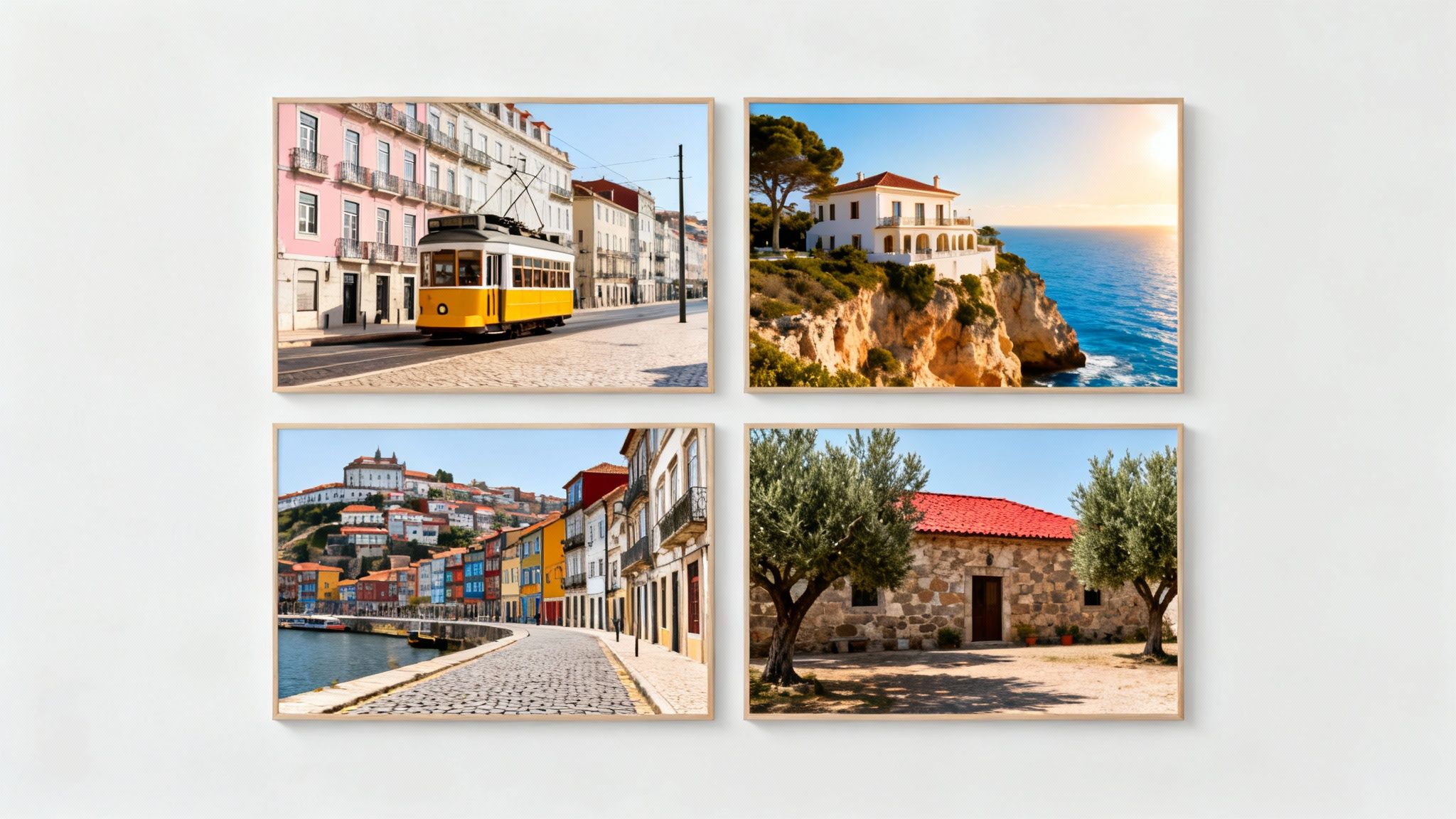
Looking at a national average for house prices in Portugal is a bit like guessing the weather for an entire continent—it doesn’t tell you much. The real story unfolds when you zoom in on the country's incredibly diverse regions. Each area offers a completely different flavor, lifestyle, and, of course, property market.
Think of it like choosing a wine. A bold red from the Douro Valley is worlds away from a crisp Vinho Verde from Minho, even though they come from the same country. It's the same with property. What you can buy in the bustling heart of Lisbon is entirely different from a sprawling farmhouse in the Alentejo.
Let's take a tour through Portugal's real estate landscape to help you find the perfect spot that fits your budget, lifestyle, and investment plans.
H3: Lisbon Metropolitan Area: The Premium Hub
As Portugal's dynamic capital, it’s no surprise that Lisbon commands the highest property prices in the country. This is the nation's economic and cultural engine, drawing in a steady flow of international executives, tech talent, and expats chasing a cosmopolitan lifestyle.
The market here is mostly about apartments. You’ll find everything from sleek, modern new-builds in districts like Parque das Nações to stunningly restored classic flats in historic areas like Chiado and Alfama. Prices often climb above €5,000 per square meter, with prime locations fetching much more. Life here is fast-paced, connected, and packed with world-class culture and cuisine.
H3: The Algarve: Sun, Sand, and Seafront Villas
The Algarve is Portugal’s postcard-perfect southern coast, a name synonymous with golden beaches, championship golf courses, and a life built around leisure. For decades, it’s been a magnet for retirees, holiday homeowners, and investors capitalizing on the massive tourism market.
The property selection is broad, from luxury beachfront villas and golf resort apartments to charming townhouses in traditional towns like Lagos and Tavira. The priciest real estate is concentrated in the "Golden Triangle"—the exclusive stretch between Vilamoura, Quinta do Lago, and Vale do Lobo. Here, prices can easily range from €3,000 to over €6,000 per square meter, especially for properties with a sea view.
H3: Porto and Northern Portugal: Authentic Charm and Rising Stars
Porto, Portugal's second city, has confidently stepped out of Lisbon's shadow. It’s a major destination in its own right, boasting a UNESCO World Heritage historic center, a vibrant arts scene, and, of course, the world-famous Port wine cellars.
Property prices here are still more accessible than in Lisbon, but they’ve been climbing steadily as the city's popularity soars. The market is a fantastic mix of traditional apartments in iconic neighborhoods like Ribeira and Foz do Douro and modern flats in up-and-coming areas. Anyone looking to get into this dynamic city should explore an apartment for sale in Porto, Portugal to see the kind of value on offer.
But the north is so much more than just Porto. Areas like the Douro Valley and Minho offer breathtaking rural landscapes dotted with historic quintas (country estates) and stone houses. These properties come at a fraction of the cost of their coastal counterparts, perfect for anyone seeking a truly authentic and peaceful Portuguese life.
H3: Central Portugal and the Silver Coast: A Hidden Gem
Stretching between Lisbon and Porto lies Central Portugal and its spectacular Atlantic coastline, the Silver Coast (Costa de Prata). This region represents some of the best value for money in the entire country and is a fantastic alternative to the more crowded and expensive Algarve.
Here, you'll find a mix of everything: lively surf towns like Nazaré and Peniche, the historic university city of Coimbra, and countless quiet rural villages. Property ranges from modern apartments to rustic farmhouses. With prices often falling between €1,500 and €2,500 per square meter, it’s become a hotspot for buyers who want an amazing lifestyle without the premium price tag.
H3: Madeira and The Azores: Island Paradises
For a completely different way of life, look to the autonomous islands of Madeira and the Azores. Famed for their dramatic volcanic landscapes, lush subtropical greenery, and year-round mild climates, they are true havens for nature lovers and anyone seeking a peaceful escape.
Madeira, especially its capital Funchal, has a more developed and sophisticated property market with a great mix of apartments and luxury villas. The Azores are more remote and wild, offering a quieter, more rustic lifestyle with charming traditional homes. Prices are still quite moderate but are on the rise as more people discover these Atlantic jewels.
H3: Average House Prices by Portuguese Region (per square meter)
To see how these regions stack up at a glance, this table provides a comparative overview of average property prices. It's a great tool to help you start identifying areas that align with your budget and what you’re looking for in a home.
| Region | Average Price per m² (Apartment) | Average Price per m² (House) | Key Buyer Profile |
|---|---|---|---|
| Lisbon | €4,500 - €6,000+ | €3,800 - €5,500+ | Investors, Expats, Professionals |
| The Algarve | €3,000 - €5,500 | €3,200 - €6,000+ | Retirees, Holiday Homeowners |
| Porto | €2,800 - €4,500 | €2,500 - €4,000 | Expats, Young Professionals, Investors |
| Central Portugal | €1,500 - €2,500 | €1,200 - €2,200 | Value Seekers, Retirees, Families |
| Madeira | €2,200 - €3,800 | €2,000 - €3,500 | Lifestyle Buyers, Nature Lovers |
As you can see, the financial difference between buying in Lisbon versus Central Portugal is massive. This highlights just how important it is to explore beyond the big city names to find the location that truly fits your personal and financial goals.
What’s Fueling Portugal's Red-Hot Property Market?
Portugal's property market didn't just heat up; it became an inferno. This surge wasn't a fluke. It's the result of several powerful economic and social forces hitting all at once, creating the perfect storm for rising house prices. If you want to understand why the house price Portugal trend keeps climbing, you need to look at what's feeding the fire.
Imagine a small, charming café that suddenly gets a rave review in a global travel magazine. Suddenly, a flood of new, wealthy customers from around the world shows up (foreign investors). At the same time, the government starts a loyalty program that gives locals a discount (government incentives), and a massive festival sets up next door (the tourism boom). Everyone wants a seat, but the café can't build an extension overnight (housing shortage). What happens? A long line out the door and a much higher price for a cup of coffee.
That’s a pretty good picture of what’s been happening here. Demand is being supercharged from multiple directions, while supply is struggling to keep up.
The Pull of Foreign Investment
One of the biggest drivers has been a steady stream of international buyers. For years, Portugal has topped the list for expats, retirees, and investors from all over Europe, North America, and beyond. They're drawn in by the incredible quality of life, the sunny climate, and the feeling that Portugal is a safe, stable, and still relatively affordable place to live in Western Europe.
This flood of foreign money has had a direct impact, especially in hotspots like Lisbon, Porto, and the Algarve. International buyers often come with deeper pockets, which naturally puts upward pressure on prices and sets a new, higher bar for the local market. Their appetite for high-quality, well-located homes creates a competitive buzz that’s been great for sellers and developers.
Government Incentives and the Golden Visa Effect
Portugal also rolled out the red carpet to attract investment. The famous Golden Visa program, which offered residency for real estate investment, has been scaled back, but its impact is undeniable. For a solid decade, it channeled billions into the property sector, fundamentally changing the landscape.
Lately, the strategy has shifted. The government has brought in new programs, like tax breaks for young, first-time homebuyers. These kinds of policies get the domestic market moving, adding another layer of demand. It ensures that price growth isn't just about foreign money, which has helped push transaction volumes and price indexes to new highs. We’ve seen dwelling sales hit three-year peaks and bank valuations jump by double digits. For a deeper dive on this, you can explore the full history of Portuguese property prices.
How Tourism Puts a Squeeze on Housing
Portugal's transformation into a world-class tourist destination is another huge piece of the puzzle. The tourism explosion created a massive demand for short-term rentals, particularly in historic city centers and along the coast. Investors jumped at the chance to earn high yields from platforms like Airbnb, buying up properties that might have otherwise gone to long-term residents.
This plays out in two ways:
- It shrinks the long-term supply: Housing stock gets pulled from the rental market, making it tougher and more expensive for locals to find a place to live.
- It inflates property values: The potential for big returns from holiday rentals makes these properties far more valuable, pushing up their sale prices and creating a ripple effect on everything nearby.
A Lisbon apartment is no longer just valued as a home; it's priced like a potential mini-hotel. That fundamentally changes what it’s worth.
The Critical Supply Bottleneck
Finally, we get to the most basic driver of all: classic supply and demand. In the big cities and popular areas, there simply aren't enough homes to go around. Building new housing has been a slow process, held back by a mix of long-winded permitting processes, soaring construction costs, and a scarcity of good land to build on.
This supply crunch puts a solid floor under prices. Even if demand were to cool off a bit, the basic lack of available homes in the places people want to live keeps the market competitive. This bottleneck is arguably the biggest structural reason why the house price Portugal trend has been so relentless, creating a tough situation for buyers but a very rewarding one for anyone who already owns property here.
How to Navigate Your Property Purchase

Getting a feel for market trends and regional prices is one thing, but the real adventure begins when you start the buying process. For anyone new to it, especially international buyers, the Portuguese system can feel a bit like a maze of unfamiliar rules and procedures.
But it’s not as daunting as it first appears. Think of it like learning the rules to a new game. Once you understand the sequence of play and what each piece does, you can move forward with confidence. Breaking it down into clear, manageable steps is the key to a smooth journey.
The path from finding your dream home to finally holding the keys is paved with legal checks, financial arrangements, and a bit of necessary bureaucracy. Nail these steps, and you're set for a secure and successful purchase.
Your Essential First Steps
Before you even think about making an offer, there's some crucial groundwork to lay. Getting your official paperwork in order from the get-go is non-negotiable and will save you from major headaches and delays later on.
First up, you absolutely must get a Portuguese tax number, known as the Número de Identificação Fiscal (NIF). This unique nine-digit number is the key that unlocks almost every financial transaction in the country, from opening a bank account to signing a property deed. Without it, you simply can't move forward.
With your NIF in hand, your very next stop should be a local bank. Opening a Portuguese bank account is essential for handling the deposit, the final payment, and all the ongoing costs like property taxes and utilities.
Assembling Your Professional Team
Buying a property in Portugal is a team sport, not a solo mission. You’ll want a crew of trusted local experts on your side to guide you through the process, protect your interests, and make sure every legal box is ticked.
Here’s who you need in your corner:
- A Reputable Lawyer (Advogado): This is your most critical hire. A good lawyer is your investigator and protector, running all the necessary legal checks, verifying the property's ownership, and making sure all contracts are watertight and in your favor.
- A Real Estate Agent (Agente Imobiliário): A sharp, well-connected agent is invaluable for sourcing the right properties, skillfully negotiating the price, and giving you the inside track on local market dynamics.
- A Notary (Notário): The notary is a neutral, state-appointed official who acts as the final witness. They oversee the signing of the final deed (Escritura), confirm everyone's identity, and officially record the sale.
The Portuguese property buying process can have unexpected twists, especially concerning property legality and historical permits. A thorough lawyer is your best defense against future problems.
It's not uncommon, for instance, to discover an old farmhouse has unrecorded renovations or is missing a crucial habitation license. Catching these issues early is vital. You can dive deeper into these checks with our comprehensive real estate due diligence checklist for a step-by-step guide.
Understanding the Key Purchase Stages
Once you’ve found "the one" and your team is in place, the transaction itself follows a well-defined path. Knowing these stages helps you stay one step ahead and be prepared for what’s coming next.
- The Promissory Contract (CPCV): After your offer is accepted, both you and the seller will sign the Contrato de Promessa de Compra e Venda (CPCV). This is a serious, legally binding agreement. At this stage, you’ll pay the deposit, which is typically 10-20% of the purchase price.
- Paying Property Taxes: Before the sale can be finalized, you'll need to pay the property taxes. The two main ones are the Property Transfer Tax (IMT) and Stamp Duty (Imposto do Selo), which are calculated based on the property’s value.
- The Final Deed (Escritura): This is the main event! You, the seller, and your representatives will meet at the notary's office to sign the final deed of sale. Here, you'll transfer the remaining balance, and the seller will hand over the keys. It’s officially yours.
- Property Registration: The final step is to make it official in the public record. Your lawyer will take the signed deed to the Land Registry Office (Conservatória do Registo Predial) to register the property in your name, cementing your legal ownership.
Answering Your Top Questions on Portugal House Prices
As you get deeper into the Portuguese real estate market, it’s only natural for questions to start bubbling up. The landscape is full of regional quirks and specific rules that can feel a little overwhelming at first. To cut through the noise and give you some real clarity, we've pulled together the most common questions we hear from buyers.
Think of this as a final chat with a seasoned expert, designed to clear up those last few nagging doubts before you dive in.
Are House Prices in Portugal Still Rising?
In a word, yes. The general trend for property prices in Portugal is still heading north. The latest data consistently shows year-on-year growth, a pattern driven by a classic mix of high demand meeting a tight housing supply. This isn't just a quick blip on the radar; it’s a sustained trend that reflects just how popular Portugal has become.
But—and this is a big but—that growth isn’t happening everywhere at the same speed. The market is less like a single rising tide and more like a landscape with its own peaks and valleys.
- The Hotspots: Big cities like Lisbon and Porto, along with the ever-popular Algarve, are where you'll see the steepest and fastest price jumps. Fierce competition from both local and international buyers keeps these markets sizzling hot.
- The Steady Climbers: Places like the Silver Coast and Madeira are also seeing solid, consistent growth as savvy buyers look for value just beyond the main hubs.
- The Slow Burners: More rural, inland regions are appreciating at a much gentler pace. They might not offer the dramatic returns of Lisbon, but they provide stability and much more approachable prices.
So, while the national average for house price Portugal is on an upward curve, what you experience on the ground will depend entirely on where you plant your flag.
The real takeaway here is that while the market is undeniably strong, price momentum is all about location. You absolutely need to do your local homework before making any big decisions.
What Are the Hidden Costs of Buying a House in Portugal?
One of the easiest traps to fall into as a buyer is focusing only on the asking price. In Portugal, a handful of other costs are baked into the transaction, and if you don't budget for them, you could be in for a nasty surprise. A safe bet is to earmark an extra 8% to 10% of the property's purchase price to cover everything.
Let's pull back the curtain on these "hidden" costs:
- Property Transfer Tax (IMT): This is the big one. The Imposto Municipal sobre as Transmissões Onerosas de Imóveis (IMT) is a sliding-scale tax, so the percentage you pay goes up with the property's value.
- Stamp Duty (IS): The Imposto do Selo is a flat-rate tax that gets applied to the purchase price. It’s a standard feature of pretty much any official financial deal in Portugal.
- Notary and Registration Fees: You'll have to pay the notary who oversees the signing of the final deed, plus fees to get the property officially registered in your name at the Land Registry Office.
- Legal Fees: We can't stress this enough: hire a good lawyer. Their fee covers the critical due diligence, contract reviews, and expert guidance that will save you headaches down the line.
- Ongoing Costs: Don’t forget that ownership comes with its own set of bills. This includes the annual property tax (Imposto Municipal sobre Imóveis or IMI), condo fees if you're in an apartment, and utility connections.
Can Foreigners Easily Get a Mortgage in Portugal?
Absolutely. Non-residents can and do get mortgages from Portuguese banks all the time. The country's financial system is well-oiled when it comes to dealing with international buyers. That said, the terms you're offered will likely be different from what a local resident would get.
The main point of difference is the loan-to-value (LTV) ratio. A Portuguese resident might be able to borrow up to 90% of the property's value, but as a foreigner, you should realistically expect to get between 60% and 80%. This means you'll need to come to the table with a larger down payment, typically in the 20% to 40% range.
To get the green light, banks will want to see a full picture of your financial health. Be prepared to provide:
- Proof of a steady income (like recent pay stubs or an employment contract).
- Tax returns from your home country for the past couple of years.
- Recent bank statements to show your savings and cash flow.
- A credit report from where you currently live.
The paperwork can feel a bit like a marathon. To make things run smoother, it's often a smart move to work with a mortgage broker who specializes in expat finance. They already have relationships with the banks and know exactly how to package your application for success.
Which Areas in Portugal Offer the Best Value for Money?
While Lisbon and the Algarve tend to hog the limelight, Portugal is packed with regions where your money goes a whole lot further without you having to compromise on lifestyle. If you're hunting for a great house price Portugal deal, looking beyond the usual suspects can pay off big time.
It’s like finding that incredible, family-run restaurant just a few blocks away from the tourist traps—the experience is more authentic, and the bill is much easier to swallow.
Here are a few regions known for offering fantastic value:
- Central Portugal & The Silver Coast: Here you get a breathtaking Atlantic coastline and gorgeous historic towns, but with property prices that are a world away from the Algarve. It's perfect for anyone who dreams of coastal living without the premium price tag.
- The Alentejo: Famous for its rolling hills, ancient cork forests, and wide-open spaces, the Alentejo is where you'll find affordable country estates (quintas) and homes in charming, whitewashed villages. It's a ticket to a peaceful, traditional Portuguese way of life.
- Northern Portugal (Inland): Step away from the coast and outside of Porto, and you’ll discover a region steeped in culture, history, and lush greenery. Areas in Minho and Trás-os-Montes have some of the most affordable properties in the entire country.
Exploring these hidden gems can lead you to a home that not only fits your budget but also gives you a truly unique and rewarding life in Portugal.
Ready to find your perfect home in one of Europe’s most desirable locations? Residaro offers an extensive selection of properties across Portugal, from sun-drenched villas in the Algarve to chic apartments in Lisbon. Start your search with Residaro today and turn your dream of owning a home in Portugal into a reality.