Your Guide to Finding a House in Brittany for Sale
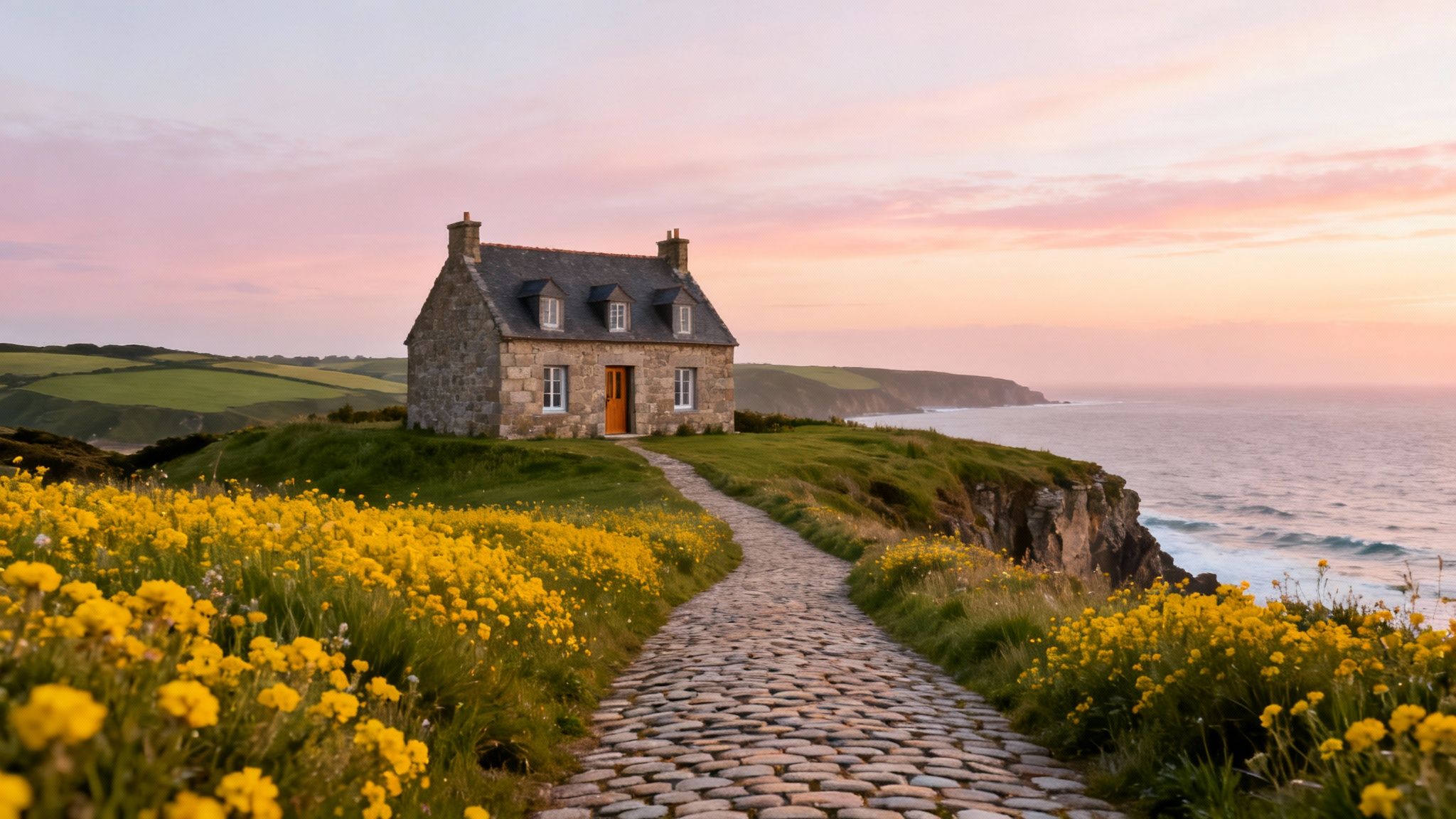
Can you picture it? Waking up to the distant sound of waves crashing against a rugged coastline, or sipping your morning coffee in the quiet garden of an old stone farmhouse. That's the dream that pulls people towards Brittany, a corner of France where a slower pace of life isn't just a cliché—it's a reality. Finding a house in Brittany for sale is less about a property transaction and more about discovering a lifestyle steeped in community, nature, and deeply rooted traditions.
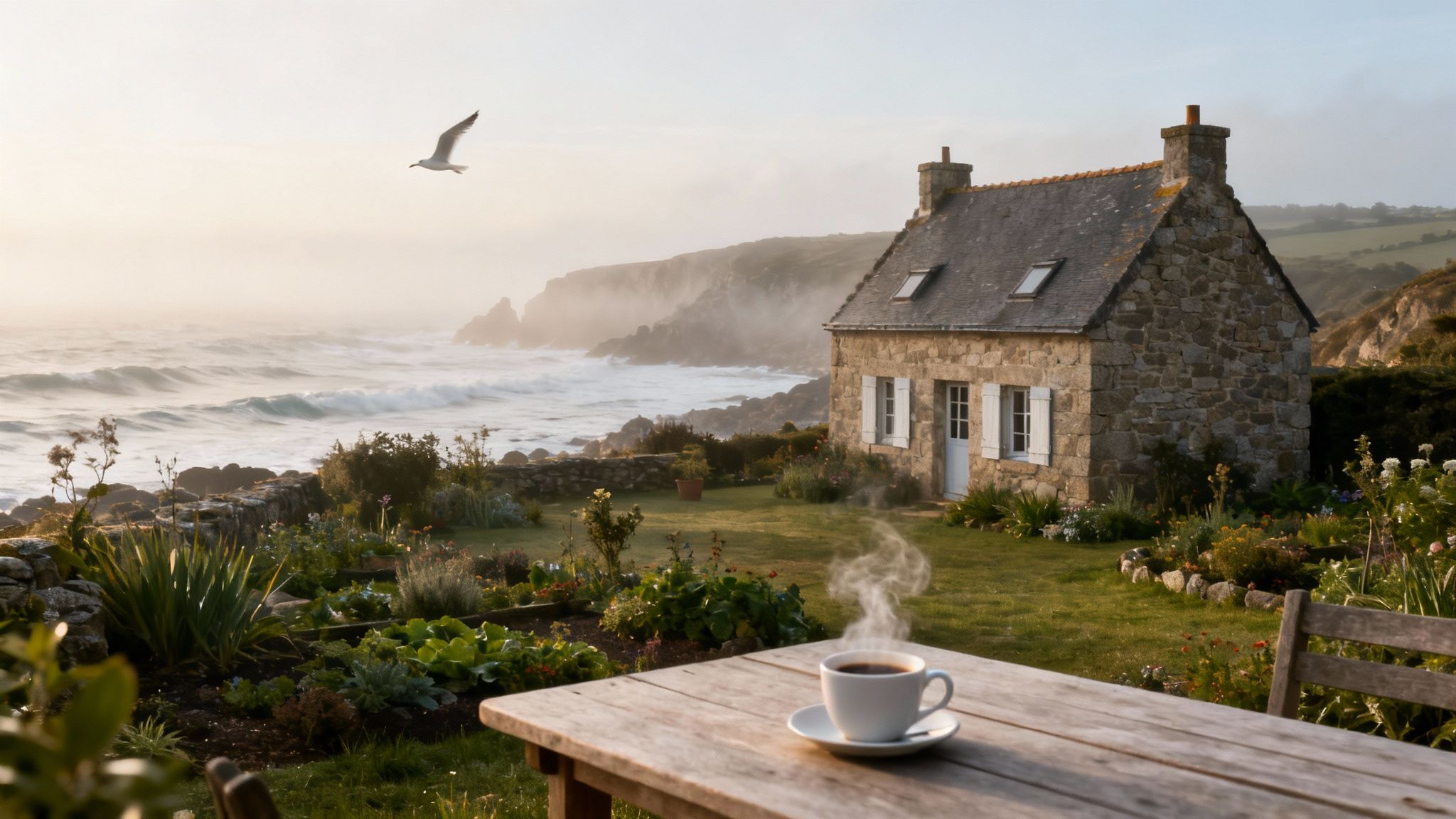
Why Choose a House for Sale in Brittany
Brittany, or Bretagne as the locals call it, has long been a magnet for homebuyers from all over the world. Jutting out from the northwest corner of France into the Atlantic, the region serves up a dramatic blend of wild coastlines, rolling green countryside, and historic market towns with their quintessential cobbled streets. It's one of those rare places where you can find profound tranquility one day and vibrant community life the next.
But the appeal runs much deeper than just the stunning scenery. The Breton lifestyle itself is a huge part of the draw, defined by a powerful connection to both the land and the sea. The region’s strong Celtic heritage gives it a familiar yet distinct feel—almost like a French cousin to Cornwall or Wales. This unique identity comes alive in local festivals, traditional music, and a fierce pride in the Breton language.
A Lifestyle Rooted in Nature and Tradition
Life in Brittany is lived outdoors. Its four diverse départements—Finistère, Côtes-d'Armor, Morbihan, and Ille-et-Vilaine—offer a boundless playground for every interest. Whether you're sailing along the famous Pink Granite Coast, hiking through ancient forests, or just whiling away an afternoon on a vast, sandy beach, the environment here practically begs you to get out and live.
Brittany offers an incredible opportunity for anyone seeking a fantastic new life in France. With longer summer days that aren't quite as hot as the south and milder winters than in the UK, it provides a comfortable climate for year-round enjoyment.
This bond with nature naturally extends to the food. The region is famous for its incredible seafood, savoury buckwheat galettes, sweet crêpes, and artisanal cider. The weekly market is a cornerstone of Breton life, a place where you can find fresh, local produce that turns everyday cooking into a genuine pleasure.
More Than Just a Holiday Destination
While it's a beloved spot for tourists, owning a house in Brittany for sale means becoming part of a genuinely welcoming and resilient community. The Breton people are known for their warmth and unpretentious, down-to-earth nature, which makes it much easier for newcomers to settle in and feel like they belong.
Here’s a quick rundown of what really makes Brittany stand out for homebuyers:
- Exceptional Quality of Life: The pace is refreshingly unhurried, the air is clean, and there's a real emphasis on balancing work and life.
- Affordability: When you compare it to other popular French regions, Brittany often gives you more for your money, whether you're after a cozy cottage or a sprawling farmhouse.
- Great Accessibility: With excellent transport links to the UK and Paris, it’s incredibly convenient for travel, family visits, or even remote working.
- A Rich Sense of History: History is everywhere you look, from the prehistoric standing stones at Carnac to the medieval walled cities of Dinan and Saint-Malo.
In the end, choosing Brittany is about choosing a way of life that values authenticity over artifice. It's for people who appreciate raw beauty, strong communities, and the simple joy of a life well-lived. This guide is your starting point, designed to give you a clear picture of what awaits in this truly magical part of France.
Navigating the Brittany Property Market
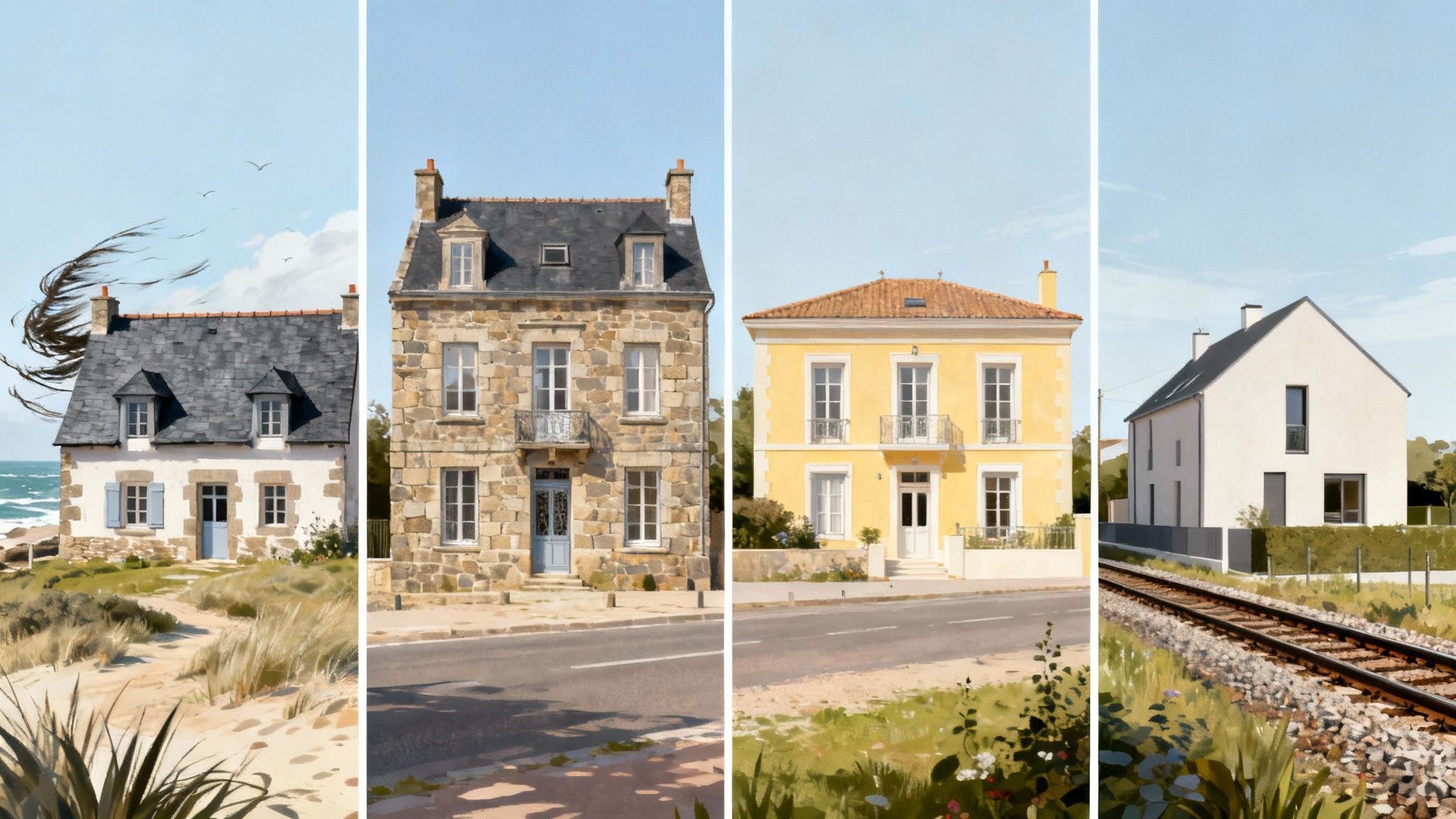
Finding a house in Brittany for sale isn’t like shopping in one big department store. It’s more like exploring a collection of unique, independent boutiques. The region is a beautiful mosaic of four distinct départements, and each one offers its own version of Breton life, its own landscapes, and its own property market.
Getting a handle on these differences is the first real step in turning a vague dream into a targeted search. Think of Brittany as four territories, each with its own personality. Your perfect home is probably waiting in the one that best clicks with your lifestyle, whether you're dreaming of wild, artistic coastlines or the energy of a thriving city.
Finistère: Where Land Meets the Sea
Finistère, which literally means "Land's End," is the wild, untamed heart of Brittany. This is where you'll find those dramatic cliffs, hidden coves, and a rugged beauty that has captivated artists for centuries. The property market here is just as varied, with everything from classic stone fishermen's cottages (penty) near the sea to sprawling farmhouses (longères) tucked away in the countryside.
Prices in Finistère can be surprisingly accessible, especially as you move inland from the coast. While towns like Douarnenez and the artist colony of Pont-Aven are always popular, the real treasures are often found in the quieter villages. It's the perfect spot for anyone seeking solitude, inspiration, and a real connection to nature.
Côtes-d'Armor: Historic Charm and Pink Granite
Stretching along the northern coast, Côtes-d'Armor is famous for its breathtaking Pink Granite Coast and incredibly preserved medieval towns like Dinan. The market here is a lovely mix of coastal properties with stunning sea views and charming townhouses nestled inside historic walls. It strikes a wonderful balance between dramatic scenery and rich cultural life.
This département tends to attract buyers who love history and want easy access to both the coast and the countryside. Property prices reflect this appeal, especially in sought-after spots like Perros-Guirec. But you only have to venture a few kilometres inland to find more affordable options that don't sacrifice any of the charm.
Morbihan: The Sunny Southern Coast
Often called Brittany's Riviera, Morbihan blesses its residents with a milder climate, gorgeous sandy beaches, and the magical Gulf of Morbihan, with its seemingly endless islands. This area is incredibly sought-after, drawing in buyers who are looking for a sunnier, more laid-back lifestyle. As you'd expect, the market is strong, with elegant villas, modern homes, and classic stone properties all in high demand.
The city of Vannes is a vibrant hub, while coastal towns like Carnac and La Trinité-sur-Mer are hotspots for sailing and tourism. As a result, property prices in Morbihan are among the highest in Brittany. The area’s enduring popularity also makes it a solid choice for holiday lets and investment properties.
A big reason for the Brittany real estate market's consistent appeal is its popularity for second homes. Across the region, 12% of all residences are second homes—a figure well above the French national average of 9%. This really highlights just how desirable it is as a place to get away. You can explore more data on the Brittany real estate market and its trends.
Ille-et-Vilaine: Dynamic and Connected
Ille-et-Vilaine is the eastern gateway to Brittany and home to the region's bustling capital, Rennes. This is the most connected of the four départements, with high-speed train links straight to Paris, making it ideal for anyone who needs easy city access but still craves the Breton lifestyle. The property market here is robust, powered by the economic and cultural engine of Rennes.
Step outside the city, and you'll find a beautiful landscape of rolling hills, ancient forests, and lovely towns. It’s a fantastic choice for families, professionals, and anyone who wants a blend of urban convenience and countryside calm. The market reflects this, offering everything from city apartments to large country estates.
Brittany Property Market Snapshot by Département
To help you get a clearer picture of how these four areas stack up, we've put together a quick comparison.
| Département | Key Characteristics | Average Price per m² (Approx.) | Best For |
|---|---|---|---|
| Finistère | Wild coastlines, artistic heritage, rural tranquility | €1,800 - €2,500 | Nature lovers, artists, budget-conscious buyers |
| Côtes-d'Armor | Pink Granite Coast, medieval towns, balanced lifestyle | €2,000 - €2,800 | History buffs, families, coastal explorers |
| Morbihan | Mild climate, sandy beaches, sailing culture | €2,500 - €3,500+ | Sun-seekers, retirees, investors, sailing enthusiasts |
| Ille-et-Vilaine | Urban hub (Rennes), excellent transport links, dynamic | €2,200 - €3,200 | Professionals, commuters, those wanting city access |
By understanding these regional personalities, you can start to zero in on the perfect place for your search. Each part of Brittany offers a unique chapter in the same beautiful story—it’s just a matter of finding the page where you belong.
The French Property Buying Process Explained
Buying a house in Brittany is a well-defined process, but it’s probably quite different from what you’re used to back home. Think of it less like a quick transaction and more like a carefully choreographed dance, where every step is designed to protect both you and the seller. Getting to grips with this sequence is the key to a smooth, stress-free purchase.
The whole affair is overseen by a uniquely French figure: the notaire. It's easy to mistake them for a typical lawyer, but they aren't there to represent one side. Instead, a notaire is an impartial public official appointed by the government. Their job is to make sure the sale is legally watertight, all the i's are dotted and t's are crossed, and the property officially changes hands. You and the seller can use the same notaire, or you can each hire your own—it makes no difference to the cost, as the legally-fixed fees are simply split.
From Initial Offer to Binding Agreement
So, you’ve found the perfect Breton home. What next? The journey starts when you make a formal written offer, known as an 'offre d'achat'. While it might seem like a simple piece of paper, treat it seriously. Once the seller signs it, you've both made a moral commitment to move forward to the main event.
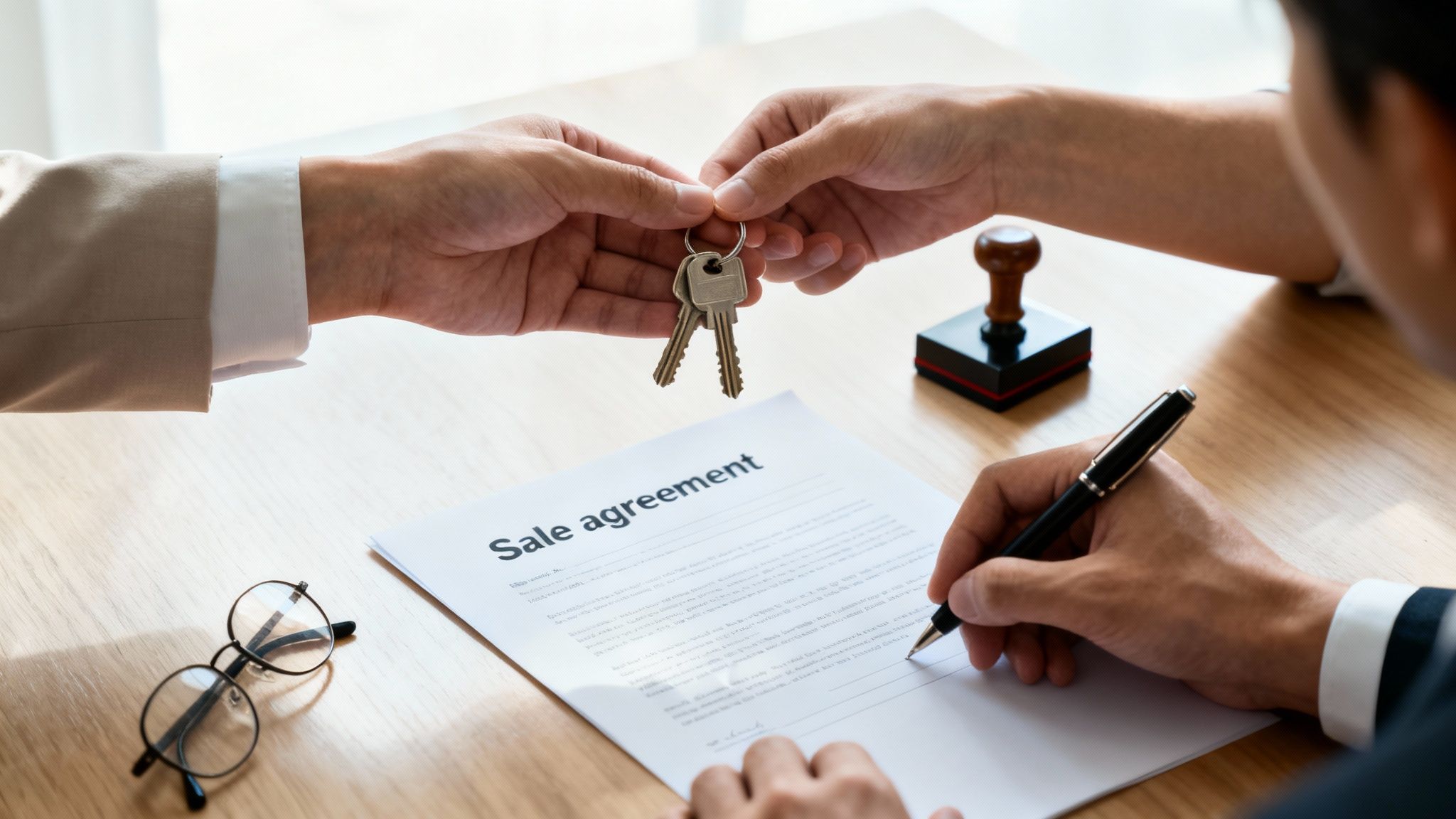
That main event is signing the preliminary contract, almost always a 'compromis de vente'. This is a massive step. It’s a legally binding agreement that locks in the price, the property details, and any "get-out" clauses, called 'clauses suspensives' (like securing a mortgage).
The 'compromis de vente' is the real point of no return. It lays out every single detail of the sale and is when you'll pay a deposit, usually between 5-10% of the purchase price. Don't worry, this money doesn't go to the seller; it's held safely by the notaire until completion.
After you've signed the 'compromis', a brilliant piece of French consumer protection kicks in: a 10-day cooling-off period ('délai de rétractation'). For those ten days, you can walk away for any reason whatsoever without losing your deposit. It’s a fantastic safety net that gives you time to breathe and be absolutely sure about your decision. To dive deeper into these contracts, have a look at our comprehensive guide on buying a home in France.
The Role of Surveys and Final Steps
Unlike in the UK or US, a full structural survey isn't a standard part of the French buying process. What you do get is a file of technical reports provided by the seller, called the 'Dossier de Diagnostic Technique' (DDT).
This folder is packed with specific assessments of the property. You'll typically find reports on:
- Energy Performance (DPE): An A-G rating of the home's energy efficiency.
- Asbestos, Lead, and Termites: Essential checks for hazardous materials, particularly in older buildings.
- Gas and Electrical Systems: A safety check on any installation that’s over 15 years old.
- Natural and Industrial Risks: A report on local hazards like flooding or ground instability.
While the DDT gives you a lot of good information, it is absolutely not a full structural survey. If you’re buying an old stone farmhouse or a property that looks like it needs some love, I can't recommend strongly enough that you hire your own independent surveyor. It’s an extra cost, but the peace of mind is priceless.
Once the cooling-off period is over and all the conditions in the contract are met, the notaire gets to work on the final legal checks. This stage usually takes around 2-3 months. The grand finale is signing the 'acte de vente'—the final deed of sale. This happens at the notaire’s office, where you'll transfer the remaining balance and finally, get the keys to your new home in Brittany.
Understanding the True Cost of Your Brittany Home
When you first start looking at houses for sale in Brittany, it’s easy to get swept away by the asking prices. But a lot like an iceberg, a big chunk of the real cost is hidden just below the surface. To set a realistic budget and sidestep any nasty surprises down the road, you need to get a handle on the complete financial picture—from the one-time closing costs to the regular expenses of being a homeowner.
Think of the listed sale price as just your ticket to the show. It gets you in the door, but it doesn't cover the whole experience. The final amount you’ll pay when you get the keys will be higher, mostly because of a set of mandatory closing costs known in France as the 'frais de notaire'.
Breaking Down the Notary Fees
Now, the term 'frais de notaire' (notary fees) is a bit of a misnomer. It sounds like it’s just the notary’s paycheck, but their personal fee is actually a pretty small slice of the pie. The vast majority of this cost is really a bundle of taxes and duties the notary collects for the French government.
These fees are a non-negotiable part of buying property in France, and the buyer always pays them. For older homes—which is what most people buy in Brittany—you can expect these fees to be between 7% and 8% of the purchase price. If you’re buying a brand-new build, you’ll catch a break, as the fees are much lower, typically around 2% to 3%.
So, what exactly are you paying for?
- Property Transfer Tax ('droits de mutation'): This is the big one, making up about 5.8% of the property price. This money goes straight to the local and national tax authorities.
- Notary's Official Fee ('émoluments'): This is the notary’s actual regulated fee for their work. It’s set by law on a sliding scale that changes with the property’s value.
- Administrative Costs ('débours'): These are the smaller, out-of-pocket expenses for things like land registry searches, getting official documents, and other procedural bits and pieces.
Let’s put that in real terms. For a €200,000 house, you need to have another €15,000 to €16,000 ready to cover these closing costs. That’s a serious amount of cash, so it’s absolutely essential to build it into your budget from day one.
Ongoing Costs of Ownership
Once the keys are finally yours, your financial focus shifts from one-off purchase costs to the recurring expenses of owning the property. The two main annual property taxes you'll become familiar with are the 'taxe foncière' and the 'taxe d'habitation'.
The 'taxe foncière' is a land and property tax paid every year by the owner. It doesn't matter if you live there full-time, part-time, or rent it out—if you own it, you pay it. The amount can vary wildly depending on the property's location, size, and condition.
The 'taxe d'habitation', on the other hand, is a residency tax. While it has been phased out for primary homes for most residents in France, it’s still very much in effect for second homes. The bill can be quite hefty, so if you're buying a holiday home, this is a major cost to factor into your annual budget. For a deeper dive into these obligations, take a look at our guide on navigating foreign real estate tax laws.
Financing Your Brittany Dream Home
For buyers coming from abroad, getting a mortgage in France is definitely achievable, but it takes some solid preparation. French banks tend to be on the cautious side; they'll want to see proof of a stable income, a clean financial history, and a decent down payment.
You’ll typically need a deposit of at least 20% of the purchase price, plus enough savings to cover the 'frais de notaire' on top of that. Lenders will also take a hard look at your debt-to-income ratio, making sure your total monthly debt payments (including your new French mortgage) don’t go over 35% of your gross monthly income.
Many international buyers find that working with a specialist mortgage broker makes life a lot easier. A good broker knows the French system like the back of their hand, has connections with different lenders, and can help you sort through all the paperwork—often in English. It can make the entire process feel a whole lot less daunting.
Brittany's Architectural Soul: More Than Just a House
You can tell a lot about Brittany just by looking at its buildings. The local architecture is the region's story written in granite and slate. When you start searching for a house for sale in Brittany, you're not just browsing listings; you're flipping through pages of history and a way of life shaped by the land itself.
Each style tells you something about the people who built it and the world they lived in. From sprawling farmhouses designed to soak up the sun to stout little cottages built to shrug off coastal storms, these homes are a direct response to Brittany's beautiful, rugged character.
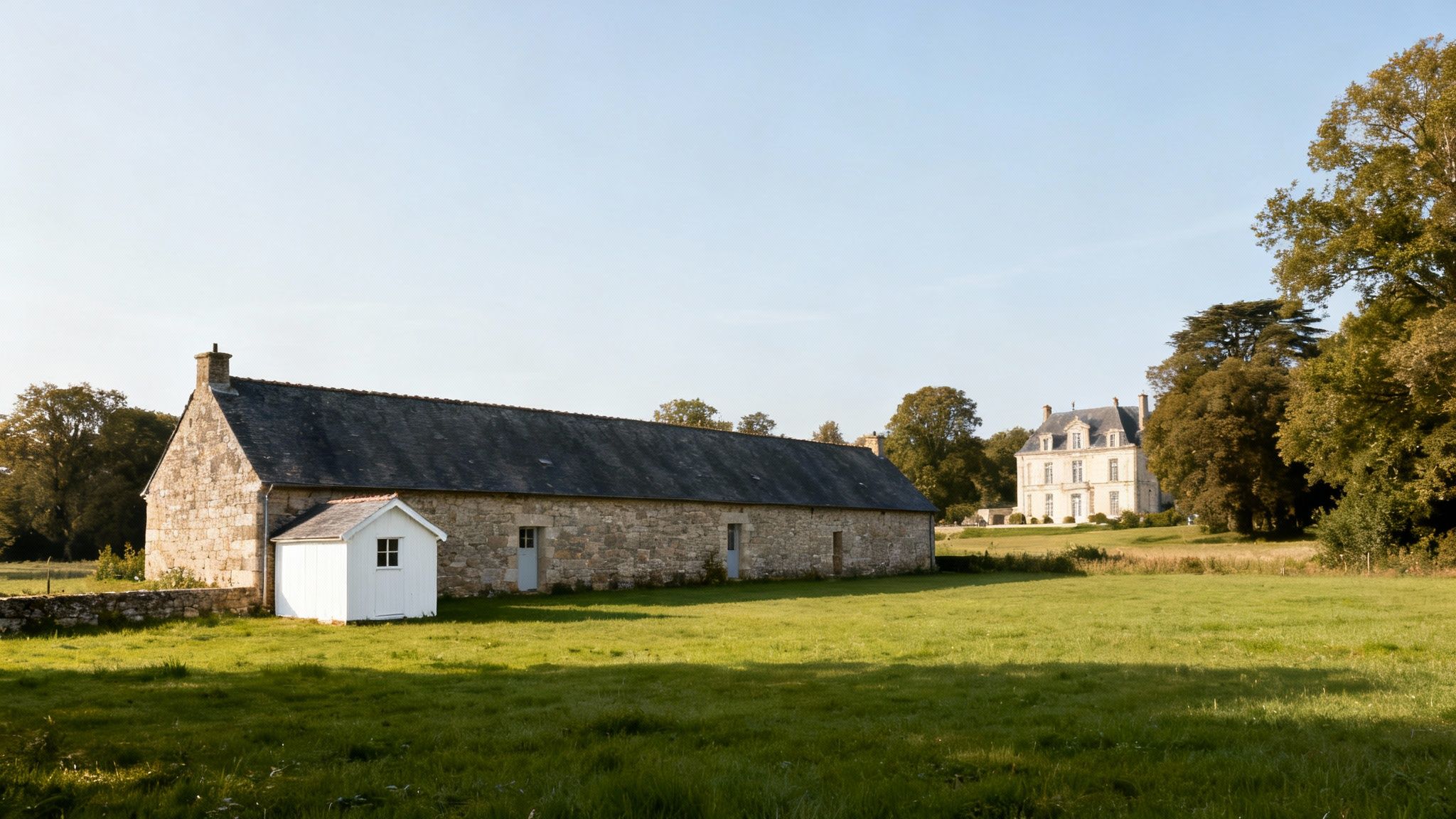
The Iconic Longère
If you had to pick one building to represent rural Brittany, it would be the longère. The name literally means "longhouse," and that's exactly what it is: a long, rectangular building, usually on one level. Traditionally, the main wall was built to face south, a clever way to capture as much precious sunlight and warmth as possible. These were practical, working homes, often with the family living at one end and their livestock sheltered under the same continuous roof at the other.
Today, these old farmhouses are incredibly popular. Their linear shape is a perfect canvas for creating stunning open-plan living spaces. Of course, they come with their own set of challenges—you might need some creative thinking to bring light into the middle of the home or figure out how to best repurpose the old barn section.
The Charming Penty
Head towards the coast, and you’ll start seeing the penty, Brittany's classic fisherman's cottage. These homes are the definition of cozy charm, built to be compact and tough enough to withstand the powerful Atlantic gales. Think thick stone walls, small, deep-set windows, and heavy slate roofs. They were built as tiny sanctuaries against the elements.
A penty makes a fantastic holiday getaway or a perfect retreat for a couple. Their smaller footprint is a huge part of their appeal, but it can make renovations tricky. The real art is in maximizing every square inch of space without sacrificing that authentic, rustic character.
When you buy a historic property in Brittany, you're not just getting a set of keys; you're becoming the next custodian of a piece of living history. The same resilience you see in the stone walls is reflected in the local property market, which consistently attracts buyers from around the globe.
It's worth noting that the wider French property market, Brittany included, has been holding up well, with buyer confidence returning. Factors like more stable interest rates and changing tax rules are helping to normalize the market and sustain interest in lifestyle-rich regions. For a deeper dive, you can read the full French property market analysis.
The Elegant Manoir
For those with a bigger dream (and budget!), the manoir, or manor house, is the crown jewel of Breton property. These were the seats of the local gentry, and they look the part. You'll see more intricate stonework, larger windows, and grand features like turrets, towers, or a pigeonnier (dovecote). A manoir is a real statement, offering space, history, and a powerful connection to the region's aristocratic past.
Of course, owning one is a serious commitment. They almost always come with significant land and various outbuildings, and the upkeep can be substantial. If the property is historically listed, renovations will have to follow strict heritage guidelines. But for the right person, the reward is a home that is truly without equal.
Here’s a quick breakdown of what to expect from these classic Breton homes:
| Property Type | Key Features | Best Suited For |
|---|---|---|
| Longère | Long, rectangular, stone walls, south-facing | Families, fans of open-plan living, country life |
| Penty | Compact, thick walls, slate roof, coastal | Holiday homes, couples, cozy and simple living |
| Manoir | Large, ornate stonework, turrets, extensive grounds | Large families, luxury living, history buffs |
Once you know which style truly speaks to you, your search for a house in Brittany for sale becomes much clearer. You’re no longer just looking for a building, but for a place that feels like a true Breton home.
Common Questions About Buying a House in Brittany
As you move from dreaming about a life in Brittany to actually looking at properties, the practical questions start to surface. It’s a completely normal part of the process, especially when you’re buying in a different country. We get these questions all the time from international buyers, so we've put together some straightforward answers to help clear things up.
Think of this as your practical guide to the nuts and bolts of the purchase. We’ll cover everything from opening a bank account to the exciting, and sometimes tricky, world of renovating an old stone house. Our goal is to swap any uncertainty you might have with the confidence you need to move forward.
Do I Need a French Bank Account to Buy a House?
In a word, yes. Having a French bank account is non-negotiable for a smooth home-owning experience. While you can certainly wire the purchase funds from your home country, a local account is essential for all the day-to-day realities of owning property in France.
This is what you'll use to pay for everything from your utility bills and property taxes (like the taxe foncière) to the local handyman you hire for repairs. Getting an account set up early makes mortgage applications, setting up direct debits, and life in general so much simpler. French banks deal with non-residents all the time, and the process is usually pretty painless once you have your ID, proof of address, and proof of income ready.
What Is a Compromis de Vente Versus a Promesse de Vente?
This is a classic point of confusion, but it’s easy to understand once you think of them as two different kinds of "promises." In almost every sale, you’ll be dealing with a compromis de vente.
-
Compromis de Vente: This is a firm, two-way street. Both you and the seller are legally committing to the sale, provided all the conditions (the clauses suspensives), like securing your mortgage, are met. It’s a binding agreement, and backing out has real legal and financial consequences for either party.
-
Promesse de Vente: This is more of a one-sided deal. The seller promises to sell the property only to you at an agreed-upon price for a certain amount of time. You pay a deposit, often up to 10%, for this exclusive option. You can walk away (losing your deposit), but the seller is stuck—they can't sell to anyone else during that period.
For the vast majority of property purchases in Brittany, the compromis de vente is the standard contract. It offers security and a clear path forward for both buyer and seller.
Can I Rent Out My Brittany Property When Not in Use?
Absolutely! Brittany's enduring charm as a tourist hotspot makes it a brilliant place to earn some rental income from your home, often called a gîte. You just need to make sure you’re doing it by the book.
Your first port of call is the local town hall, or mairie, where you’ll need to register your property as a rental. Be aware that in some highly sought-after tourist zones, there might be a cap on how many days a year you can rent it out on a short-term basis. And, of course, all rental income has to be declared to the French tax authorities. It’s a smart move to chat with a local accountant to get your tax situation squared away from the start.
Renting out your home can be a great way to make it work for you, but a little prep goes a long way. Keeping the property in top shape is the secret to happy guests and great reviews. A good inspection before you list it can save you a world of trouble later on.
For a detailed checklist of what to look for, our guide on how to inspect a house before buying has tons of tips that are just as handy for getting a property rental-ready.
Are There Special Rules for Renovating Old Stone Houses?
Yes, and this is a huge one for anyone who has fallen for the romance of an old Breton longère. France is fiercely protective of its architectural heritage, especially for homes in protected zones or those listed as historic buildings (monument historique).
You’ll need to get planning permission from the mairie for almost any work that changes the exterior. That includes everything from replacing windows and doors to touching the roof or building an extension. It could be a simple déclaration préalable de travaux for small jobs or a full-blown permis de construire for anything major.
The key to success? Find a local architect or builder who knows the regional rules and has experience with traditional materials. They won't just handle the paperwork; they’ll make sure your renovation honours the character of your home while making it work for modern life. It’s a partnership that will pay for itself a hundred times over.
Ready to find your own slice of this incredible region? Residaro has a huge selection of properties just waiting to be discovered. Start your search for the perfect house for sale in Brittany on https://residaro.com and turn your dream into a plan.