France, Brittany Houses For Sale - A Complete Buyer's Guide
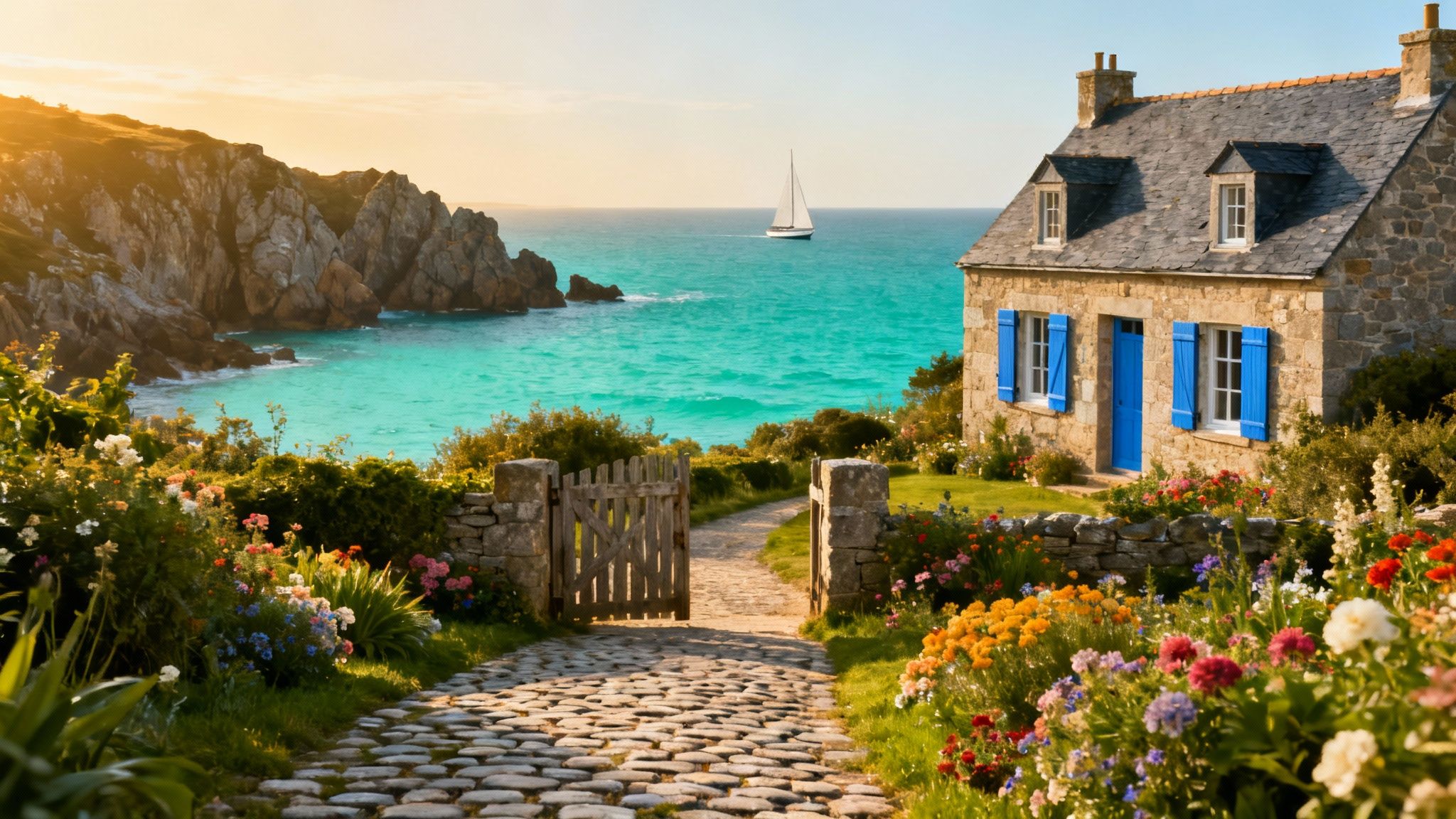
Picture this: waking up to the crisp sea air on a rugged coastline, or maybe sipping your morning coffee in the quiet courtyard of a centuries-old stone cottage. That vision is more than just a dream—it's a very real possibility. The market for France Brittany houses for sale offers a rare mix of affordability, stability, and an unbeatable quality of life that keeps pulling in buyers from all over the world.
Why Choose Brittany For Your French Dream Home
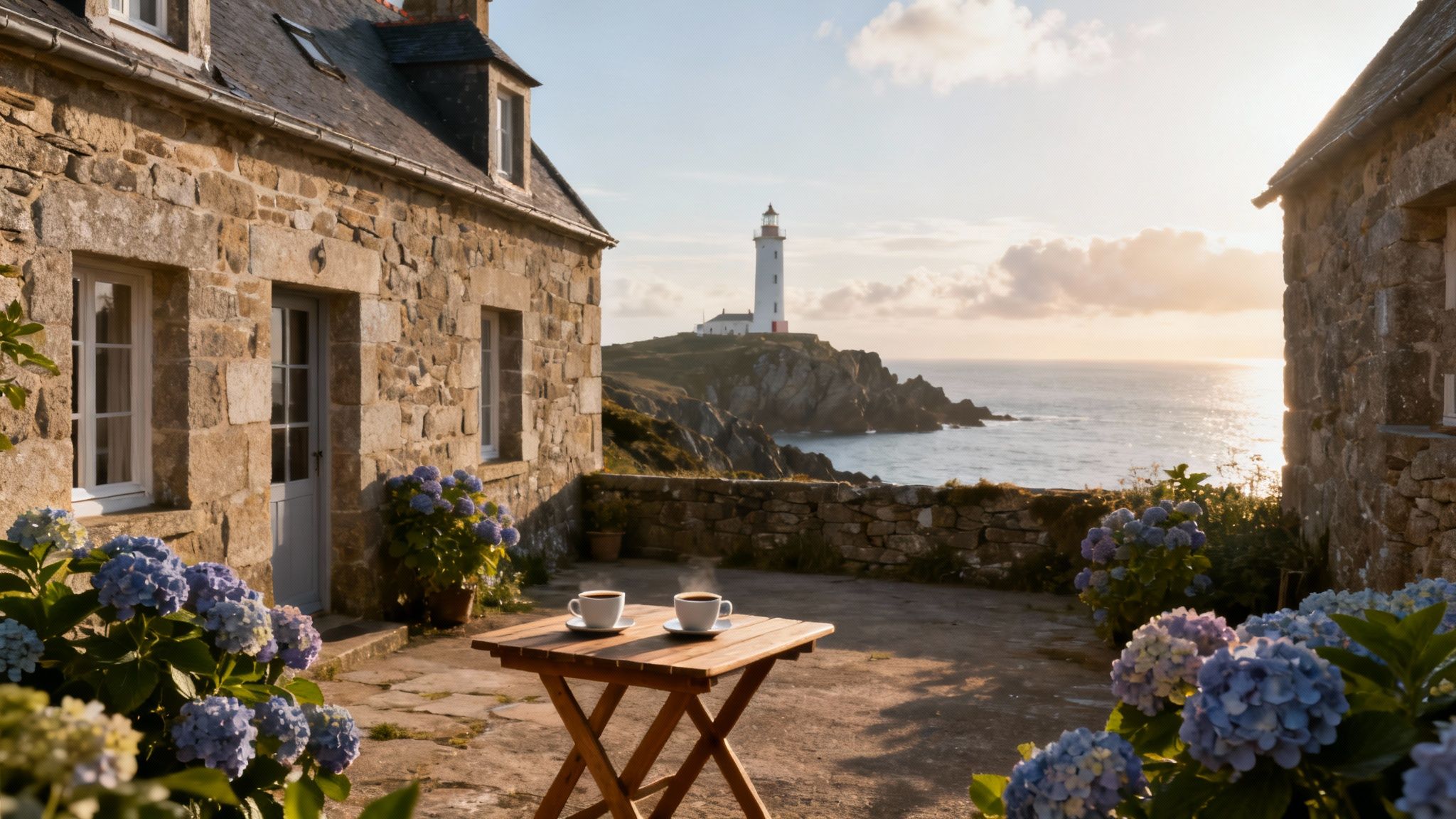
Brittany, or Bretagne as the French call it, is more than a place on a map; it's a feeling. It's a land steeped in ancient Celtic traditions, with dramatic coastlines giving way to charming medieval towns that feel like they’ve been pulled straight from a storybook. For anyone searching for their perfect French home, Brittany makes a compelling argument, blending authentic culture with modern, easy living.
Unlike the frenetic, high-priced property markets you'll find elsewhere in France, Brittany offers a breath of fresh air and incredible value. It's a place where a stone farmhouse brimming with character can cost the same as a tiny apartment in a major city. That perfect balance makes it a fantastic choice for families, retirees, and investors.
The table below breaks down exactly what makes this region so appealing to international buyers.
Why International Buyers Choose Brittany
| Key Attraction | What This Means For You |
|---|---|
| Affordable Property Prices | Your budget goes further, allowing you to afford a larger home, more land, or a better location than in other popular French regions. |
| Stable Real Estate Market | A solid investment that holds its value, giving you peace of mind whether you're buying a forever home or a holiday property. |
| Unique Lifestyle | You get to immerse yourself in a rich culture connected to the sea, history, and nature. It's a slower, more meaningful way of life. |
| Excellent Accessibility | Easy travel to and from the UK, Ireland, and mainland Europe via ferries and regional airports makes visiting friends and family a breeze. |
| Strong Second-Home Market | A popular destination for holidaymakers means there's great potential for rental income if you're not living there year-round. |
From the financial security to the day-to-day experience, Brittany truly delivers on its promise of a better, more fulfilling lifestyle.
A Stable and Welcoming Property Market
The region's property market has proven itself to be remarkably resilient. By the end of 2024, median prices settled at a stable €2,749 per square meter, which speaks volumes about its lasting appeal. It’s also a magnet for holidaymakers—a significant 12% of all properties here are second homes, well above the national average of 9%.
This stability is a huge plus for buyers. It means your investment isn't likely to be caught up in wild market swings, making the decision to buy here a smart move for both your lifestyle and your finances.
The real magic of Brittany is its ability to offer a genuine slice of French life without the eye-watering price tag. It’s an investment in a way of living, where community, nature, and history are just part of your daily routine.
Lifestyle and Accessibility
Beyond the market numbers, it's the lifestyle that truly seals the deal. From the windswept cliffs of Finistère to the sheltered, turquoise bays of the Morbihan, the landscape is endlessly beautiful and diverse. Life here is deeply connected to the sea, the land, and the rhythm of the seasons. For many, this offers a welcome escape and a much higher quality of life, a key consideration when weighing the pros and cons of retiring in France.
What makes Brittany especially appealing to international buyers is just how easy it is to get to. With major ferry ports in Saint-Malo and Roscoff, plus airports in Rennes and Brest, the region is incredibly well-connected to the UK, Ireland, and the rest of Europe. Your French dream home is never more than a short trip away.
Getting to Grips with the Brittany Property Market
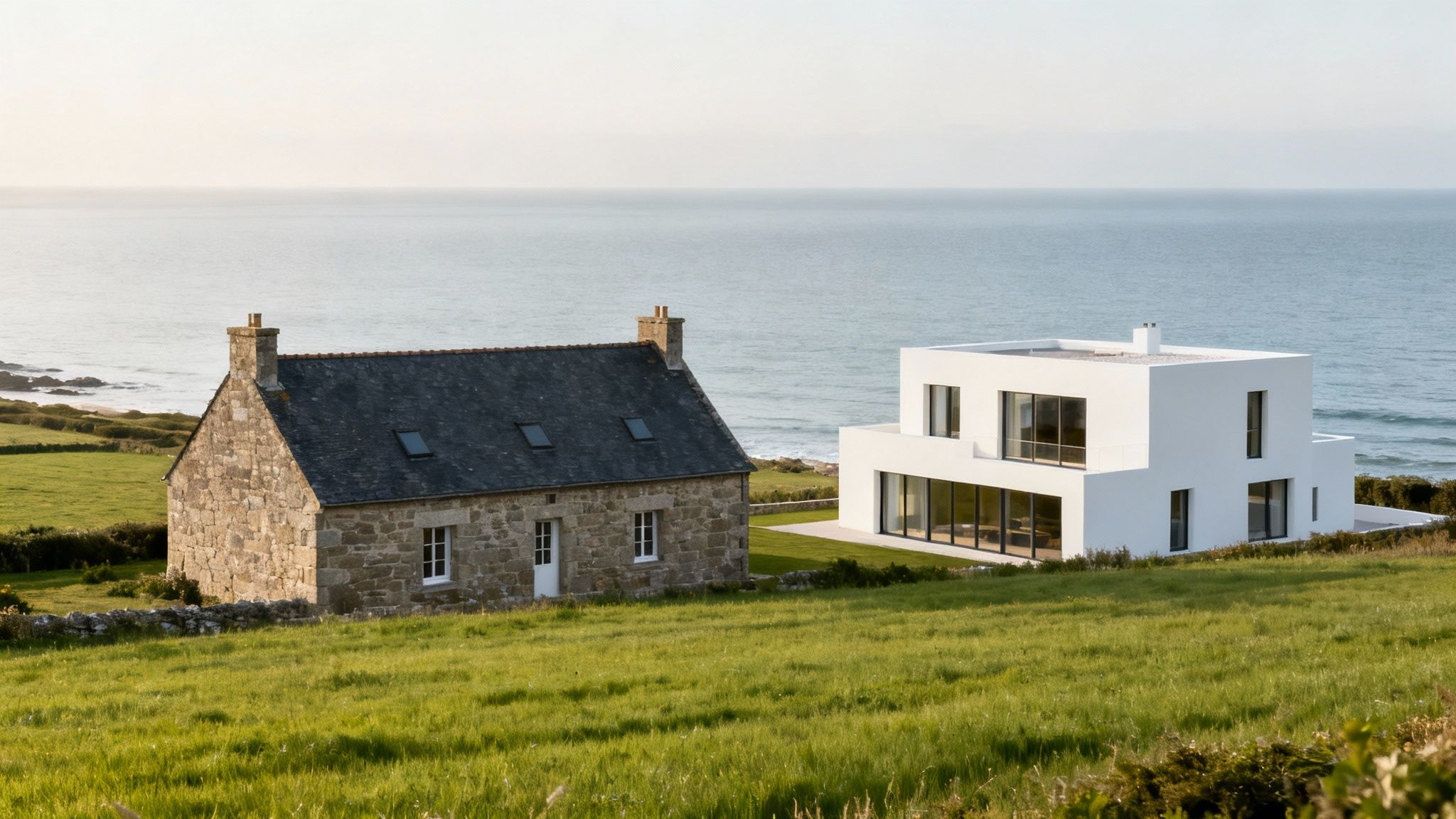
Stepping into a new property market can feel a bit like sailing in uncharted waters. To find the right France Brittany houses for sale, you need a good map and a reliable compass. Think of Brittany’s real estate market as a sturdy ship that holds its course, even in choppy seas. While other French regions can get tossed around by dramatic price swings, Brittany is known for its remarkable stability.
That resilience is a huge plus for international buyers. It means your investment is less likely to be rocked by volatile market shifts, so you can plan your budget with a whole lot more confidence. Getting a feel for this dynamic is the first step to spotting a genuine opportunity when it comes along.
What's Happening in the Market Right Now?
Brittany's property market has a long track record of steady, sustainable growth—no dramatic booms and busts here. That trend is holding strong, proving just how much enduring appeal the region has, even when other areas hit a rough patch. For anyone looking for a secure long-term investment, this is a massive advantage.
The latest numbers really tell the story. While some parts of France have seen sharp price corrections, Brittany has held its ground beautifully. In early 2025, for example, the region saw a modest +2.64% year-on-year price growth. That might not sound like much, until you compare it to the -25.11% drop in neighbouring Normandy. It really highlights Brittany's unique market strength.
And people are still buying. With 23,371 property transactions and only a tiny -2.89% dip, the market is still very much alive and kicking. You can dig into the specifics of these French property price trends to see just how well the region is doing. This all adds up to a balanced environment for buyers—you won't find fire-sale prices, but you will find fair value where sensible offers are taken seriously.
Brittany offers a property market grounded in real-world demand, not speculation. People come here for the lifestyle, the culture, and the scenery—and those are the things that give a property its long-term value.
A Look at the Different Types of Homes You'll Find
One of the best parts about house-hunting in Brittany is the sheer variety on offer. The region’s rich history is literally built into its architecture, so there’s something for every taste and budget. You’re not just buying a house; you’re buying a little piece of Breton heritage.
Let's break down some of the classic styles you'll come across:
- Longère: This is the quintessential Breton farmhouse. It’s a long, rectangular stone building, usually found out in the countryside. Many have been beautifully renovated to mix that rustic charm—think exposed stone and chunky wooden beams—with modern comforts.
- Penty: A small, traditional stone cottage, almost always with a slate roof. These are absolutely charming and make perfect holiday homes or cozy, low-maintenance retreats.
- Maison de Maître: Literally a "master's house," these are elegant, substantial homes that once belonged to local dignitaries. They feel grand, with high ceilings and large windows, and you'll typically find them in or near towns.
- Coastal Villas: Dotted along the incredible shoreline, you'll find everything from traditional seaside homes to sleek, modern villas with panoramic ocean views. They're highly sought after for both their location and rental potential.
- Neo-Breton Houses: Built mostly from the 1960s onwards, these are more modern homes that borrow from traditional Breton style, using slate roofs and granite details but with contemporary layouts and amenities inside.
This amazing diversity means you can really tailor your search. Whether you're dreaming of restoring an old farmhouse or waking up to sea views in a modern villa, the options are there. The trick is to balance what you want aesthetically with the practical stuff, like location, potential renovation work, and, of course, your budget.
Exploring Where To Buy In Brittany
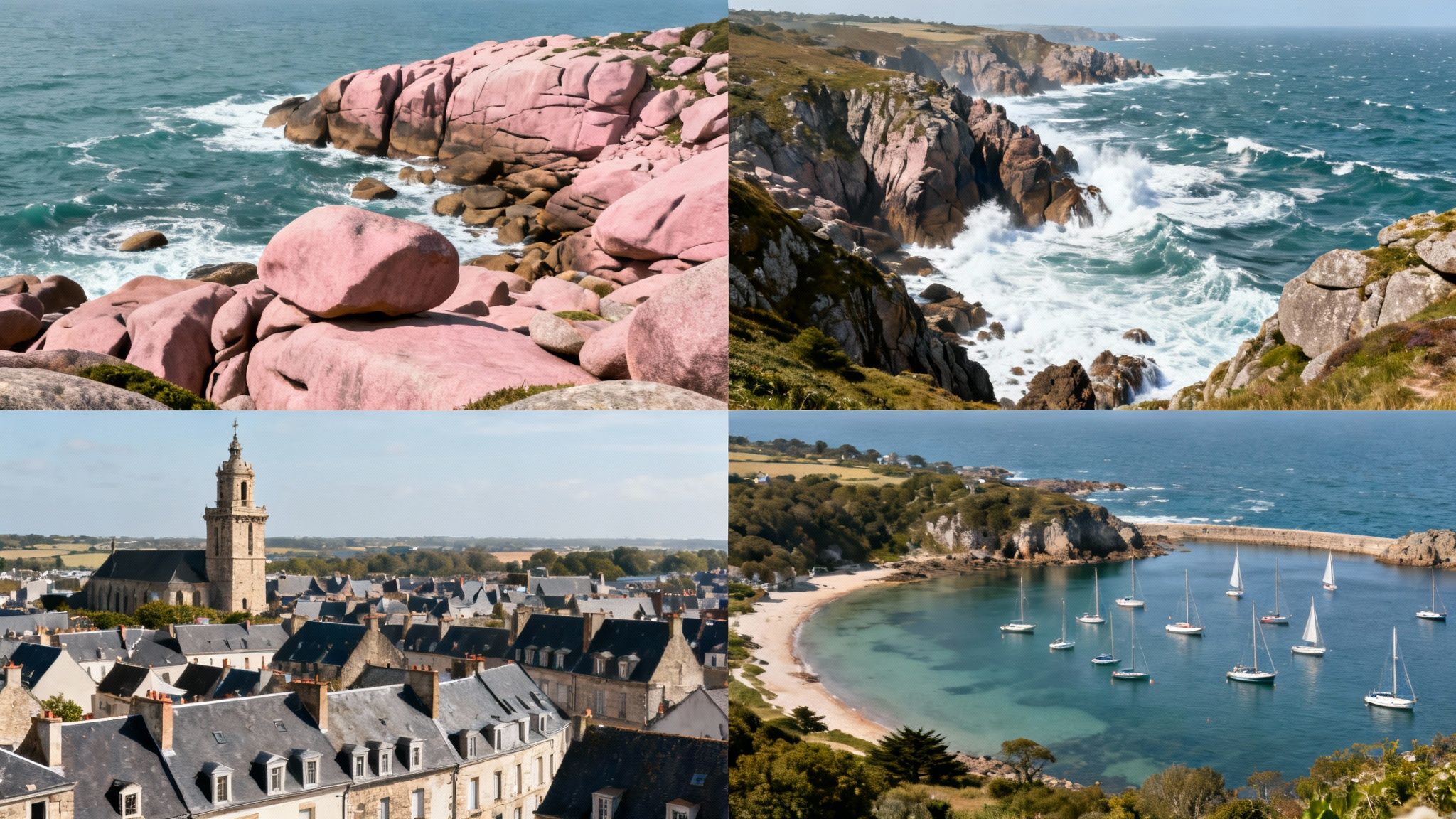
So, you've set your heart on Brittany. That's a fantastic first step. But now comes the real adventure: deciding where in this magnificent region you want to call home. Brittany isn't a single, uniform place; it's a mosaic of four distinct departments, each with its own character, landscape, and property market.
Think of it as choosing a path on a hike. Each trail leads through beautiful scenery, but one will perfectly match your pace and what you want to see. We’ll walk through each department—Côtes-d'Armor, Finistère, Ille-et-Vilaine, and Morbihan—to help you find your perfect fit in your search for France Brittany houses for sale.
Côtes-d'Armor: The Historic Coastline
Home to the breathtaking Pink Granite Coast (Côte de Granit Rose), Côtes-d'Armor (22) is all about dramatic shorelines steeped in history. Its name literally means "coast of the sea," and it delivers with rugged cliffs, hidden sandy coves, and postcard-perfect port towns. You can almost feel the echoes of ancient mariners and swashbuckling privateers.
Head inland, and the landscape softens into rolling green hills and serene river valleys. This is where you'll find some of Brittany's most beloved medieval towns, like Dinan, whose half-timbered houses and cobblestone streets feel like a step back in time.
From a buyer's perspective, this department often represents fantastic value, especially when you compare it to the south. Traditional stone farmhouses (longères) and charming village homes are plentiful and often more affordable than in neighboring areas.
- Key Towns: Dinan, Saint-Brieuc, Perros-Guirec, Paimpol.
- Lifestyle: A dream for history buffs, sailing enthusiasts, and anyone seeking a quieter coastal life deeply connected to Breton culture.
- Average House Price: Around €2,405 per m².
Finistère: Where The Land Ends
Welcome to the wild heart of Brittany. Finistère (29), or "Land's End," is where the continent meets the full force of the Atlantic. It’s a place of raw, untamed beauty—windswept peninsulas, towering cliffs, and a mystical atmosphere that has captivated artists for centuries. This is arguably the most traditionally Breton part of the region, where the Breton language still thrives.
The department offers a coast of two halves: the wild, rugged Atlantic shore to the west and the more sheltered bay around the naval city of Brest. The interior is a landscape of myth, with ancient forests and moody moorland. Towns like Quimper and Locronan are cultural hotspots, bursting with Breton art and architecture.
This is the spot for buyers who crave adventure and an authentic connection to Celtic Brittany. The property market reflects this diversity, with everything from remote coastal cottages to grand townhouses in bustling cultural hubs.
Finistère offers a powerful sense of escape. It’s for those who don’t just want to see the ocean but feel its energy, who want to walk ancient trails, and who find beauty in a landscape that's both dramatic and serene.
Ille-et-Vilaine: The Urban Heartbeat
Centered around its vibrant capital, Rennes, Ille-et-Vilaine (35) is the economic engine of Brittany. It acts as the region's main gateway, boasting a TGV link that can get you to Paris in under two hours. That accessibility makes it a magnet for professionals and anyone wanting a perfect mix of dynamic city life and peaceful countryside.
While its coastline is the shortest of the four, it packs a punch with the magnificent walled city of Saint-Malo and the chic resort town of Dinard. Venture inland, and you'll discover a gentle, pastoral landscape of forests and tranquil rivers, offering countless rural retreats just a short drive from the city buzz.
Property prices here are the highest in Brittany, especially in and around Rennes and along that coveted slice of coast. The trade-off? A strong rental market and economic stability, making it a very solid place to invest.
Morbihan: The Sheltered Southern Gem
Known for its milder microclimate, Morbihan (56) is defined by the stunning Golfe du Morbihan, a vast inland sea sprinkled with islands. The name itself means "little sea" in Breton, and this sheltered bay gives the department its unique character. Its calm waters are a paradise for sailing, kayaking, and island hopping.
The southern coastline is lined with beautiful sandy beaches and popular resort towns. Deeper inland lies the legendary Brocéliande Forest, the mythical home of King Arthur and Merlin. The medieval city of Vannes, with its ancient walls and lively marina, is a true highlight.
Thanks to its sunshine and scenery, Morbihan is a top destination for both holidaymakers and retirees. This popularity means its property market is one of the most sought-after in Brittany, with prices to match—especially for homes with a sea view or direct water access.
Comparing Brittany's Departments For Property Buyers
Choosing between these four fantastic departments can be tough. To make it a little easier, here’s a quick comparison to help you match an area to your budget, lifestyle, and what you’re looking for in a Breton home.
| Department | Typical Vibe | Average Price Range (per m²) | Best For |
|---|---|---|---|
| Côtes-d'Armor | Historic, rugged, authentic | €1,900 - €2,900 | Value seekers, history lovers, and those wanting a dramatic coastline. |
| Finistère | Wild, traditional, artistic | €1,800 - €2,800 | Nature lovers, adventurers, and buyers seeking an authentic Celtic experience. |
| Ille-et-Vilaine | Urban, connected, dynamic | €2,500 - €4,000+ | Professionals, investors, and those wanting easy access to both city and country. |
| Morbihan | Sunny, chic, nautical | €2,400 - €3,800+ | Retirees, boaters, and buyers prioritizing a milder climate and seaside lifestyle. |
Ultimately, the best department is the one that feels right for you. Whether you're drawn to the wild coast of Finistère or the sunny bays of Morbihan, each corner of Brittany offers a unique way of life just waiting to be discovered.
The Buying Process For International Buyers
Buying a home in France is an exciting prospect, but be prepared for a process that's likely quite different from what you're used to. It's less of a quick handshake deal and more of a formal, three-act play, meticulously choreographed to protect everyone involved. Getting the rhythm of this process right is the key to a smooth journey from browsing Brittany houses to finally holding the keys.
The whole affair is overseen by a legal expert called a notaire. Don't think of them as your personal lawyer; they're a neutral, state-appointed official whose job is to ensure the sale is completely above board for both you and the seller. Their role is absolutely central.
Step 1: Making An Offer
So, you've found the one among the many beautiful France Brittany houses for sale. Your first move is to make a formal written offer, or offre d'achat. This isn't a casual note; it's a serious document stating the price you're willing to pay.
Once the seller signs your offer, you have a legally binding agreement on the price. That means you can't just walk away without a very good reason. It's smart to include a few escape clauses, known as clauses suspensives, such as making the deal contingent on you securing a mortgage.
Step 2: The Initial Sales Agreement
With your offer accepted, things get more serious. The next step is signing the initial sales contract, most commonly the Compromis de Vente. This is a far more detailed document prepared by the notaire, spelling out every single term of the sale in black and white.
When you sign the Compromis, you'll also hand over a deposit, usually between 5-10% of the purchase price. Don't worry, this money doesn't go to the seller; it's held safely in the notaire's client account.
This is the real point of commitment. Once the Compromis de Vente is signed, the seller is locked in. They can't accept a higher offer or change their mind.
But as the buyer, French law gives you a crucial safety net: a 10-day cooling-off period. This starts the day after you receive the fully signed contract. During these ten days, you can pull out for any reason at all—no questions asked—and get your full deposit back.
Step 3: The Final Act Of Sale
The grand finale is the signing of the Acte de Vente, the final deed of sale. This usually takes place two or three months after the Compromis, giving the notaire plenty of time to conduct all the necessary legal searches and checks on the property's history.
On the big day, you'll meet the seller and the notaire to sign the final stack of documents. At this point, you'll transfer the rest of the money, along with the notaire’s fees and taxes (the frais de notaire). The moment the ink is dry, the property is yours. Congratulations, you get the keys!
Getting the finances in order is just as critical as knowing the legal steps. For international buyers, here’s what you need to have on your radar:
- Getting a Mortgage: If you need a loan, try to get a mortgage pre-approval (an accord de principe) before you even start looking. It proves to sellers you're a serious contender.
- Currency Exchange: Exchange rate swings can add or subtract thousands from your final cost. It's almost always better to use a specialist currency exchange service rather than your regular bank. They offer much better rates.
- Closing Costs: The frais de notaire are the main closing cost. This isn't just the notaire's payment; it bundles in various property taxes and duties. As a rule of thumb, budget around 7-8% of the purchase price for an older home.
This structured approach gives everyone clarity and security. For a deeper dive, our complete guide to buying a home in France breaks it down even further. By understanding these stages, you can approach your Brittany property hunt with real confidence.
Renovation and Rental Opportunities in Brittany
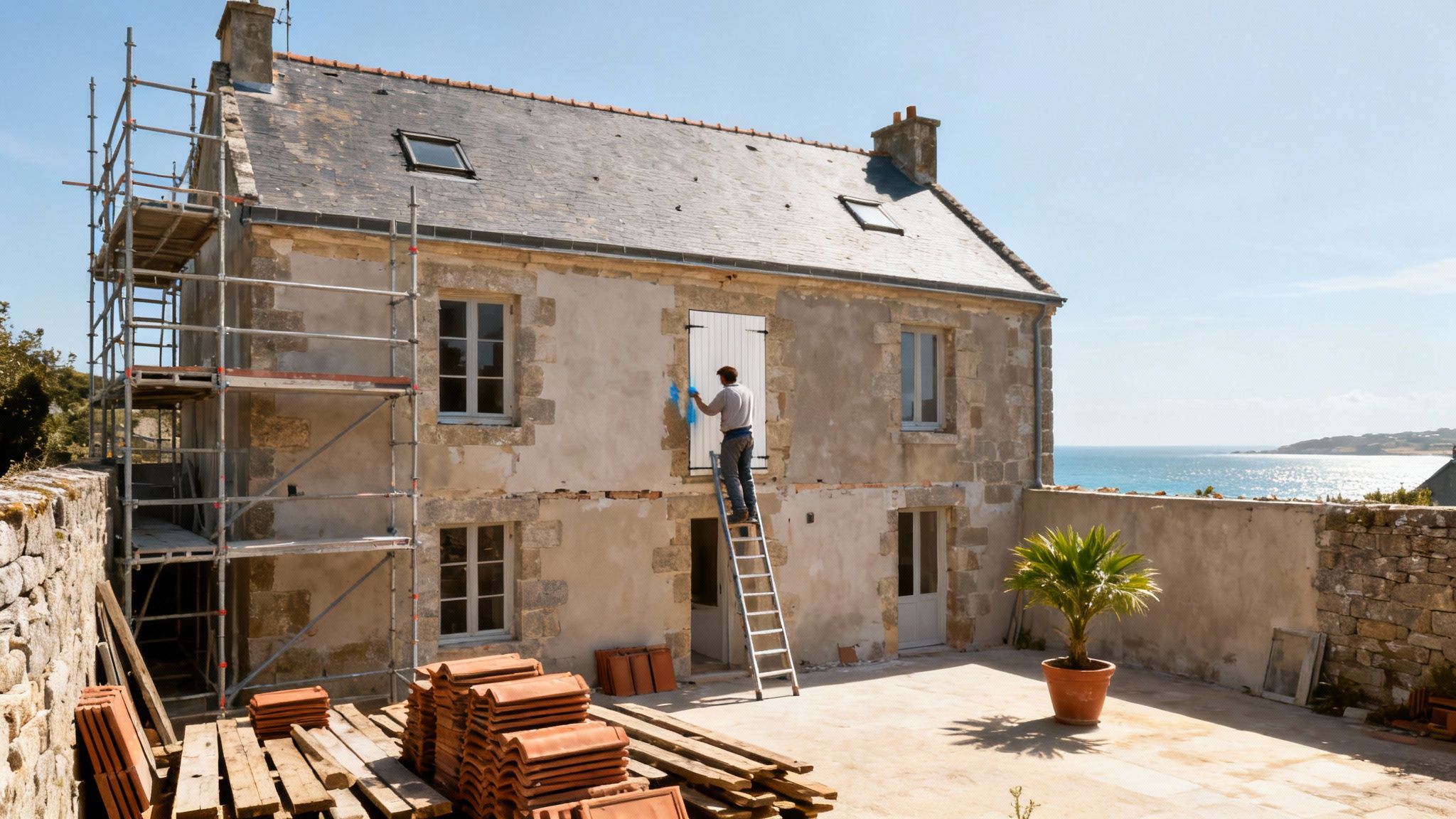
Searching for France Brittany houses for sale isn't just about finding a new home—it can be a very shrewd financial decision. Brittany is brimming with opportunities, whether you're dreaming of a hands-on renovation project or looking to generate a steady income from rentals. A property here can become an asset that helps pay for your new life in France.
So many of us are captivated by the romance of a "fixer-upper," or maison à rénover. These properties, often charming old stone cottages (pentys) or long farmhouses (longères), are a chance to restore a piece of Breton history while building real value.
Tapping Into Renovation Potential
Taking on a renovation project in Brittany is your chance to create a home that's truly yours, perfectly blending authentic character with modern comforts. It's an exciting prospect, but you absolutely have to go in with a clear-eyed plan.
Before you even think about making an offer, get quotes from local artisans. A registered French builder can give you a devis (a detailed, binding estimate), which is non-negotiable for budgeting properly. Be sure to factor in all the big-ticket items:
- Structural Work: This means the roof (toiture), walls (murs), and foundations. No cutting corners here.
- Systems Upgrades: It's very common to need to update the electrics, plumbing, and install a modern septic tank (fosse septique) to meet current standards.
- Finishing Touches: This is the fun part, but it all adds up—insulation, windows, kitchens, and bathrooms.
A well-managed renovation doesn’t just create your dream home; it can dramatically increase its market value. The trick is to balance your creative vision with a realistic budget and a sensible timeline.
Capitalizing on the Strong Rental Market
Brittany’s status as a top tourist destination creates a fantastic market for holiday lets, known in France as gîtes. With its breathtaking coastline, historic towns, and lively cultural festivals, the region draws millions of visitors every year. This translates into consistent demand for good quality rental accommodation.
This is a brilliant opportunity for property owners to generate an income stream. A successful rental often comes down to a few key things: a great location (close to the coast or a popular town), desirable amenities (like a pool or a beautifully equipped kitchen), and smart marketing with professional-looking photos.
Getting the numbers right is essential. Prices in Brittany have held up well, and with property transaction volumes across France bouncing back, it points to a healthy, recovering market where buyers still have some negotiating power. This stability makes Breton property a resilient asset. You can read more about these trends in the French property market analysis for summer 2025.
To figure out if a potential rental will actually be profitable, you have to look past the purchase price. By weighing your expected rental income against all the running costs—maintenance, insurance, and local property taxes like the taxe foncière—you can get a true picture of your investment's potential. For a step-by-step guide, have a look at our article on how to calculate rental yield.
Whether for your own enjoyment or for profit, these opportunities make buying in Brittany an even more compelling idea.
Got Questions About Buying in Brittany? We've Got Answers
As you get closer to finding that perfect stone cottage or seaside villa, a few practical questions are bound to pop up. Let's tackle some of the most common ones we hear from international buyers looking for France Brittany houses for sale, giving you the clear, straightforward answers you need.
What Are The Main Annual Property Taxes?
Once you're a homeowner in France, you'll have two local property taxes to factor into your annual budget. They're pretty straightforward once you know what they are.
- Taxe Foncière: Think of this as the basic "ownership tax." Every property owner pays it, whether you live there full-time, part-time, or not at all. The amount is set by your local council (commune) and is based on the property's theoretical rental value.
- Taxe d’Habitation: This is a "residency tax." While it's been phased out for main homes in France, it is still payable on second homes. For almost all international buyers, your Breton getaway will be classed as a second home, so plan on paying this one.
You'll get the bills for these each year, usually in the autumn.
Do I Really Need A French Bank Account?
In a word, yes. While it's not a strict legal requirement for the property purchase itself, trying to manage your life in France without one is a recipe for frustration. A French bank account is practically essential.
You’ll need it for everything from setting up utilities like electricity and internet to paying your local taxes and managing rental income. Getting an account sorted early in the process will save you a world of administrative pain and expensive international transfer fees later. It’s a simple step that makes life so much easier.
Can I Get A Mortgage As A Non-EU Citizen?
Absolutely. French banks are quite accustomed to lending to non-EU buyers, including applicants from the UK, US, and Canada, as long as you have your financial ducks in a row. The application process is very similar to that for EU citizens, though you should be prepared to provide more detailed financial documents, professionally translated into French.
The key difference is the deposit. Be ready to put down a bit more, typically around 20-30% of the purchase price. French lenders see this as a sign of your commitment and it makes you a much stronger candidate in their eyes.
Does Buying A Property Give Me Residency?
This is a big one, and the answer is a clear no. Buying a house in France, beautiful as it may be, doesn't automatically give you the right to live there. Property ownership and immigration status are two completely separate things.
If you’re from outside the EU and want to spend more than 90 days in any 180-day period at your Brittany home, you must apply for a long-stay visa. You'll need to do this through the French consulate in your country of residence, so make sure to start that process well before you plan to move.
Ready to stop dreaming and start searching? At Residaro, we make it easy to explore a curated selection of beautiful homes across Brittany and the rest of Europe. Begin your journey today and find the property that's waiting for you at https://residaro.com.