Retiring in France Pros and Cons: A 2026 Guide

Retiring to France conjures vivid images of sun-drenched vineyards, bustling market days, and leisurely café mornings spent watching the world go by. The romantic ideal is a powerful motivator for many, but the practical reality involves a complex interplay of incredible rewards and significant challenges. For anyone seriously considering this life-changing move, a clear-eyed view is essential. This comprehensive guide moves beyond the charming clichés to offer a balanced, practical look at the retiring in france pros and cons.
We will delve into the critical details that truly define the expatriate experience. You will gain actionable insights on navigating the world-class (but often complicated) healthcare system, deciphering the specific visa and residency requirements for non-EU citizens, and understanding how the cost of living varies dramatically from a chic Parisian apartment to a rustic farmhouse in the Dordogne. This is not just a high-level overview; it's a detailed breakdown of the financial, administrative, and cultural factors you must consider.
This listicle is structured to provide clarity and depth on key topics, including:
- Healthcare: Quality, access, and actual costs for retirees.
- Finances: Pension taxes, property ownership, and regional living expenses.
- Integration: The language barrier, French bureaucracy, and building a new social life.
Ultimately, this guide provides the crucial information needed to weigh the dream against the reality. It is your first step towards making a well-informed decision about your potential new life in l'Hexagone, ensuring your retirement plans are built on a solid foundation of knowledge.
1. Healthcare System Quality and Accessibility
One of the most significant advantages of retiring in France is its world-renowned healthcare system. Consistently ranked among the best globally, the Système de Santé offers a high standard of care through a hybrid public-private model. For retirees, this means access to excellent doctors, modern facilities, and comprehensive coverage once you are integrated into the system.

The system operates on the principle of universal coverage, funded primarily through social security contributions. Once you become a legal resident and register with the Protection Universelle Maladie (PUMA), the state typically reimburses around 70% of medical costs, with the remainder often covered by affordable top-up private insurance known as a mutuelle.
Navigating Access as an Expat
While the quality is a major pro, the con for new arrivals is the administrative process required to gain access. You must first secure a long-stay visa and establish legal residency, a process that can take several months. Until you are officially in the system, you must have private health insurance that meets French visa requirements.
For instance, an American couple aged 65+ retiring to a village in the Dordogne would need comprehensive private insurance for their first year. After establishing residency, they could apply for PUMA and then purchase a mutuelle for around €100-€150 per person per month to cover the remaining costs. Exploring healthcare is a key step when you compare France with other top retirement destinations; you can read more about how European healthcare systems stack up on our blog post detailing the best places to retire in Europe.
Actionable Tips for a Smooth Transition
To ensure continuous coverage and a seamless integration, consider these practical steps:
- Register Immediately: Begin the PUMA application process as soon as you receive your residency permit (carte de séjour).
- Budget for Initial Costs: Plan for private insurance costs for at least the first three to six months. A budget of €200-€400 per person per month is a safe estimate for comprehensive coverage.
- Learn Key Terminology: Familiarize yourself with basic French medical terms like médecin traitant (primary care doctor) and carte vitale (health card).
- Engage a Specialist: Consider hiring an expat healthcare advisor to help navigate the paperwork and find the right mutuelle for your needs.
2. Cost of Living Variations by Region
One of the most appealing pros of retiring in France is the potential for an affordable lifestyle, especially when compared to countries like the US, UK, or Australia. However, the cost of living varies dramatically across the country. While Paris and the French Riviera are notoriously expensive, vast swathes of rural and provincial France offer a high quality of life on a modest budget.
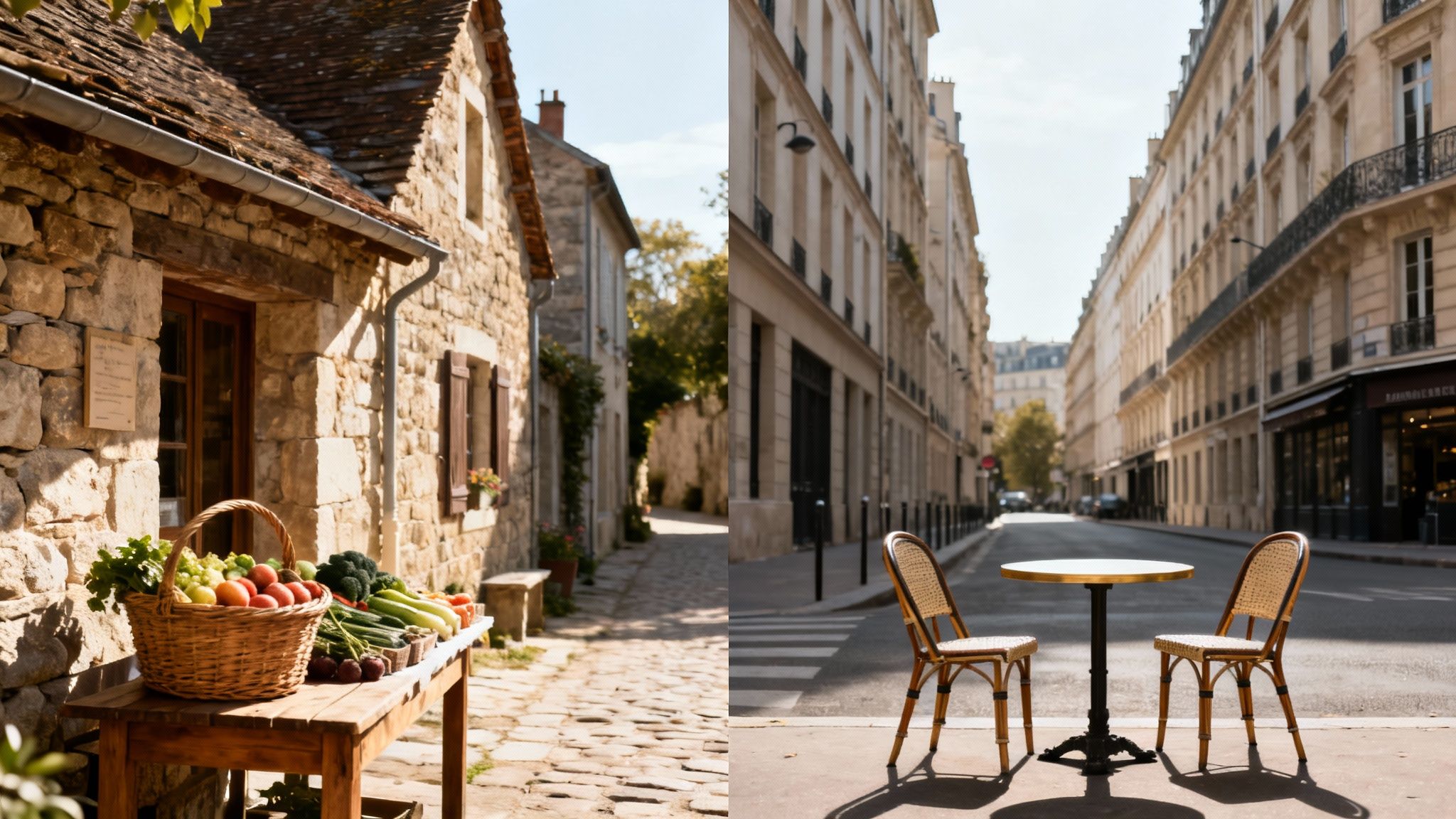
This regional disparity allows retirees to tailor their location to their financial situation. The pro is that a modest pension can go a long way in the right area, while the con is that underestimating the costs in a high-demand location can quickly drain your retirement funds. A strategic choice of region is therefore a critical factor in any analysis of retiring in France pros and cons.
Navigating Access as an Expat
Understanding these regional differences is key to a successful retirement. A couple could live comfortably on €1,500 per month in a charming village in the Dordogne (Nouvelle-Aquitaine), enjoying local markets and a relaxed pace. In contrast, British pensioners in a Riviera town like Nice might find they need over €2,500 per month to cover rent, dining, and social activities.
The primary con for new arrivals is misjudging these costs. Groceries, utilities, and transport are generally consistent, but housing prices and dining out are the main drivers of the disparity. Renting before buying is a common strategy to truly grasp the local economic landscape before making a significant property investment.
Actionable Tips for a Smooth Transition
To find a region that matches your budget and lifestyle, consider these practical steps:
- Explore High-Value Regions: Start your search in areas known for affordability and a strong expat community, such as Nouvelle-Aquitaine, Occitanie, or parts of Brittany.
- Budget for a Non-Parisian Lifestyle: Plan for a monthly budget of €1,200-€1,800 per person for a comfortable life outside of the major metropolitan hubs.
- Rent Before You Buy: Live in a target area for at least six months to a year to understand the true day-to-day and seasonal costs, including winter heating expenses.
- Use Regional Calculators: Utilize online cost-of-living calculators that allow you to compare specific French cities and towns, not just the national average.
3. Visa and Residency Requirements for Non-EU Citizens
For non-EU citizens, navigating the visa and residency process is a significant consideration when evaluating the pros and cons of retiring in France. The primary route is the visa de long séjour valant titre de séjour (VLS-TS) mention visiteur (long-stay visitor visa), which allows you to stay for up to a year without the right to work. This process is a clear con due to its complexity and strict requirements.
Applicants must provide substantial documentation, including proof of accommodation, comprehensive private health insurance, and a letter promising not to seek employment. Critically, you must also demonstrate sufficient and stable financial resources, equivalent to the French minimum wage (SMIC), which is around €1,400 net per month per person. This financial threshold can be a hurdle for some retirees.
Navigating Access as an Expat
The administrative journey doesn't end upon arrival. Once in France, you must validate your visa and, before it expires, apply for a residency permit (carte de séjour). This can be a lengthy, bureaucratic process requiring patience and meticulous record-keeping. Post-Brexit, UK citizens now face these same non-EU hurdles, a stark change from their previous freedom of movement.
For instance, an American retiree moving to Provence must first apply at the designated French consulate in the US. Upon arrival, they validate their visa online and then, after a year, apply at their local préfecture for a renewable residency card. After five years of continuous legal residence, they can apply for a 10-year residency card, which offers greater long-term stability. The intricacies of this process are a key part of planning your move, and you can explore more about what's required in our guide on how to retire abroad.
Actionable Tips for a Smooth Transition
To navigate the French immigration system successfully, a proactive and organized approach is essential:
- Prepare Documentation Early: Begin gathering all necessary financial statements, proof of pension, and other required documents at least six months before your intended application date.
- Secure Proper Insurance: Purchase a private health insurance policy that explicitly meets the requirements for a French long-stay visa for the entire first year.
- Budget for Professional Help: A budget of €1,500-€3,000 to hire an experienced French immigration lawyer can save significant time and prevent costly mistakes.
- Join Expat Forums: Online communities for expats in France offer up-to-date, firsthand advice on navigating the visa process at specific préfectures.
4. Language Barrier and Integration Challenges
While the romantic image of French life is a powerful draw, one of the most significant cons for many retirees is the language barrier. Outside of major tourist hubs like Paris, English proficiency is considerably lower than in other popular European retirement destinations. A genuine willingness to learn French is not just a courtesy; it is often essential for daily life, from grocery shopping to navigating bureaucracy.
The level of integration you experience will be directly linked to your language skills. Many expats who feel isolated in rural areas cite the language barrier as the primary obstacle to building a fulfilling social life. Conversely, those who actively pursue fluency often find a warm and welcoming community.
Navigating Access as an Expat
The reality of retiring in France pros and cons is that your social success hinges on communication. An American retiree in a Provençal village who dedicated a year to intensive language study before and after their move is far more likely to integrate successfully than someone who relies solely on translation apps. Programs like those offered by Alliance Française have proven highly effective in helping expats achieve the functional fluency needed for true integration.
This challenge is a key differentiator when considering France. While you might manage in Spain or Portugal with less local language proficiency, in France, a lack of French can limit your access to social clubs, local events, and deeper friendships, making daily life feel transactional rather than relational.
Actionable Tips for a Smooth Transition
To overcome the language hurdle and fully embrace French life, consider these practical steps:
- Start Early: Begin intensive French language study at least 6-12 months before your move. Aim for a B1 level for conversational competence.
- Invest in Tutoring: While apps are useful, one-on-one tutoring or group classes provide crucial speaking practice and personalized feedback. Budget €50-€100 per month for sustained learning.
- Join Local Groups: Once in France, enroll in local conversation groups, book clubs, or hobby associations to practice in a real-world setting.
- Embrace Imperfection: The French generally appreciate a sincere effort. Don't be afraid to make mistakes; prioritize communication over perfect grammar, especially for daily interactions.
5. Bureaucracy and Administrative Complexity
Among the most significant cons of retiring in France is its notoriously complex bureaucracy. While the lifestyle is relaxed, the administrative system is anything but. From securing residency to setting up a bank account or utilities, the process often involves extensive paperwork, specific formatting requirements, and multiple visits to different official offices, known as préfectures.
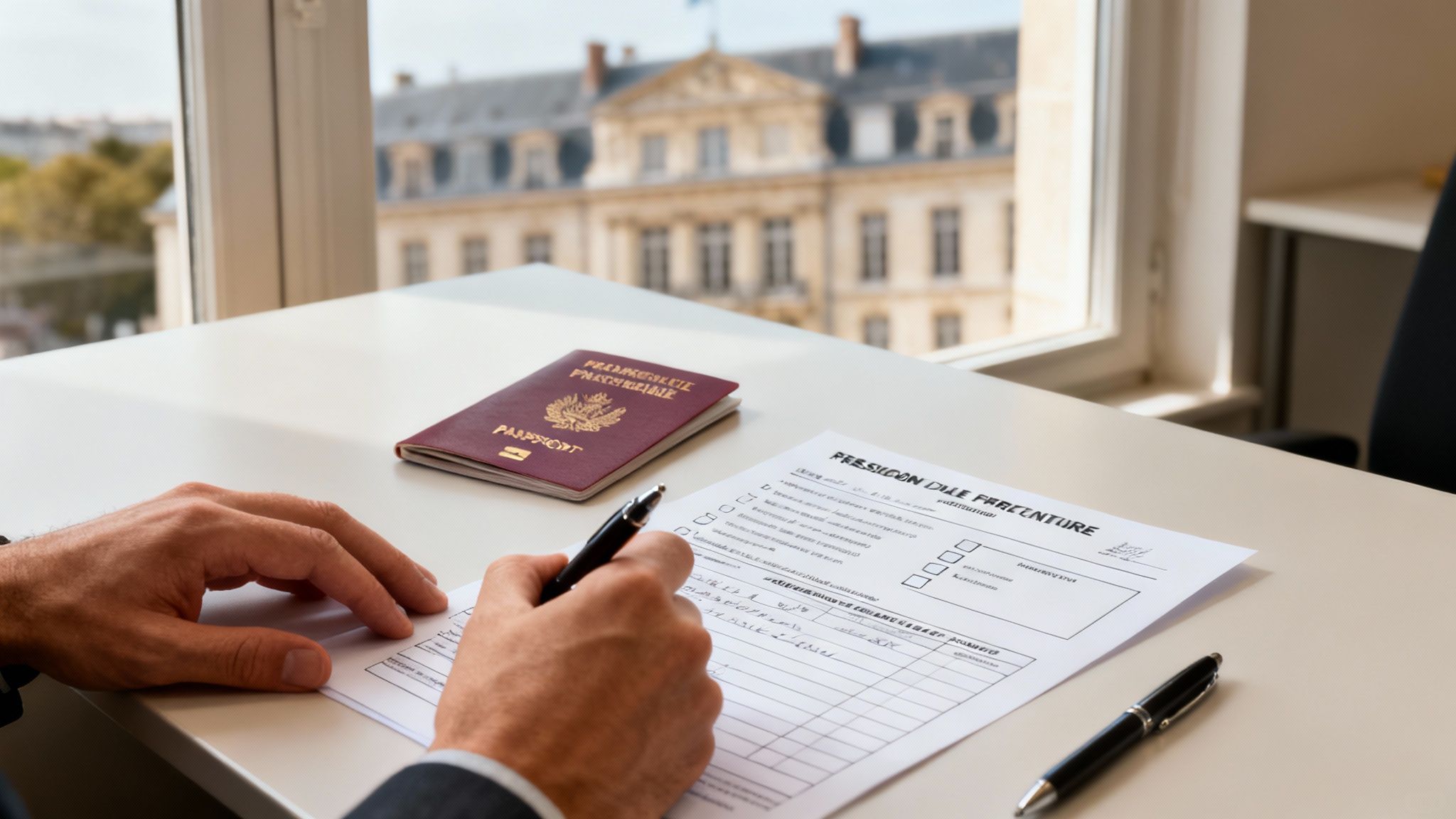
This administrative friction is a common source of frustration for expatriates. The system can seem inflexible and requires patience and meticulous preparation. Seemingly simple tasks can become drawn-out procedures, demanding original documents, certified translations, and strict adherence to protocol.
Navigating the Paperwork Maze
While ultimately manageable, the con for retirees is the sheer time and mental energy required to navigate the system. It is not uncommon for the initial residency registration process to take six to eight months from start to finish. Horror stories circulate about applications being rejected over minor documentation errors, forcing applicants to restart the entire process.
For example, a retired British couple moving to Provence might find their visa renewal requires a specific set of financial documents, while another préfecture just one town over has slightly different requirements. This inconsistency means you must be prepared for anything. Many retirees opt to hire administrative consultants, which can cost between €500 and €1,500, simply to ensure their dossiers are correctly assembled.
Actionable Tips for a Smooth Transition
To minimize stress and avoid common pitfalls, a proactive and organized approach is essential. Consider these practical steps:
- Create a Master File: Scan and keep digital and physical copies of every important document (birth certificates, marriage licenses, passports, financial statements).
- Budget for Professional Help: Set aside €1,500-€3,000 in your relocation budget for a bilingual administrative assistant or relocation specialist. Their expertise can save you months of frustration.
- Embrace Patience and Politeness: A calm and polite demeanor (la politesse) in government offices can make a significant difference. Be prepared for appointments to be delayed or rescheduled.
- Use Online Systems: When possible, use online appointment-booking systems to secure your spot and receive confirmation, reducing unnecessary trips.
6. Culture, Cuisine, and Quality of Life
A significant pro for many considering retiring in France is the unparalleled quality of life, deeply rooted in its rich culture and world-class cuisine. The French lifestyle, or l'art de vivre, emphasizes savoring moments, prioritizing leisure, and building strong community connections. This slower, more intentional pace, combined with abundant holidays and a celebrated café culture, creates an environment perfectly suited for a fulfilling retirement.

From world-class museums in Paris to regional festivals celebrating everything from truffles to lemons, the cultural calendar is endlessly vibrant. The emphasis on high-quality, seasonal food and local wine is not just a stereotype; it is a central part of daily life and social interaction, making every meal an experience.
Embracing the French Pace of Life
The primary pro is the lifestyle itself, but the corresponding con is that assimilation requires a genuine effort to integrate. The social fabric is often woven through local traditions and long-standing relationships, which can take time for newcomers to penetrate. A passive approach may lead to social isolation, a key consideration in the retiring in France pros and cons debate.
For example, a retired couple moving to Provence can thrive by joining local hiking clubs (randonnée), taking art classes, and frequenting the village market. This active engagement allows them to build relationships organically and become part of the community fabric rather than remaining outsiders. Similarly, those in Bordeaux can immerse themselves by joining wine appreciation societies and participating in harvest festivals.
Actionable Tips for a Smooth Transition
To fully embrace the French lifestyle and avoid cultural frustration, focus on active integration from day one:
- Visit First: Spend an extended period in your chosen region before committing to a move to ensure its culture aligns with your expectations.
- Join Local Clubs: Find groups that match your interests, whether it's cycling, book clubs, or local history societies. This is the fastest way to meet like-minded people.
- Embrace Local Events: Make a point to attend village festivals, seasonal markets, and public concerts. Consistent presence helps build familiarity with neighbors.
- Budget for Culture: Earmark funds for dining out, museum visits, and local excursions. A budget of €150-€300 per month can greatly enrich your social and cultural life.
- Learn Regional Traditions: Show interest in the local history and culinary specialties. Asking a shopkeeper about a local cheese or a neighbor about a regional custom is a powerful way to connect.
7. Property Ownership and Real Estate Investment
France presents an attractive and diverse real estate market, a significant pro for many retirees. From charming stone farmhouses in the Dordogne to chic apartments in Nice, the options are vast and often more affordable than in other Western countries. Owning property not only provides stability but can also be a sound long-term investment, with desirable areas like Provence seeing significant appreciation over the last two decades.
The primary advantage is the ability to create a permanent home base while potentially building equity. However, the con lies in the complexity of the French property acquisition process and ongoing ownership responsibilities. Transaction costs are high, and navigating inheritance laws (succession) can be challenging without expert legal advice.
Navigating Access as an Expat
The legal and financial aspects of buying property in France can be daunting for newcomers. The process involves a notaire, a state-appointed lawyer who handles the legal transfer of property, and transaction fees (frais de notaire) typically add 7-8% to the purchase price. Maintenance, property taxes (taxe foncière), and potential wealth taxes must also be factored into your budget.
For instance, an American couple purchasing a €250,000 home in Occitanie should budget an additional €17,500-€20,000 for fees. They would also need to consider French inheritance law, which reserves a portion of an estate for children, and might explore legal structures like an SCI (Société Civile Immobilière) to manage the asset. You can dive deeper into the purchasing process by reading our guide to buying a home in France.
Actionable Tips for a Smooth Transition
To make a smart and secure property investment, consider these practical steps:
- Budget for Total Costs: Factor in an additional 7-8% of the purchase price for transaction fees and budget €5,000-€20,000 annually for maintenance and taxes.
- Hire a Bilingual Lawyer: Engage your own bilingual property lawyer or advisor (€1,500-€3,000) to represent your interests, in addition to the state-appointed notaire.
- Rent Before You Buy: Live in your target region for at least 6-12 months to ensure it’s the right fit before committing to a purchase.
- Plan for Inheritance: Consult with a specialist in international estate planning to understand and prepare for French succession laws to protect your assets.
8. Pension Income Tax and Financial Complexity
One of the most complex aspects of retiring in France is navigating its tax system. France taxes its residents on their worldwide income, which includes foreign pensions, investments, and rental income. This can be a significant financial con for retirees accustomed to simpler or lower-tax jurisdictions, making professional advice almost essential.
The system is progressive, with income tax rates scaling up to 45%. Additionally, most investment and pension income is subject to social charges (prélèvements sociaux) of up to 17.2%. While tax treaties with many countries (like the US, UK, and Canada) prevent double taxation, understanding how they apply to your specific income streams is crucial.
Navigating Access as an Expat
The primary challenge is the steep learning curve and the potential for a higher tax bill if your finances aren't structured correctly. You must declare all global assets and income sources, a process that can be intricate and demanding for newcomers. Failing to plan can lead to unforeseen tax liabilities.
For example, a US retiree with a $50,000 annual pension might find their French tax and social charge liability is significantly higher than what they would pay stateside. However, a British retiree could structure their pension drawdown to stay within lower tax brackets, minimizing their exposure to the top 45% rate. The key is proactive, expert-led financial planning before becoming a tax resident.
Actionable Tips for a Smooth Transition
To manage the financial complexity and minimize your tax burden when retiring in France, consider these steps:
- Consult an Advisor: Engage an international tax advisor familiar with both French and your home country's tax laws before your move.
- Understand Tax Treaties: Review the double taxation agreement between France and your home country to see how your pension, social security, and investment income will be treated.
- Budget for Professional Help: Plan for annual tax preparation costs, which can range from €1,500 to €3,000 for complex returns involving foreign assets.
- File Correctly (US Citizens): Remember that US citizens must continue to file US tax returns and report foreign bank accounts through FBAR/FATCA, regardless of their residency status in France.
9. Healthcare Costs for Pre-Residency and Ongoing Coverage
While the quality of French healthcare is a major draw, understanding the associated costs, especially during the transition phase, is crucial. The primary con is the initial expense before you are integrated into the state system, which requires comprehensive private insurance. This initial outlay is a significant factor when considering the pros and cons of retiring in France.
Once you establish legal residency and join the PUMA system, state coverage kicks in, but it doesn't cover everything. Most residents purchase affordable top-up insurance (mutuelle) to cover co-pays, dental, vision, and specialist fees. The cost of this mutuelle varies based on age and desired coverage level but represents an ongoing expense in your retirement budget.
Navigating Access as an Expat
The initial period before you qualify for state healthcare presents the biggest financial hurdle. You must secure private international health insurance to meet visa requirements, which can be costly. For example, an American retiree might pay €300-€400 per month for this initial coverage.
However, once in the system, the costs drop dramatically. That same retiree's ongoing mutuelle could be just €150 per month. The benefits are tangible; a British retiree might find that their new eyeglasses, costing €120, are almost entirely covered by their mutuelle. Similarly, prescription medications can be significantly cheaper; a drug costing over $300 in the US might only require a €40 co-pay in France.
Actionable Tips for a Smooth Transition
To manage healthcare costs effectively and ensure continuous coverage, focus on planning and timely administration:
- Secure Insurance Early: Arrange your private international health insurance at least three months before your move to avoid any gaps.
- Budget for Both Phases: Plan for €250-€400 per person per month for pre-residency insurance. After residency, budget for a mutuelle costing around €150-€250 per person per month.
- Register Immediately: The moment you have your residency permit, begin the application process for the state healthcare system (PUMA) to minimize the time you rely on expensive private insurance.
- Prepare Medical Records: Keep comprehensive, translated records of any pre-existing conditions and arrange for a sufficient supply of prescription medications before you move.
10. Social Integration and Building Community
While France offers immense cultural richness, one of the more challenging cons of retiring here is the time and effort required to build a deep social network. French society can be more reserved than many Anglo cultures, and friendships tend to develop slowly through shared activities and consistent interaction over time. This cultural nuance means that retirees, especially those without strong language skills, can sometimes face social isolation.
The pro is that once you break through the initial reserve, the connections you make are often profound and lasting. The French value community deeply, but it's built on a foundation of genuine, shared interests rather than spontaneous friendliness. Successfully integrating often hinges on actively participating in local life, a process that can be incredibly rewarding.
Navigating Access as an Expat
The primary challenge is overcoming the initial barrier to entry into established local circles. It requires patience and a proactive approach. An English-speaking couple retiring to a quiet rural village without joining local clubs or learning the language might struggle to connect beyond superficial greetings at the market.
In contrast, a retiree who joins the local club de randonnée (hiking club) or volunteers at the annual village festival will naturally build relationships. In larger cities like Nice or Lyon, established expatriate groups can provide an immediate social safety net, but long-term integration still depends on engaging with the local French community. The path to a fulfilling social life is a clear example of the retiring in france pros and cons; the potential reward is great, but it demands significant personal investment.
Actionable Tips for a Smooth Transition
To build a strong community and avoid isolation, consider these proactive steps:
- Identify Interests Early: Before you move, research local clubs and associations related to your hobbies, whether it's wine tasting, pétanque, or historical societies.
- Be a Regular Presence: Consistently attend local markets, festivals, and café gatherings. Familiarity is the first step toward friendship.
- Invest in Language Skills: Prioritizing French lessons before and after you arrive is the single most effective tool for social integration. A budget of €50-€100 per month for group classes is a wise investment.
- Volunteer Locally: Offering your time to a local charity, school, or event is a fantastic way to meet people and demonstrate your commitment to the community.
Retiring in France: 10-Point Pros & Cons Comparison
| Item | Implementation complexity | Resource requirements | Expected outcomes | Ideal use cases | Key advantages |
|---|---|---|---|---|---|
| Healthcare System Quality and Accessibility | Moderate — residency enrollment and paperwork required | Proof of residency/income, time, basic French, possible short-term private insurance | High-quality, low-cost care after enrollment; limited access initially | Retirees with health concerns planning long-term residency | Universal coverage, excellent facilities, low medication costs |
| Cost of Living Variations by Region | Low — requires regional research and choice | Budgeting, relocation costs, time to rent/try locations | Large regional cost differences; significant savings outside Paris | Retirees seeking affordable living or value for pension income | Lower housing/food costs in provinces, strong purchasing power |
| Visa and Residency Requirements for Non-EU Citizens | High — complex applications, variable prefecture rules | Proof of income (~€15k+), extensive documentation, months of processing, legal advice | Residency card if requirements met; ongoing renewals and compliance | Non-EU retirees with stable income aiming for legal long-stay status | Multiple visa pathways, multi-year residency options, family visas possible |
| Language Barrier and Integration Challenges | Moderate — sustained study and immersion needed | Time, classes/tutors (€50–100/month), practice, community engagement | Improved daily independence and social integration over months/years | Retirees wanting deep cultural integration and autonomy | Greater cultural access, better service access, enriched daily life |
| Bureaucracy and Administrative Complexity | High — many registrations and inconsistent local practices | Time (6–12 months), original documents, possible consultants (€500–3,000) | Stable legal and service access once completed; high initial friction | Those prepared to manage paperwork or hire relocation specialists | Well-established procedures exist; long-term stability after setup |
| Culture, Cuisine, and Quality of Life | Low — lifestyle benefits immediate, assimilation varies | Time to participate, budget for cultural activities and dining | High life satisfaction for engaged retirees; slower social assimilation | Retirees prioritizing arts, gastronomy, leisurely pace | World-class culture, cuisine, walkable towns, relaxed lifestyle |
| Property Ownership and Real Estate Investment | Moderate–High — legal and tax structuring advised | Purchase price + 7–8% fees, bilingual lawyer (€1,500–3,000), maintenance budget | Homebase and potential capital appreciation; inheritance complexity | Retirees seeking permanent residence or long-term investment | Foreign ownership allowed, regional affordability, renovation grants |
| Pension Income Tax and Financial Complexity | High — progressive taxation and reporting obligations | International tax advisor, accounting, documentation, annual fees | Worldwide income taxed; mitigation via treaties and planning possible | Retirees with foreign pensions/investments needing tax planning | Tax treaties/deductions can reduce double taxation if managed |
| Healthcare Costs for Pre-Residency and Ongoing Coverage | Moderate — arrange pre-residency insurance and post-residency mutuelle | International insurance (€200–400/month pre), mutuelle (€100–300/month post), out-of-pocket funds | High upfront insurance costs, then low ongoing costs after residency | New arrivals needing continuous coverage before joining public system | Low medication costs and comprehensive hospital care once resident |
| Social Integration and Building Community | Moderate — requires consistent participation over time | Time, language ability, joining clubs/volunteering, travel to events | Deep, lasting friendships typically develop over 1–3 years | Retirees aiming for meaningful local connections and activities | Strong village/neighborhood communities, organized clubs, lasting ties |
Turning Your French Dream into a Practical Plan
Deciding to retire in France is not merely a change of address; it's an embrace of a different rhythm of life, a new culture, and a distinct set of opportunities and challenges. Throughout this guide, we've navigated the intricate tapestry of what this move truly entails, moving beyond romanticized visions of lavender fields and Parisian cafes to the practical realities of visas, healthcare, and taxes. The journey requires a clear-eyed assessment of the retiring in france pros and cons, a balance between the undeniable allure of French living and the pragmatic steps needed to make it a sustainable reality.
The dream is powerful, but a successful transition is built on a foundation of meticulous planning. The allure of world-class healthcare is tempered by the need to secure initial private coverage. The appeal of a lower cost of living in rural France is balanced by the necessity of navigating a complex property market. And the rich cultural immersion is contingent on overcoming the language barrier and a famously labyrinthine bureaucracy. These are not roadblocks, but rather signposts guiding you toward a more prepared, and ultimately more rewarding, experience.
Key Takeaways: From Dream to Actionable Strategy
Your primary takeaway should be that preparation is paramount. The difference between a stressful, complicated relocation and a smooth, exciting adventure lies in the work you do before you ever pack a suitcase.
Here are the critical action points to distill from our discussion:
- The Visa is Your Gateway: Your residency status is the first and most crucial domino. For non-EU citizens, the Long-Stay Visa serving as a Residence Permit (VLS-TS) is your starting point. Begin this process at least six to twelve months in advance, as gathering the required financial proof, health insurance documentation, and accommodation details takes considerable time.
- Healthcare is a Two-Phase Process: Understand that you will likely need comprehensive private health insurance to secure your initial visa. Once you are a legal resident and integrated into the French system (typically after three months of stable residency), you can apply for the PUMA (Protection Universelle Maladie), which grants access to the state system. Budget for both phases.
- Financial & Legal Diligence is Non-Negotiable: The French tax system, particularly concerning pension income and wealth tax (Impôt sur la Fortune Immobilière), is complex. Engaging a cross-border financial advisor and a French notaire for property transactions isn't a luxury; it's a fundamental necessity to avoid costly mistakes and ensure compliance.
- Language is Your Key to Integration: While you can get by with English in major tourist hubs, true integration and the ability to navigate daily life, from doctor’s appointments to dealing with local artisans, hinge on your willingness to learn French. It is the single most important tool for building a community and feeling at home.
Crucial Insight: The French system rewards patience and diligence. Bureaucracy can feel slow and illogical at times, but approaching it with organization, politeness, and persistence is the only effective strategy. Keeping a detailed file with copies of every document is a time-honored expat tradition for a reason.
Ultimately, weighing the retiring in france pros and cons is a deeply personal calculation. For many, the unparalleled quality of life, access to exceptional food and wine, rich history, and the emphasis on leisure and social connection far outweigh the administrative hurdles. The challenges are finite and navigable with the right resources, while the rewards are a daily part of your new life. Your dream of a French retirement doesn't have to remain a dream. By breaking the process down into manageable steps, you can create a clear, actionable roadmap that turns your vision of sipping coffee at a local market or restoring a charming stone farmhouse into your lived reality.
Ready to find the cornerstone of your new life in France? Explore thousands of curated property listings across every region, from the sun-drenched coasts of the Côte d'Azur to the rustic countryside of the Dordogne, with Residaro. Our platform is designed to help international buyers navigate the market with confidence, turning the complex process of finding a home into an exciting first step. Start your French property search with Residaro today.