Buy Apartment Porto Portugal: Your Porto Property Guide
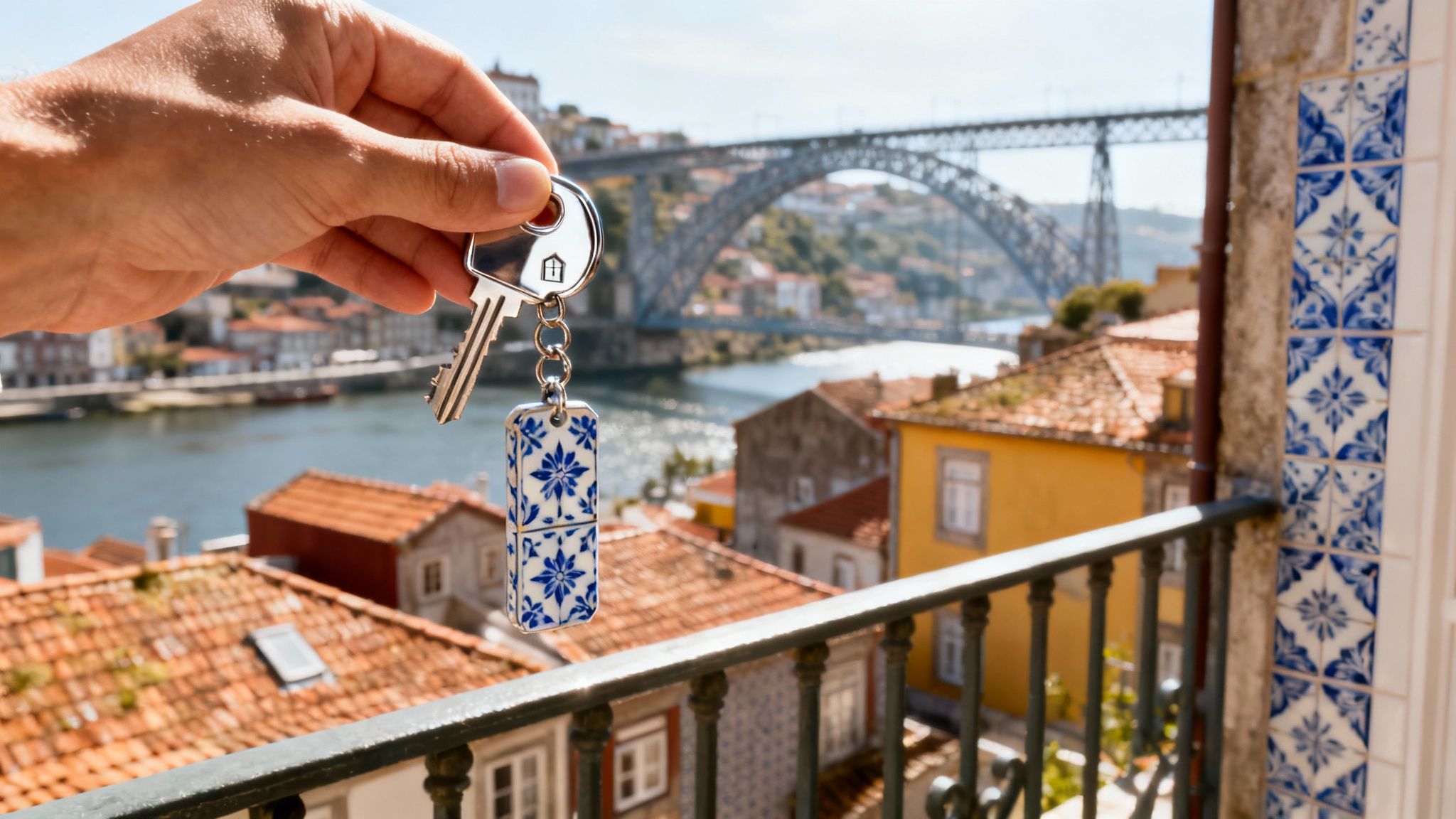
Thinking about buying an apartment in Porto? You’re in good company. This city has a special kind of magic, blending old-world charm with a modern, creative energy that's pulling in people from all over the world. Whether you're after a smart investment, a sunny European base, or simply a better way of life, Porto delivers.
The market here is strong, but it’s not just about the numbers; it’s about investing in a place that feels alive and full of potential.
Why Buying an Apartment in Porto Is a Smart Move
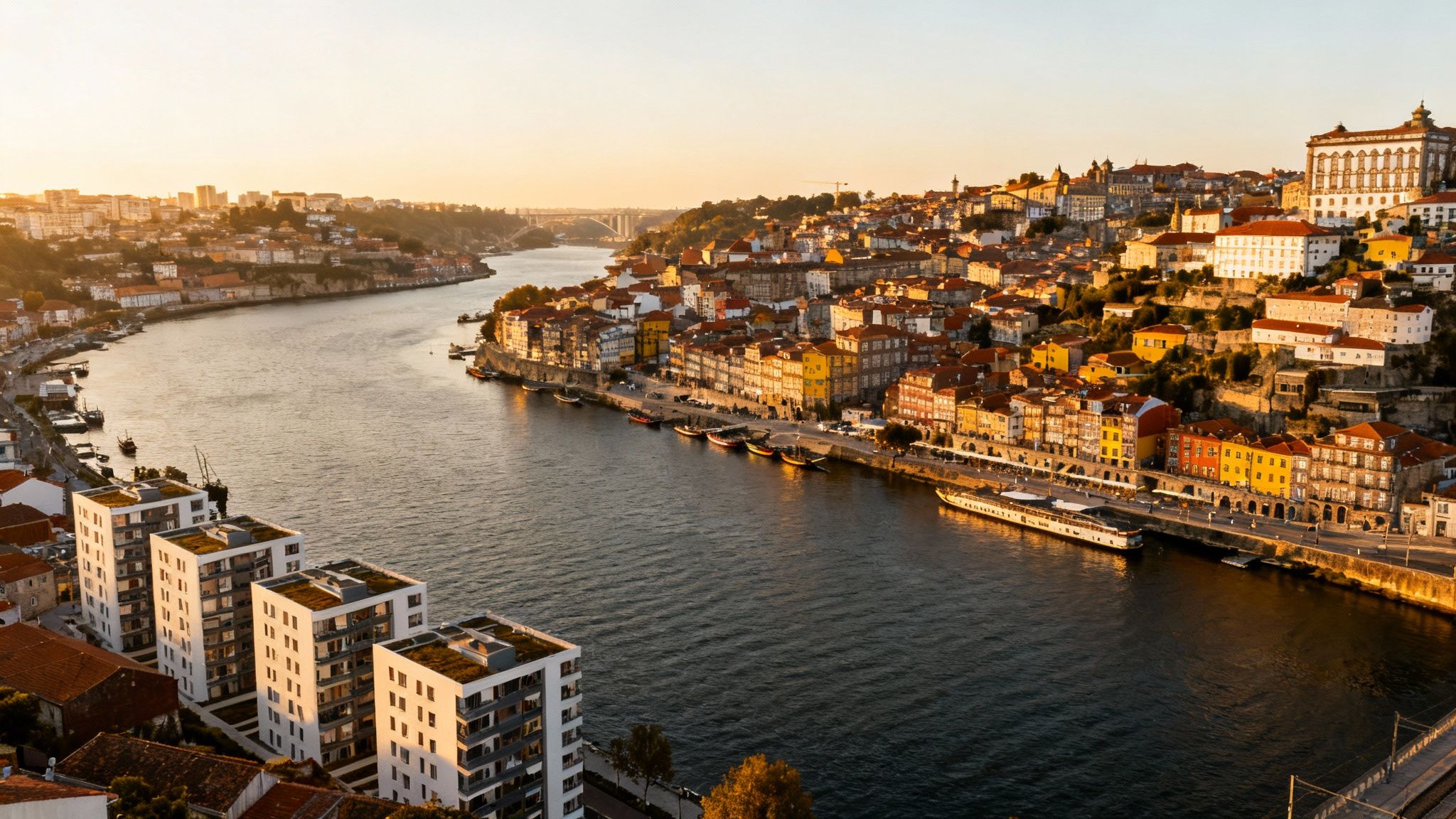
Porto has truly come into its own over the past decade. It’s no longer just a "hidden gem"—it's a major destination for savvy property investors and expats who know a good thing when they see it. The appeal goes far beyond the stunning riverside views and famous Port wine cellars. This is a city buzzing with economic and cultural activity, where historic architecture stands alongside a booming tech scene.
For a buyer, this creates a real estate market that’s both exciting and reassuringly stable. Porto hasn’t seen the wild, speculative bubbles of some other major European cities. Instead, it offers steady, sustainable growth. That makes it a fantastic choice whether you’re looking for a place to call home, a holiday retreat, or a solid asset for your portfolio.
The data backs this up. In Porto, residential property prices have climbed 5.9% in the last year, with the average hitting €3,908 per square meter. This isn't just a fleeting trend; it’s driven by the city's incredible lifestyle, its prime spot on the Atlantic coast, and its growing reputation as a hub for tech and tourism that continually attracts new residents and investors.
Tangible Benefits for International Buyers
Beyond pure appreciation, investing in Porto unlocks a whole host of lifestyle and strategic advantages. It's one of those rare places in Western Europe where you can find an exceptional quality of life without an astronomical price tag.
Here’s what really stands out for people buying an apartment in Porto:
- Strong Rental Yields: The city is a magnet for tourists, international students, and a growing wave of professionals. This creates a powerful demand for rental properties. With the median asking rent now at €17.8 per square meter, the potential for a healthy return on a buy-to-let investment is clear.
- A Strategic European Base: Owning a property in Portugal gives you a foothold in the Schengen Area. For non-EU citizens, this is a huge plus, offering incredible freedom and ease of travel across the continent.
- An Unbeatable Lifestyle: Porto is famous for its warm, welcoming culture, incredible food, and dynamic arts scene. It's a city built on a human scale—perfectly walkable, with great public transport, making it an absolute joy to live in.
- A Growing Tech and Innovation Hub: The city has worked hard to build a thriving startup ecosystem, which now attracts top talent and major companies. This economic diversification adds a layer of long-term stability and growth potential to the property market.
For many international buyers, Porto represents the perfect equilibrium. It’s a city with a rich soul and a promising future, offering a property market that feels accessible yet full of opportunity. It’s less about speculation and more about investing in a tangible, high-quality lifestyle.
Porto Property Market Snapshot
To give you a clearer picture, here's a quick look at the key market indicators that are drawing buyers to Porto right now.
| Metric | Recent Data | What This Means for Buyers |
|---|---|---|
| Average Price per m² | €3,908 | Prices are competitive compared to other Western European cities, offering good value. |
| Year-on-Year Price Growth | +5.9% | The market shows healthy, sustainable appreciation, not a speculative bubble. |
| Median Asking Rent per m² | €17.8 | Strong rental demand provides excellent potential for buy-to-let income. |
| Tourism Growth | Consistent increase | A thriving tourism sector underpins the short-term rental market and overall economy. |
This data paints a compelling picture of a market that is both growing and stable, making it an attractive environment for a long-term investment.
Understanding the Market Dynamics
Before you start your search, it’s important to know that Porto isn’t one single market. It's a city of distinct neighborhoods, each with its own vibe, lifestyle, and price range. You have the upscale, breezy coastal living in Foz do Douro, the hip and artistic energy of Cedofeita, and the more traditional, family-friendly feel of a neighborhood like Bonfim.
Doing your homework on these areas is absolutely essential to finding a place that aligns with your goals. The broader strength of the national housing market provides a fantastic foundation for your search. To get that wider context, I'd recommend reading our detailed guide on Portugal house prices, which breaks down the trends across the country.
Ultimately, buying an apartment in Porto is an investment in both a valuable asset and an incredible way of life. The city's unique blend of culture, economic energy, and natural beauty makes a powerful case for anyone looking to own their own piece of this corner of Europe.
Finding Your Perfect Porto Neighborhood
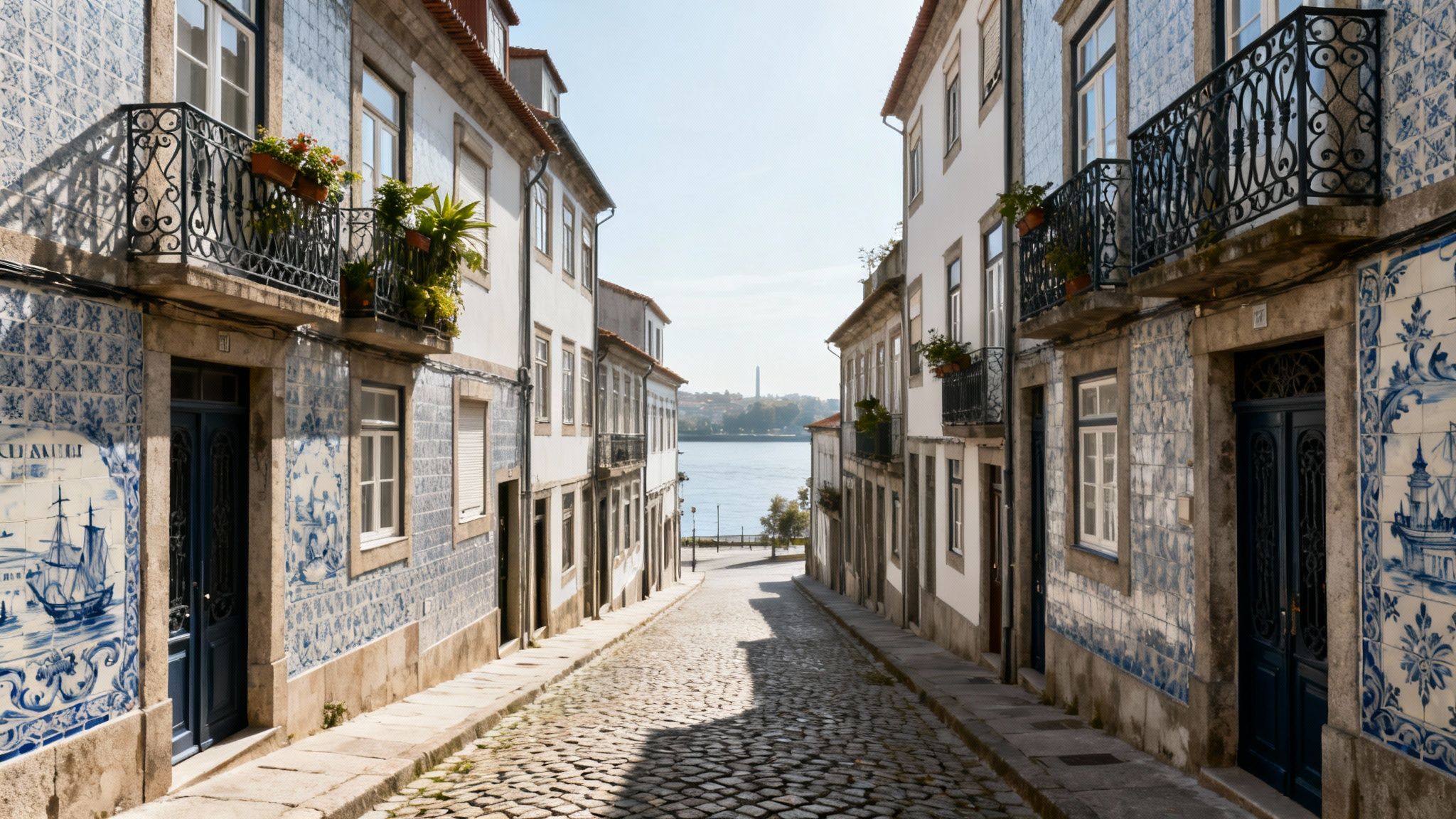
This is where the real fun begins. Choosing the right neighborhood is less about ticking boxes and more about finding a place that just feels right. Porto isn't a single, monolithic city; it's a vibrant mosaic of distinct freguesias (parishes), each with its own rhythm and personality.
Your ideal spot depends entirely on the life you want to lead. Are you picturing yourself sipping a morning coffee on a balcony overlooking the Douro? Or maybe you prefer the buzz of an artsy street with galleries and indie shops?
My advice? Before you even think about listings, get on the ground. Spend a day walking through these areas. Grab lunch, wander down side streets, and see how the vibe changes from morning to night. A neighborhood that looks perfect on a map might have a completely different energy in person. This decision shapes everything—your daily commute, your social life, and, of course, the long-term value of your property.
The Historic Heart: Ribeira and Miragaia
When most people dream of Porto, they’re picturing Ribeira. It’s the city’s postcard-perfect historic core, a UNESCO World Heritage site packed with colorful riverside houses, winding medieval alleys, and that iconic view of the Dom Luís I Bridge. Buying here means stepping out your door into the very soul of the city.
But let’s be realistic. Living in a postcard has its trade-offs. The apartments are often in historic, protected buildings, which can mean quirky layouts and navigating renovation restrictions. Car access is a headache, and the constant thrum of tourism isn’t for everyone.
For a slightly more authentic feel, look just next door to Miragaia. It has all the old-world charm of Ribeira but feels more like a genuine neighborhood. It's a great compromise if you want to be close to the action but not right in the middle of it.
The Creative and Chic: Cedofeita and Bonfim
Often dubbed Porto's "art district," Cedofeita is where the city's creative pulse beats strongest. It’s a dynamic, bohemian hub filled with independent art galleries, concept stores, and trendy brunch spots. This is the place for you if you thrive on energy and want a young, international crowd on your doorstep.
The apartments here are a mix of beautifully restored classic flats and modern new builds. Its central location and vibrant culture make it a hotspot for anyone looking to buy an apartment in Porto Portugal, from digital nomads to young professionals.
Bonfim, just a short walk east of the center, is the neighborhood everyone's talking about. It has quietly emerged as a trendy yet wonderfully relaxed alternative. It offers that perfect blend of urban convenience with a calmer, more residential feel, making it a favorite for families and clued-in investors who appreciate its beautiful 19th-century architecture and fantastic transport links.
Coastal Elegance: Foz do Douro
If your vision of life in Porto involves sea air and sunset strolls along the beach, then Foz do Douro is your destination. This is where the Douro River finally meets the Atlantic, creating Porto’s most sophisticated and upscale coastal neighborhood. Life here revolves around chic waterfront restaurants, high-end boutiques, and beautiful sandy beaches.
Foz offers a completely different rhythm from the city center. It’s a peaceful haven for families and professionals who value space, quiet, and a premium lifestyle. The property market here reflects that, with spacious, modern apartments commanding some of the highest prices in the city. You’ll have a bit of a commute into the historic center, but for those who live here, the incredible quality of life is a price well worth paying.
An Investor’s Take on Neighborhoods and Rental Yields
If your purchase is driven by investment potential, the neighborhood you choose is absolutely critical. Porto's rental market is robust, and buying an apartment here can be a fantastic source of passive income if you choose wisely.
To give you an idea, asking rents on platforms like Idealista showed Porto at €17.8/m² in May 2025. That’s just a breath behind Lisbon but miles ahead of more rural areas. This premium is concentrated in the most desirable neighborhoods, so your location choice will directly impact your potential rental yield. For a deeper dive into the numbers, you can explore detailed reports on the Portugal rental market.
To help you compare your options, here’s a quick breakdown of what you can expect in some of the city's top areas.
Comparing Porto's Top Neighborhoods for Buyers
Every neighborhood in Porto offers a distinct trade-off between lifestyle, cost, and investment return. This table breaks down the key characteristics of the city's most sought-after districts to help you align your goals with the right location.
| Neighborhood | Vibe & Lifestyle | Avg. Price per m² (Estimate) | Best For |
|---|---|---|---|
| Ribeira | Historic, Tourist-Centric, Vibrant | €4,500 - €6,000+ | Short-term rental investors, culture lovers |
| Cedofeita | Artistic, Bohemian, Trendy | €3,800 - €5,500 | Young professionals, creative expats, long-term rentals |
| Bonfim | Up-and-Coming, Residential, Relaxed | €3,500 - €5,000 | Families, long-term investors seeking value |
| Foz do Douro | Upscale, Coastal, Tranquil | €5,000 - €7,000+ | Luxury buyers, families, premium lifestyle seekers |
Ultimately, whether you're chasing high yields from a short-term rental in Ribeira or a relaxed family life in Bonfim, Porto has a neighborhood that fits. The key is to be clear on your priorities from the start.
Navigating Finances and Mortgages as a Foreign Buyer

Alright, let's talk money. Understanding the financial side of things is probably the most critical part of buying an apartment in Porto. It’s not just about the asking price you see on a listing; you need to get a handle on the full picture—all the taxes, fees, and what it really takes to get a mortgage as an international buyer.
The good news? Portugal’s banking system is quite open to foreigners. But don't mistake "open" for "easy." You absolutely have to be prepared.
Your first real step should be to map out a detailed budget, and I mean detailed. So many first-time foreign buyers get caught off guard by the extra costs, which can tack on a hefty percentage to the final bill. Getting these numbers down on paper early on will save you a world of stress later.
Think of the total cost like an iceberg. The property's price is what you see above the water. The real bulk of the cost—the taxes and fees—is lurking just beneath the surface. These are non-negotiable, and you'll need the cash ready before you can sign the final deed.
Budgeting for the True Cost of Your Porto Apartment
Before you even think about applying for a loan, you need a crystal-clear breakdown of all the purchase costs. These are paid out-of-pocket, entirely separate from your down payment.
Here’s what you need to account for:
- Property Transfer Tax (IMT): This is the big one. IMT is a progressive tax, so the rate climbs with the property's value. It can be anywhere from 1% to 8%. For a €300,000 apartment, that’s a significant chunk of change.
- Stamp Duty (Imposto do Selo): This is a straightforward flat tax of 0.8% on the purchase price. It’s smaller than the IMT, but it’s another mandatory cost to factor in.
- Notary and Registration Fees: These are the administrative costs for making it all official—having the deed witnessed, signed, and registered in your name. You should set aside around €1,000 to €2,500 for this.
- Legal Fees: As a foreign buyer, hiring a Portuguese lawyer isn't just a good idea; it's essential. Their expertise in due diligence and contract review is worth every penny. Expect to pay between 1% and 2% of the property price.
Just to give you a real-world example, on a €400,000 apartment, these "extra" costs could easily add €30,000 or more to your total bill. This is exactly why a comprehensive budget from day one is so important.
Securing a Mortgage as a Non-Resident
Portuguese banks are generally willing to lend to non-residents, but they're going to do their homework on you. They need to see a stable and transparent financial history.
For non-residents, banks will typically finance up to 70% of the property’s valuation price. This means you’ll need to come up with a down payment of at least 30%, plus have enough cash on hand to cover all those taxes and fees we just talked about.
A common mistake I see international buyers make is underestimating the sheer amount of paperwork involved. Portuguese banks need to be absolutely certain of your financial stability, and they will ask for a lot of proof. Getting your documents together early dramatically improves your odds of a smooth approval.
Want to make your mortgage application as strong as possible? Start gathering these documents now:
- Your Portuguese NIF (Tax Number): You can't do anything financial in Portugal without this. It's step one.
- Proof of Income: This means your last three to six months of payslips, your most recent tax returns, and usually a confirmation letter from your employer.
- Bank Statements: The bank will want to see the last three to six months of statements from your main bank account back home.
- Credit Report: A credit report from your country of residence is crucial to demonstrate you have a good track record of managing debt.
- Proof of Down Payment: You have to prove you have the funds for the deposit and all the closing costs sitting in an account, ready to go.
You’ll also need to decide on the type of interest rate. A variable-rate mortgage is linked to the Euribor (the European interbank lending rate), so your payments can go up or down. A fixed-rate mortgage gives you predictable payments for a set term, but often at a slightly higher starting rate. It really comes down to your personal risk tolerance.
For a much deeper dive, our guide on securing a mortgage for a foreign property breaks this all down. Planning your finances properly is what turns the dream to buy an apartment in Porto, Portugal into a reality.
The Legal Maze of Buying Property in Portugal
When you decide to buy an apartment in Porto, you'll inevitably encounter the Portuguese legal system. It's a methodical process designed to protect everyone involved, but it's absolutely not something you should try to navigate on your own, especially as an international buyer. The whole system is built on a foundation of legal oversight and specific contracts, all designed to ensure a clean, official transfer of ownership.
Finding Your Legal Ally
Your most important partner in this entire journey will be a qualified local legal professional. You have two main options: an 'advogado' (a lawyer) or a 'solicitador'.
While both are licensed to handle property deals, an advogado can represent you in court if things get complicated. A solicitador, on the other hand, specializes purely in the contractual and administrative side of real estate. For most apartment purchases, a good solicitador is more than capable and often a more cost-effective choice.
Think of them as your project manager. They act on your behalf, review every single document with a fine-toothed comb, and make sure your investment is legally sound. This is not the place to cut corners—their fee is a small price to pay for genuine peace of mind.
The Key Milestones on Your Path to Ownership
The journey from finding that perfect Porto apartment to finally holding the keys involves several distinct legal stages. Each step serves a specific purpose, formalizing the agreement and protecting your interests along the way.
Here’s a practical look at what to expect:
- Granting Power of Attorney (Procuração): Can't be in Portugal for every signature? No problem. Granting Power of Attorney to your lawyer lets them sign contracts and handle tasks for you. It's a lifesaver for overseas buyers.
- The Due Diligence Deep-Dive: This is where your lawyer really proves their worth, digging into the property's history to uncover any potential red flags.
- Signing the Promissory Contract (CPCV): This is the first legally binding agreement. It locks in the deal and is when you'll pay your deposit.
- The Final Deed of Sale (Escritura): The finish line! This is the official transfer of ownership, signed in front of a public notary.
Why Due Diligence is Non-Negotiable
Before a single contract is signed, your lawyer will launch a full investigation into the property’s legal and financial background. This isn't just a box-ticking exercise; it's designed to protect you from nasty surprises that could surface years later. It’s a comprehensive check to verify that the seller actually has the right to sell and that the property is free of hidden debts or legal issues.
Your lawyer's due diligence is your single best defense against common pitfalls. It confirms that the apartment you think you're buying is the apartment you're actually buying.
They will meticulously check several key documents:
- Property Registration (Certidão de Teor): Confirms who the legal owner is and checks for any outstanding mortgages, liens, or other charges.
- Tax Registry (Caderneta Predial): This document from the tax office details the property's official tax value, size, and layout. Your lawyer will ensure this matches the registration certificate perfectly.
- Usage License (Licença de Utilização): This proves the property is legally registered for residential use—a crucial check for older buildings or recently renovated apartments.
- Energy Performance Certificate (Certificado Energético): A mandatory certificate in Portugal that rates the property's energy efficiency.
Understanding the Contracts That Matter
The two most important documents you'll encounter are the Promissory Contract and the Final Deed. The entire legal framework of your purchase hinges on these two agreements.
First up is the Promissory Contract of Purchase and Sale (Contrato de Promessa de Compra e Venda, or CPCV). This is the real cornerstone of the deal. Once you and the seller sign this, you're both legally bound to see the transaction through. This is also when you'll pay the deposit, which is typically 10% to 30% of the purchase price. The CPCV has teeth: if you pull out, you forfeit your deposit. If the seller backs out, they are legally required to pay you double the deposit.
The grand finale is the Final Deed of Sale (Escritura Pública de Compra e Venda). This document makes it all official. It's signed at a notary's office with all parties (or their legal representatives) present. Once the Escritura is signed and the remaining balance is paid, you get the keys. Your lawyer then registers your new ownership at the Land Registry and local tax office, completing the entire process. This whole procedure is part of what's known as conveyancing, and you can learn more about what property conveyancing is in our detailed guide.
Making an Offer and Closing the Deal

You've walked the cobblestone streets, found a neighborhood that clicks, and lined up your financing. Now, you’ve found the apartment. This is where all that preparation pays off, moving from dreaming to doing. Getting your offer right and smoothly navigating the closing process are the last hurdles to making that Porto property your own.
Putting in an offer in Portugal isn't just a casual conversation; it's a formal step, but there's definitely room to negotiate. Your first bid shouldn't be a wild guess. This is where a good local agent earns their keep, pulling up recent sales data for similar properties so you can put forward an offer that’s both serious and smart.
The offer itself is submitted in writing, clearly laying out your proposed price, any contingencies (like making the sale dependent on a clean building inspection), and your ideal timeline for signing the key legal documents.
Crafting a Winning Offer
In a sought-after market like Porto, a compelling offer is about more than just the number. Sellers are looking for a sure thing. Showing up with your financing pre-approved and your lawyer ready to go tells them you’re not a tourist—you're a serious buyer.
Here’s how you can make your offer the one they choose:
- Show Them the Money: Lead with your financial strength. State clearly if you have a pre-approved mortgage or if you’re a cash buyer. This dramatically lowers the seller's perceived risk and can make your offer shine, even if it’s not the highest on the table.
- Be Flexible with Dates: If your own timeline allows for it, ask the seller about their preferred closing date and try to match it. It’s a simple gesture of goodwill that can set you apart from other bids.
- Add a Human Element: It might sound old-fashioned, but a short, sincere note explaining what you love about the apartment can sometimes tip the scales, especially if the owner has lived there for years and has an emotional tie to the place.
Once the seller says "yes" to your offer, your lawyer or solicitador steps into the spotlight. They’ll be your guide through the two most important contracts you'll sign.
Securing the Deal with the Promissory Contract
First up is the Contrato de Promessa de Compra e Venda (CPCV), often just called the Promissory Contract. Honestly, this is the most important document in the whole purchase. It’s a rock-solid, legally binding agreement that nails down every detail of the sale, from the final price and payment schedule to the official closing date.
When you sign the CPCV, you’ll also pay the deposit, which is usually between 10% and 30% of the purchase price. This isn't just a handshake—it's a significant financial commitment from both you and the seller.
The CPCV has serious teeth. If you, as the buyer, decide to walk away without a legally sound reason (like a failed contingency), you lose your deposit. But the protection goes both ways. If the seller backs out, they are legally required to pay you back double your deposit.
Your lawyer will have done their homework before you ever see this document, confirming the property is clear of any debts or legal claims. Signing the CPCV officially states your intent to buy an apartment in Porto, Portugal, and it protects your investment as you head for the finish line.
The Final Step: The Escritura
The big day arrives with the signing of the Escritura Pública de Compra e Venda, the Final Deed of Sale. This all happens in person at a notary's office and is the formal ceremony where the property officially becomes yours.
You (or your lawyer, if you've granted them Power of Attorney) will sit down with the seller and the notary. The notary reads the deed aloud to ensure everyone understands the terms, confirms all conditions have been met, and then witnesses the final signatures. This is also when you'll transfer the remaining balance of the purchase price.
As soon as the Escritura is signed, it's a done deal. The notary registers the sale, and your lawyer gets to work updating the property records at the Land Registry (Conservatória do Registo Predial) and the tax office (Finanças).
Then comes the best part: they hand you the keys. Congratulations, the apartment is yours. Welcome to Porto
Common Questions About Buying in Porto
When you start seriously looking at buying an apartment in Porto, you're bound to have questions. It's totally normal. You're not just navigating a new property market; you're dealing with a different country's legal and financial systems.
To clear things up, I’ve put together answers to the most common questions I hear from international buyers. Think of this as the practical advice you need after you've fallen in love with a neighborhood and are ready to get down to the details.
Do I Need a Portuguese Bank Account?
Absolutely. This isn’t just a recommendation—it’s a non-negotiable part of the process. Trying to buy property in Portugal without a local bank account is like trying to drive a car without keys. It just won't work.
Your Portuguese account is the hub for the entire transaction. Here’s why it's so critical:
- Getting Your Tax ID (NIF): You can't get your Número de Identificação Fiscal (NIF), which is your Portuguese tax number, without a local bank account. And you can't buy property without a NIF.
- Moving Your Money: It makes transferring large sums for the deposit and final payment much smoother and more secure.
- Paying Taxes and Fees: All the official costs, like the IMT (Property Transfer Tax) and Stamp Duty, have to be paid from a Portuguese account.
The good news is that opening an account as a foreigner is very straightforward. Portuguese banks are well-versed in helping international clients. You'll generally just need your passport, proof of address from back home, and your newly acquired NIF. Getting this sorted is one of the very first things you should tick off your list.
What Are the Ongoing Costs of Owning an Apartment?
Getting the keys is a fantastic feeling, but it’s not the end of your expenses. To keep your investment sustainable and stress-free, you need to budget for the recurring costs that come with owning property in Porto.
Beyond any mortgage payments, here’s what you should plan for each year:
- Annual Property Tax (IMI): This is the main municipal property tax, called Imposto Municipal sobre Imóveis. The rate is set by the local council but typically sits between 0.3% and 0.45% of the property's tax value (Valor Patrimonial Tributário). This value is usually quite a bit lower than what you actually paid for the apartment, which is a nice surprise for many.
- Condo Fees (Condomínio): If you're in an apartment building with shared facilities, you'll have monthly condo fees. These cover the upkeep of common areas—the elevator, garden, hallways, cleaning, and building exterior. Expect to pay anywhere from €30 to over €150 per month, depending on how old the building is and what amenities it offers.
- Utilities and Insurance: You'll have your standard bills for electricity, water, gas, and internet. Home insurance (seguro multirriscos habitação) is also a must—it's mandatory if you have a mortgage and just plain smart if you don't.
A quick heads-up for those buying at the higher end of the market: Portugal has an additional wealth tax called AIMI (Adicional ao IMI). It only kicks in if your total taxable property assets in the country are valued at over €600,000.
Can Buying Property Grant Me Residency?
This is a big one, and the rules have shifted recently, so it's important to be clear. Simply buying an apartment in Porto does not automatically make you a resident of Portugal.
However—and this is a big however—owning a home is a massive advantage. Having a registered address in Portugal is a foundational requirement for almost every type of residency visa. It proves you have a genuine, tangible connection to the country. This is crucial for visa applications like the D7 (for retirees or those with passive income) or the D8 (the digital nomad visa).
It's also critical to know that the famous Golden Visa program changed significantly. Buying residential real estate directly in a major city like Porto no longer qualifies you for that specific program. The residency landscape is always evolving, so my strongest advice is to speak with an experienced immigration lawyer. They'll give you advice based on the very latest regulations and your own personal situation.
Ready to turn your Porto dream into a reality? Start exploring curated listings and gain invaluable market insights with Residaro. Our platform is designed to make your European property search simple and successful. Find your perfect apartment in Porto today.