Buy Apartment in Porto Portugal: Your Complete Guide
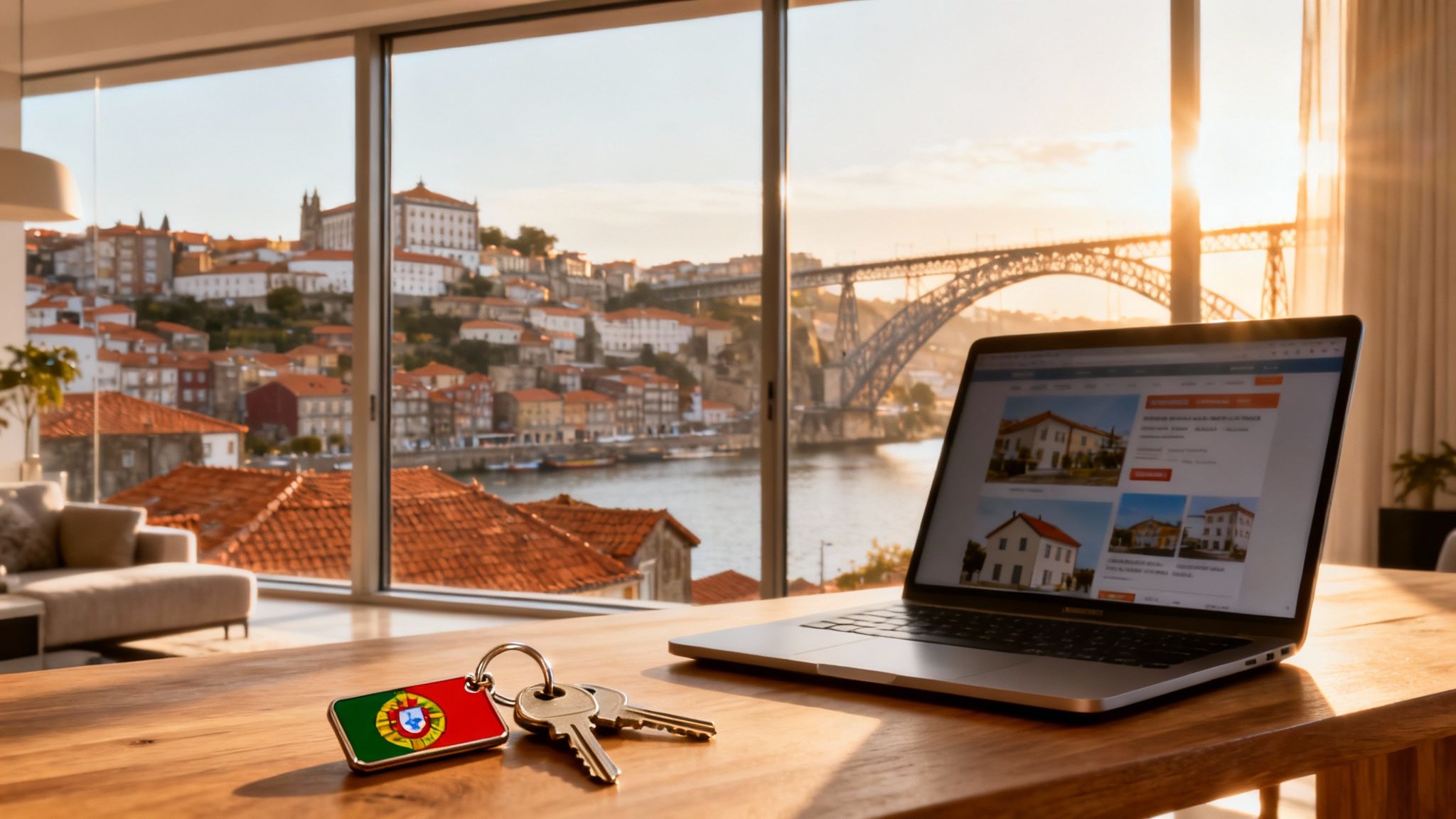
So, you're thinking about buying an apartment in Porto? Smart choice. This city is a fantastic blend of old-world charm and a surprisingly resilient modern property market, which is why it's become such a magnet for international buyers looking for a great lifestyle and a sound investment.
Why Buying an Apartment in Porto Is Such a Good Idea

Porto has graduated from being a hidden gem to a premier destination for savvy global investors and expats. The city's appeal runs much deeper than its stunning Douro River views and famous port wine cellars. It’s a place where tradition and progress coexist beautifully, creating a living experience that’s hard to find elsewhere.
The local economy is booming, especially in tech and tourism, which keeps job growth and rental demand high. This economic energy underpins a stable, appreciating real estate market that’s still more accessible than many other major European capitals.
The Draw for International Buyers
For anyone looking to buy an apartment in Porto, the advantages are pretty clear. The city strikes a perfect balance between vibrant urban energy and a more relaxed pace of life. Throw in a welcoming culture and a relatively low cost of living, and it becomes an obvious choice for people from all over the world.
Here's what really makes Porto stand out:
- Strong Investment Potential: The property market here has shown steady, reliable growth, meaning your investment has solid potential for capital appreciation.
- Exceptional Quality of Life: Porto is famously safe and boasts excellent healthcare, a rich cultural scene, and some of the best food you'll ever have.
- Welcoming Expat Community: There’s a thriving international community, which makes settling in and finding your footing so much easier.
Porto offers something truly unique in the European property market. You get the cultural richness of a historic city combined with the economic pulse of a modern hub. It's a powerful combination that attracts buyers looking for both lifestyle and long-term value.
A Market on the Rise
The data backs this up. Portugal's property market has shown incredible strength lately. In 2024, the country saw 156,325 dwellings sold—a huge 14.5% jump from the previous year.
This momentum carried into 2025, with residential prices in Porto itself climbing 5.9% to €3,908 per square meter. That figure alone shows just how much of a leading market it has become.
This upward trend isn’t a fluke; it’s fueled by strong demand from both locals and international buyers, cementing Porto’s reputation as a reliable place to invest. For a more detailed breakdown of these trends, take a look at our comprehensive guide on Portugal house prices.
Finding Your Perfect Porto Neighborhood
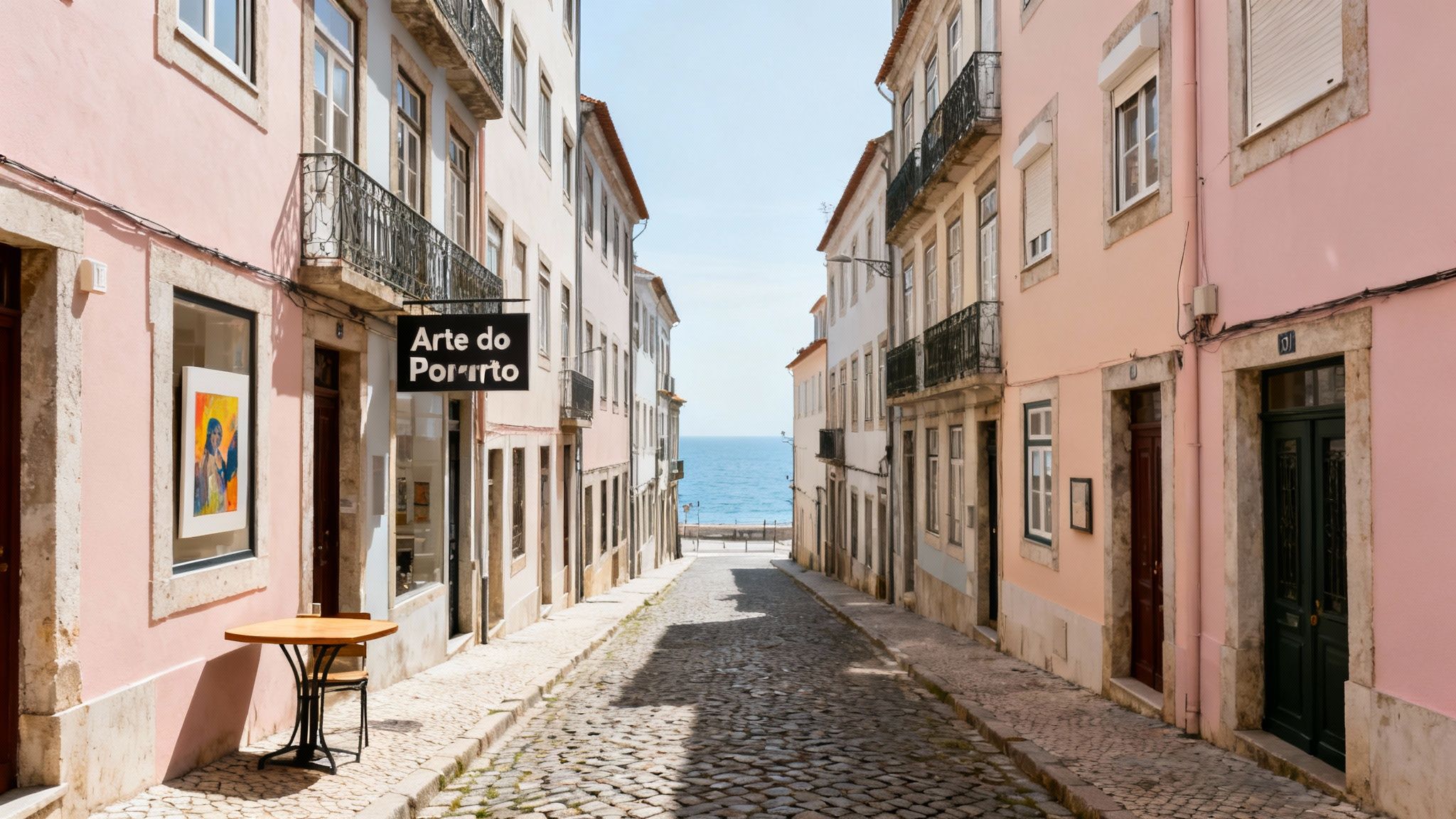
When you start to buy an apartment in Porto, Portugal, you'll quickly realize that choosing the right neighborhood—or freguesia—is just as important as the property itself. This decision will define your daily life, from your morning coffee ritual to your evening stroll. Each district has a completely different personality, and looking beyond the main tourist drags is where you'll find the real gems.
To narrow it down, think about your ideal day. Are you picturing yourself sipping a coffee at a riverside café, watching the boats go by? Or is it more of a jog along the Atlantic coast, followed by an afternoon exploring independent art galleries? Your lifestyle is the best compass you have for navigating Porto's vibrant and diverse property market.
Live Amidst History in Ribeira
If you dream of being surrounded by history, then the Ribeira district and the historic center are where you should start your search. This is the postcard-perfect Porto you’ve seen in photos—a UNESCO World Heritage site where colorful, narrow townhouses cascade down to the Douro River. Living here means stepping out your front door into a lively scene of street performers, traditional restaurants, and centuries-old architecture.
Apartments in this area are typically stunningly renovated units tucked away in historic buildings. You’ll find a beautiful mix of original stone walls and exposed wooden beams alongside all the modern comforts. Just be ready for the trade-offs: spaces are often smaller, and the buzz of tourism is a constant companion. It's a fantastic spot for a pied-à-terre right in the heart of the action.
Embrace the Creative Vibe in Cedofeita
Walk up the hill from the river, and you'll find yourself in Cedofeita, Porto's undisputed "art district." This neighborhood is a magnet for creatives, digital nomads, and young professionals. Its streets are a lively mix of contemporary art galleries, concept stores, trendy brunch spots, and fantastic coffee shops.
The property scene here is just as dynamic, with a blend of classic apartments and new, architecturally interesting developments. Cedofeita gives you a more authentic, local feel than Ribeira while still being incredibly central. It’s the perfect base if you’re working remotely and crave a community with a constant source of inspiration.
Insider Tip: Don’t forget to look across the river at Vila Nova de Gaia. It's not just for port cellars! Gaia offers some of the most breathtaking views of Porto and is seeing a ton of new development. You can often find a more spacious, modern apartment for a better price per square meter, and you're still just a short walk or metro ride from the city center.
Find Your Peace in Foz do Douro
For those who value tranquility, green spaces, and a touch of elegance, Foz do Douro is the place to be. This is where the Douro River finally meets the Atlantic Ocean, and the pace of life is completely different. The long seaside promenades, chic boutiques, and upscale restaurants create a sophisticated, almost resort-like feel.
Here, you'll find sleek, spacious apartments in modern buildings, many boasting incredible sea views and private terraces. Foz is a big draw for families and retirees who want safety, quiet, and easy access to international schools and beautiful parks. It’s a slice of coastal paradise just a quick bus ride from the city's hustle and bustle.
Porto Neighborhood Snapshot for Apartment Buyers
To help you compare these areas at a glance, I've put together a quick breakdown. Remember, these price ranges are a guide—the final cost always depends on the specific building, its condition, and amenities.
| Neighborhood | Vibe & Lifestyle | Average Price per m² | Best For |
|---|---|---|---|
| Ribeira & Sé | Historic, bustling, tourist-centric | €4,500 – €6,000 | Vacation homes, short-term rental investors |
| Cedofeita | Artsy, trendy, dynamic | €3,800 – €5,200 | Young professionals, digital nomads, creatives |
| Foz do Douro | Upscale, coastal, tranquil | €4,200 – €6,500 | Families, retirees, luxury buyers |
| Bonfim | Up-and-coming, authentic, well-connected | €3,000 – €4,500 | First-time buyers, long-term investors |
Ultimately, the right neighborhood is the one that just feels right to you. My best advice is to spend a few days exploring. Walk around in the morning, afternoon, and evening to get a true sense of each area's unique energy. This on-the-ground research is the most valuable part of your entire property search.
Budgeting and Financing Your Porto Purchase

A successful property purchase in Porto starts long before you find the perfect apartment—it begins with a rock-solid financial plan. The final price you agree on is just one piece of the puzzle; understanding the full spectrum of costs is what gives you the confidence to move forward without any last-minute surprises.
To be truly prepared, you need to account for taxes, legal fees, and other administrative expenses. From my experience, a safe bet is to budget an extra 8% to 10% of the property's purchase price to cover all these associated costs. Think of it as a financial buffer that ensures your journey to ownership is smooth and stress-free.
The Major Purchase Taxes Explained
When you buy an apartment in Porto, Portugal, you’ll encounter two main taxes. These are non-negotiable, one-time payments you'll make right before signing the final deed.
First up is the IMT (Imposto Municipal sobre as Transmissões Onerosas de Imóveis), which is the Property Transfer Tax. This is usually the largest single cost you'll face besides the apartment price itself. The IMT is calculated on a progressive scale, so the rate goes up with the property’s value. For a primary residence, the rates can be anywhere from 0% to 8%.
Next is the Imposto do Selo, or Stamp Duty. This one is much simpler: it’s a flat rate of 0.8% of the property’s declared value. It applies to nearly all official transactions in Portugal, and buying real estate is no exception.
A Real-World Cost Breakdown
Let's make this tangible. Imagine you’ve found an apartment in Porto for €300,000 that you plan to use as your main home. Here’s a rough estimate of what your additional costs would look like:
- IMT (Property Transfer Tax): For a €300,000 property, your IMT bill would be around €9,045.
- Stamp Duty (Imposto do Selo): This comes out to €2,400 (0.8% of €300,000).
- Notary and Registration Fees: These administrative costs for finalizing the deed and officially registering your ownership typically land between €1,000 and €2,500.
- Legal Fees: Hiring a lawyer is something I always recommend. Their fees usually run between 1% and 2% of the purchase price, which would be about €3,000 to €6,000 in this case.
Total Estimated Costs: Adding it all up, your extra expenses would be in the ballpark of €15,445 to €19,945. As you can see, this fits squarely within that 8-10% buffer we talked about. Planning for this from day one is the key to a smooth transaction.
Securing a Mortgage as a Foreign Buyer
Here’s some good news for international buyers: Portuguese banks are generally quite open to lending to non-residents. Just be aware that the terms might be a little different from what you're used to back home.
Typically, you can expect to finance up to 70-80% of the property's value. This means you'll need to come up with a deposit of 20-30% yourself. To get your application approved, the bank will want to see a clear picture of your financial health. Get ready to provide:
- Proof of Income: Recent payslips, an employment contract, or tax returns from your home country.
- Bank Statements: Usually the last three to six months to demonstrate consistent cash flow.
- Credit Report: A copy of your credit history from your country of residence.
- NIF (Número de Identificação Fiscal): Your Portuguese tax number. This is non-negotiable for any financial transaction in the country.
Getting a mortgage can take a bit of time, so it's a smart move to start these conversations early. You can dive deeper into the specifics in our guide on getting a mortgage for a foreign property.
Financially, Porto offers incredible value, especially when you compare it to other major European markets. As of late 2025, asking prices in Porto were around €3,885 per square meter, which is a world away from Lisbon's €5,978/m². For a buyer from the UK, this translates to an apartment price that is a staggering 55.9% below the UK average, making Porto an incredibly attractive option. You can find more market data like this in this recent report on global property markets.
Getting to Grips with the Portuguese Legal Process
Let's be honest—the thought of navigating Portuguese bureaucracy can feel a bit daunting. But once you get a feel for the rhythm of it, you’ll find it’s a well-trodden path. When you’re ready to buy an apartment in Porto, Portugal, having the right legal expert on your team isn't just a nice-to-have; it's the single best way to protect your investment and make sure everything goes smoothly.
The whole system is built on a series of checks and balances designed to safeguard everyone involved. With a good lawyer guiding you, you can tackle each stage with confidence, knowing that all the i's are dotted and t's are crossed.
First Things First: Get Your NIF
Before you can make any real financial moves in Portugal, you need a NIF (Número de Identificação Fiscal). Think of it as your personal Portuguese tax number. It’s absolutely essential for opening a bank account, signing contracts, and, of course, buying property.
Getting your NIF is usually the first task on the checklist. Your lawyer or a fiscal representative can handle this for you. For non-EU residents, appointing a fiscal representative is often a requirement anyway. It’s a simple but crucial step that unlocks everything else.
Your Legal Team: Who Does What?
In Portugal, you’ll likely hear the terms advogado (lawyer) and solicitador. Both are qualified to handle property deals, but an advogado has the added ability to represent you in court should any disputes pop up, giving you a wider safety net. This person is your champion, digging into the details on your behalf.
Here's what they'll be busy doing for you:
- Digging into the Paperwork: They’ll pull the property's records from the Land Registry (Registo Predial) to make 100% sure the seller is the rightful owner and that there are no hidden debts, mortgages, or liens attached to the apartment.
- Checking Licenses and Plans: They'll verify that the apartment has a valid habitation license (Licença de Utilização) and that its layout matches the official building plans on file. You don't want any surprises about unapproved renovations.
- Reviewing Condo Minutes: This is a pro tip. Your lawyer will look through the minutes from recent condominium meetings. It’s a great way to uncover potential issues, like upcoming expensive building repairs or long-running disputes between neighbours.
This deep-dive investigation is what a secure purchase is built on. For a closer look at all the moving parts, our guide on what property conveyancing involves breaks it down even further.
The Two Big Steps: From Offer to Ownership
After your offer is accepted and your lawyer gives the initial thumbs-up, the legal process really kicks into gear with two major milestones, each marked by a key contract.
The first is the Contrato de Promessa de Compra e Venda (CPCV), which is the Promissory Contract. This is a serious, legally binding agreement that locks both you and the seller into the deal. When you sign the CPCV, you’ll pay your deposit, typically 10% to 30% of the purchase price. This document lays out all the terms—the final price, the closing date, and any other conditions you’ve agreed on.
Why the CPCV Matters: This contract offers real protection. If the seller pulls out after signing, the law says they have to pay you back double your deposit. On the flip side, if you decide to walk away, you’ll lose the deposit you paid.
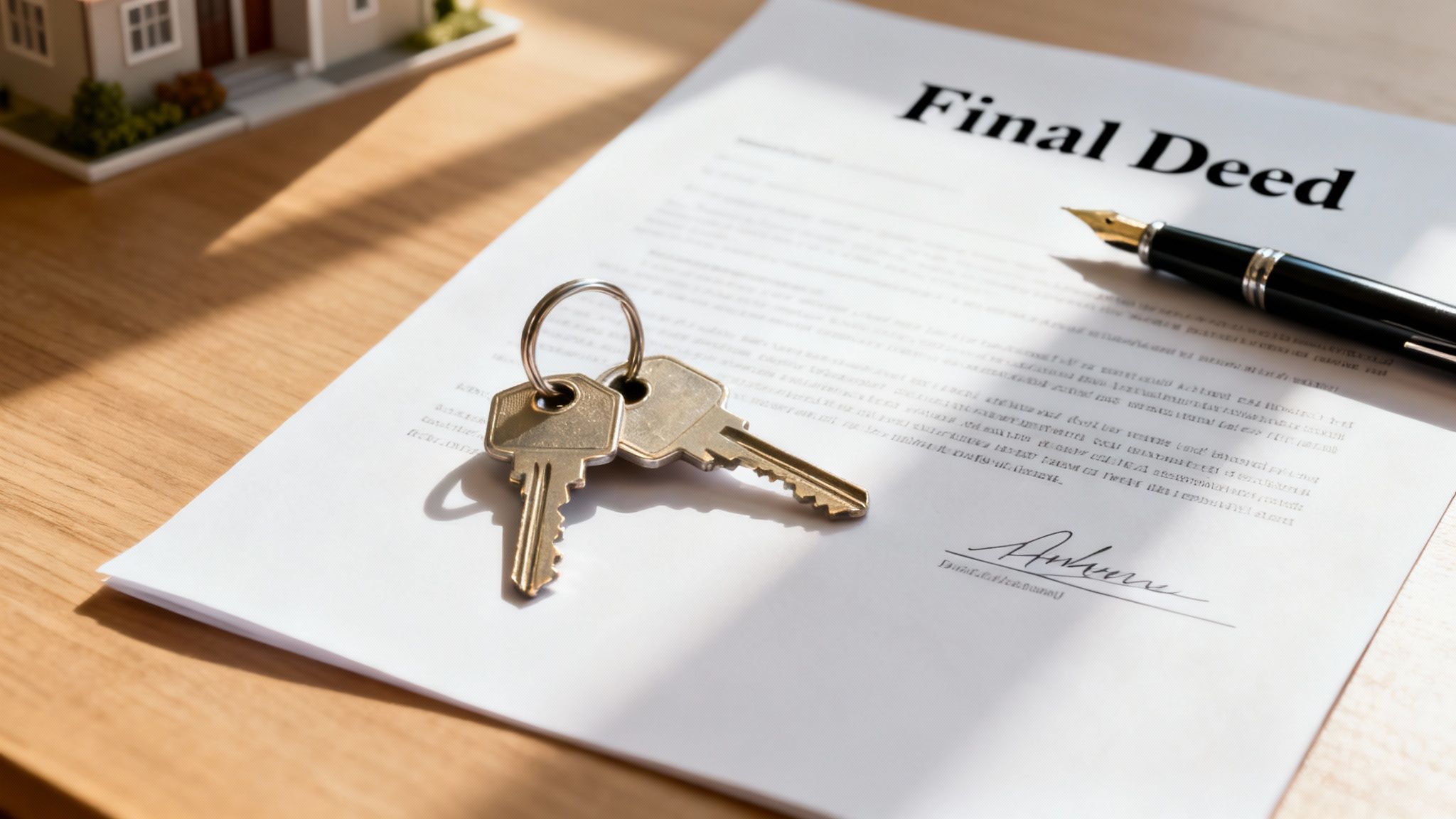
Finally, you have the Escritura Pública de Compra e Venda, or the Final Deed. This is the grand finale—the official transfer of ownership. It all happens at a notary's office, with you, the seller, and your legal reps present. This is when you'll pay the remaining balance of the purchase price, plus the property transfer tax (IMT) and Stamp Duty.
Once the Escritura is signed and witnessed by the notary, the keys are yours. Your lawyer will then register the property in your name at the Land Registry and the local tax office (Finanças), making you the official, proud new owner of an apartment in Porto.
From Property Search to Closing the Deal
Alright, this is where the real fun begins—turning your research and spreadsheets into action. You've got your budget locked in and a few favourite neighbourhoods in mind. Now it's time to actually find, secure, and officially make a Porto apartment your own.
This final leg of the journey has a clear path, taking you from scrolling through listings all the way to holding the keys in your hand.
Thankfully, modern tools have made the initial hunt much easier, especially for international buyers. Using a platform like Residaro lets you get incredibly specific with your filters, so you can shortlist properties that genuinely fit your needs before you even think about booking a flight. Don't be shy with those filters—drilling down by must-have amenities, floor level, and even building age will save you a ton of time down the road.
Mastering Property Viewings
Whether you’re in Porto or viewing from thousands of miles away, you need a plan. It’s easy to get swept up in a beautifully staged interior, so arm yourself with a checklist to assess the real nuts and bolts of the property and its immediate surroundings.
For anyone buying from abroad, virtual viewings are an absolute game-changer. Insist on a live video walkthrough with your agent. This lets you be the director—ask them to open cupboards, check the water pressure in the shower, or zoom in on that crack in the wall that looked suspicious in the photos.
Here are some essential questions I always tell my clients to ask:
- What is the Valor Patrimonial Tributário (VPT)? This is the official tax value of the property. It's the number used to calculate your annual IMI tax, so you need to know it.
- Are there any major building works planned? The best way to find out is to ask for the minutes from the last condominium meeting. This is where you’ll uncover plans for a new roof, elevator repairs, or other costly assessments.
- How old are the plumbing and electrical systems? This is a huge one, especially in Porto's gorgeous but old buildings. An answer like "we're not sure" is a red flag for potentially expensive upgrades.
- What, exactly, is included in the sale? Never assume the fancy oven or light fixtures are staying. Get a clear, written list of what’s included.
Asking these questions upfront ensures you have a full picture of the property’s condition and the real costs you'll face as an owner.
Making an Offer and Navigating Negotiation
So, you’ve found the one. Now it's time to make your move. In Portugal, the negotiation process tends to be less aggressive than in other markets; it's more about reaching a fair, sensible price. Your offer should be grounded in reality, based on what similar properties in that specific area have recently sold for.
Your agent will submit the formal offer to the seller, and you can expect a bit of back-and-forth. It's all part of the dance. Sometimes, offering a little flexibility on the closing date can be a surprisingly effective bargaining chip, particularly if the seller needs to move quickly.
Insider Tip: A straightforward offer with minimal conditions often beats a slightly higher but more complicated one. Having your financing pre-approved and your lawyer ready to go shows the seller you’re serious and organized, which can give you a real edge.
Once your offer is accepted, things move fast. You'll usually sign a simple reservation agreement and pay a small holding deposit (think €5,000–€10,000) to take the property off the market while your lawyer gets to work on the due diligence.
The Final Steps to Ownership
After your lawyer has checked everything and given you the green light, the next major step is the legally binding Promissory Contract (CPCV). This is a big one. At this stage, you’ll pay the main deposit, typically between 10% and 30% of the purchase price. The CPCV locks in all the sale terms and officially sets the date for the final closing.
The closing day itself is a formal event called the Escritura, held at a notary’s office. You’ll meet the seller there (or have your lawyer represent you with a power of attorney). Here’s how it unfolds:
- Final Document Review: The notary reads the entire Final Deed aloud. It's a formality, but an important one to ensure everyone is on the same page.
- Payment Transfer: The final balance is paid, usually with a certified cheque drawn from your Portuguese bank account.
- Signing the Deed: You, the seller, and the notary all sign the Escritura, and just like that, the ownership is officially transferred.
With the ink still fresh on the paper, the seller will hand you the keys. Congratulations—the apartment is now yours. The very last step is handled by your lawyer, who will register your new ownership at the Land Registry, cementing your new status as a homeowner in beautiful Porto.
Your Porto Apartment Buying Checklist: A Step-by-Step Roadmap
Buying property in a new country can feel overwhelming, but breaking it down into clear, manageable steps makes all the difference. Think of this checklist as your personal roadmap, guiding you from the initial dream of owning a Porto apartment to the day you get the keys.
Let's walk through the entire journey, phase by phase.
Phase 1: Getting Your Ducks in a Row (Research & Budgeting)
Before you even start scrolling through beautiful listings, you need to lay a solid foundation. Getting these essentials sorted out first will save you a world of headaches later on.
- Get Your NIF: First things first, you'll need a Portuguese tax identification number (Número de Identificação Fiscal). You can't do anything financially significant in Portugal without it.
- Open a Portuguese Bank Account: This is non-negotiable. You'll need it for the property transaction itself, paying taxes, and eventually, for setting up utilities like electricity and water.
- Be Brutally Honest About Your Budget: Figure out your total budget, but don't stop there. You need to tack on an extra 8-10% to cover the inevitable taxes and fees, mainly the IMT (Property Transfer Tax) and Stamp Duty. Forgetting this buffer is a classic rookie mistake.
Phase 2: The Hunt Begins (Property Search)
Now for the fun part! With your finances organized, you can start the exciting search for your perfect spot in Porto.
- Create Your "Must-Have" List: What are your absolute deal-breakers? Think about location, number of bedrooms, whether you need outdoor space, or proximity to a metro station. Be specific.
- Start Viewing Properties: It's time to see what's out there. Line up viewings for the properties that catch your eye, whether you're here in person or arranging for a detailed virtual tour.
A well-organized search isn't just about efficiency; it's about confidence. When you know what you're looking for and have your finances in order, you can move decisively when you find the right place.
Phase 3: The All-Important Legal Checks (Due Diligence)
This is where you protect your investment. Don't be tempted to cut corners here; a thorough legal check is your best insurance against future problems.
- Hire a Good Lawyer: Find an independent Portuguese lawyer (advogado) who specializes in real estate. Their job is to look out for your best interests, not the seller's or the agent's.
- Let Them Do Their Job: Your lawyer will dig into the details—verifying the property's registration (Registo Predial), checking for any outstanding debts or liens, and making sure all building licenses and permits are in order.
Phase 4: Making It Official (The Purchase Process)
You've found the one and the legal checks are clean. You're in the home stretch now, and it's time to make it official.
- Make Your Offer: Your lawyer will help you submit a formal offer and negotiate the price and terms with the seller.
- Sign the Promissory Contract (CPCV): Once your offer is accepted and due diligence is complete, you'll sign a preliminary contract—the Contrato de Promessa de Compra e Venda. This is when you'll pay the deposit, typically 10-20% of the purchase price.
- The Final Deed (Escritura): This is the final meeting at the notary's office. You'll sign the final deed of sale (Escritura), pay the remaining balance, and congratulations—you'll be handed the keys to your new apartment in Porto
Frequently Asked Questions About Buying Property in Porto
To help you get started, I’ve put together answers to the questions I hear most often from international buyers. Think of this as a quick-start guide to the practical side of buying your apartment in Porto.
Getting a handle on the financial and logistical details early on is crucial. It saves you from hitting unexpected snags and makes the whole experience of buying in Portugal feel a lot less daunting.
Do I Need a Portuguese Bank Account?
Yes, this is non-negotiable. You'll need a Portuguese bank account right at the start to get your NIF (tax identification number), which is the key that unlocks the entire property buying process.
All the money for your deposit and the final purchase has to move through this account. Later on, it’s how you’ll pay for utilities, condo fees, and your annual property taxes (IMI). Honestly, setting this up first is one of the smartest moves you can make.
Can Foreigners Get a Mortgage in Portugal?
Absolutely. Portuguese banks are quite accustomed to lending to non-residents who want to buy an apartment in Porto, Portugal. The terms might be a little different than what you'd find back home, but it's a well-trodden path.
- Loan-to-Value (LTV) Ratio: Banks will typically finance up to 70-80% of the property’s value. This means you’ll need to have a down payment of at least 20-30% ready to go.
- Required Documents: You'll need to show proof of income (like payslips and tax returns from your home country), recent bank statements, and usually a credit report to get the ball rolling.
My advice? Chat with a mortgage advisor before you even start seriously looking. It gives you a realistic budget and shows sellers you mean business.
Getting pre-approved for a mortgage before you make an offer is a game-changer. It tells the seller you're a serious, qualified buyer and can give you a real edge, especially if you find yourself competing with other offers.
What Are the Ongoing Costs of Ownership?
Once the keys are in your hand, there are a few recurring costs to plan for. The big one is the Imposto Municipal sobre Imóveis (IMI), which is the annual property tax. It’s calculated based on your property's official tax value (the VPT).
Beyond the IMI, you’ll also have:
- Condominium Fees: This covers the upkeep of shared spaces—think elevators, lobbies, gardens, and the building’s exterior.
- Utility Bills: Your standard water, electricity, and gas expenses.
- Home Insurance: It’s not always legally required, but I always tell my clients to get it. It’s a small price to pay to protect a significant investment.
And if you plan on renting out your apartment, don't forget you'll need to pay tax on that rental income. Factoring these costs into your budget from day one is the key to a stress-free ownership experience.
Ready to find your perfect apartment in Porto? The process is clearer than you think, and the right tools make all the difference. Start your search with Residaro and explore verified listings in Porto's most desirable neighborhoods today. Your dream home is just a few clicks away at https://residaro.com.