Guide to Buy a Cheap House in Portugal: Affordable Regions & Tips
So, you're dreaming of owning a home in Portugal but don't have a massive budget? Good news: it's absolutely possible. But you need to adjust your strategy. Forget finding a steal in Lisbon or the Algarve; the real gems are now off the beaten path.
This guide is your road map to finding, financing, and securing an affordable property in the real Portugal.
Understanding the New Reality of Portugal's Property Market
Let's be honest—the idea of Portugal as a universally "cheap" property destination is a thing of the past. The market has shifted dramatically, and the first step to a successful purchase is acknowledging this new reality. It helps you set realistic expectations and focus your search where true value can still be found.
We're going to move past the headlines and give you a practical, actionable plan. This isn't about chasing a fantasy villa in a tourist hotspot for pennies. It’s about making a smart, informed decision that gets you the authentic Portuguese lifestyle you're looking for, at a price that actually works.
Why Prices Have Changed So Much
Portugal’s real estate market has been on a wild ride. Between 2015 and 2025, it went from one of Western Europe’s best-kept secrets to one of its fastest-growing markets.
To put it in perspective, by the third quarter of 2025, Portugal saw a staggering 17.7% annual jump in house prices. That was the second-highest in the entire EU, while the eurozone average was just 5.1%. A perfect storm of foreign investment, a tourism boom, and a tight housing supply caused this surge.
What does this mean for you? A house in an interior region that might have cost under €120,000 back in the mid-2010s can now easily top €200,000. If you want to dive deeper into the data, you can read more about Portugal's real estate market trends on globalcitizensolutions.com.
While the days of rock-bottom prices are over, Portugal is still quite affordable compared to places like Paris or Barcelona. The key is simply knowing where to look.
The secret to success is calibrating your expectations. Portugal is no longer uniformly cheap, but secondary cities and inland districts still offer relatively low entry prices and significant room for long-term appreciation.
What This Guide Will Cover
We’ll give you the tools and knowledge to navigate this dynamic market with confidence. Our goal is to help you:
- Pinpoint genuinely affordable regions far from the crowded tourist traps.
- Navigate the financial and legal hurdles that non-residents face.
- Manage the entire buying process like a pro, from making an offer to signing the final deed.
By focusing on emerging value and practical strategies, you can still buy a cheap house in Portugal and turn that dream into a reality.
Where to Find Portugal's Most Affordable Properties
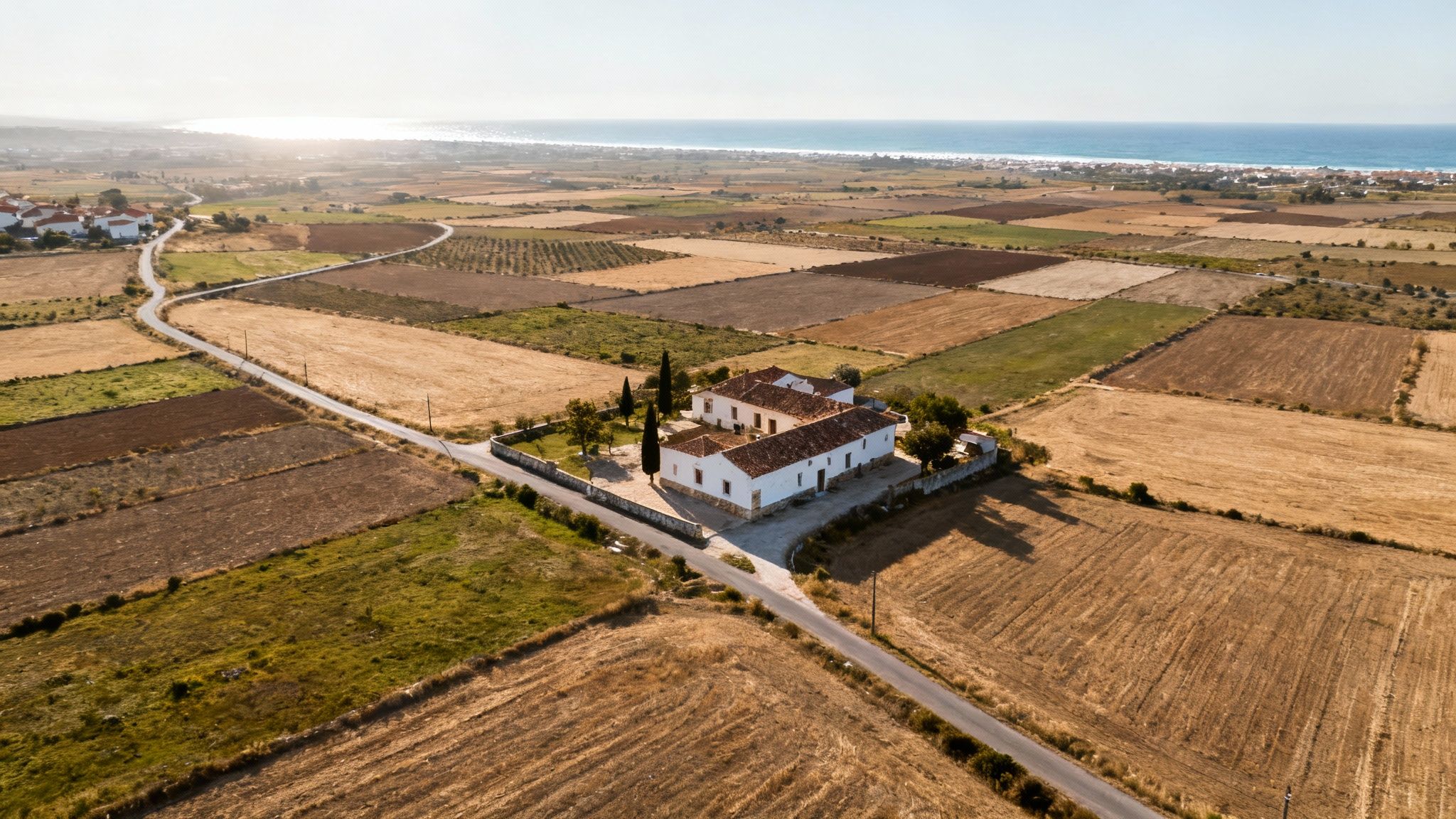
The secret to snagging an affordable home in Portugal isn't about finding a hidden gem in Lisbon or a bargain in the Algarve—it's about looking where most people don't. The real value, and often the most authentic Portuguese lifestyle, is found well beyond the crowded tourist hotspots.
If you want to buy a cheap house in Portugal, you have to be strategic. The best opportunities are waiting inland or along the country's less-developed coastlines. Let's dig into where your money will stretch the furthest and what kind of life you can build there.
The Heart of Affordability: Central Portugal
When you hear stories of people buying charming stone houses for a song, they're almost always talking about Central Portugal. This sprawling, beautifully rugged region, especially districts like Castelo Branco and Guarda, is where you'll find some of the lowest property prices in the country.
This is the land of forgotten stone villages, small farms (called quintas), and generous plots of land that cost a fraction of what you'd pay elsewhere. It's a true haven for anyone dreaming of a quiet, rural life. Just be prepared that many of these properties need a good deal of renovation, which is a big reason for their low price tags—but also a fantastic opportunity to create your perfect home.
- Property Types: Village houses ready for a makeover, small-to-medium-sized quintas, and land for a self-build project.
- Price Expectations: It's not uncommon to see prices fall below €800 per square meter, with many renovation projects listed for well under €100,000.
- Lifestyle: Think slow, traditional, and deeply connected to nature. It’s perfect for homesteaders, artists, or anyone simply looking for peace.
- A Few Caveats: You'll need a car, as access to major hospitals and airports can be an hour's drive or more. And to truly become part of the community, learning Portuguese is essential.
The Rustic Soul: Alentejo
Stretching from the south of Lisbon all the way down to the Algarve, the Alentejo is Portugal's vast, sun-drenched heartland. It's a landscape of rolling cork oak forests, ancient olive groves, and whitewashed villages that feels a world away from the busy coast.
While prices along the Alentejo's stunning coastline have started to climb, the interior remains incredibly undervalued. Here, you can find sprawling estates (herdades) or traditional single-story homes with plenty of land for a surprisingly small investment. Life moves at its own unhurried pace, attracting those who want to disconnect and enjoy the simple things.
The Alentejo isn’t for everyone. It’s for people who find beauty in wide-open spaces, a strong sense of community, and the slow rhythm of the seasons. It’s a conscious choice for a different, richer quality of life.
The Sweet Spot: The Silver Coast
Feeling like the deep interior is a bit too remote, but the Algarve is way out of budget? The Silver Coast (Costa de Prata) is the perfect middle ground. This beautiful stretch of coastline runs north of Lisbon, from the surf town of Ericeira up to Figueira da Foz, offering a fantastic lifestyle without the premium price tag.
Areas around towns like Caldas da Rainha, Nazaré, and São Martinho do Porto strike a brilliant balance. You get stunning beaches, vibrant local markets, and all the essential amenities without the intense financial pressure of the more famous tourist hubs. For a closer look at how prices compare across the country, our deep dive into Portugal house prices offers some great regional insights.
This region is an excellent fit if you’re looking for:
- Proximity to the Capital: Many towns are just a one-hour drive from Lisbon and its international airport.
- Authentic Coastal Living: Enjoy everything from world-class surf breaks to charming fishing villages and breezy promenades.
- Real Value for Money: While not as cheap as the interior, prices here are far more accessible than in the Algarve or the Lisbon-Cascais corridor.
Affordable Regions in Portugal at a Glance
To help you visualize the options, this table breaks down the key differences between Portugal's most budget-friendly areas. Finding the right fit is about balancing your financial goals with your lifestyle aspirations.
| Region | Average Price/m² (approx.) | Property Types | Best For |
|---|---|---|---|
| Central Portugal | €600 - €900 | Renovation projects, stone houses, quintas | Rural living, DIY enthusiasts, ultimate tranquility |
| The Alentejo | €900 - €1,400 | Single-story farmhouses, herdades, village homes | Authentic culture, open space, slow-paced lifestyle |
| The Silver Coast | €1,500 - €2,200 | Apartments, townhouses, modern villas | A balance of coast & convenience, proximity to Lisbon |
Ultimately, choosing the right region is the most important decision you'll make. It sets the tone for your budget, your lifestyle, and your entire home-buying adventure in Portugal.
Getting Your Finances in Order as a Foreign Buyer

Finding that perfect, affordable house is a huge milestone, but it's only half the story. The real work—and where many buyers stumble—is on the financial side. When you decide to buy a cheap house in Portugal, the price you see on the listing is just your starting point.
To avoid any nasty surprises down the line, you need to build a budget that accounts for everything. Think of it as your financial roadmap for a smooth, stress-free purchase.
Building a Realistic Purchase Budget
Let's get straight to it: the final price you pay will be higher than the asking price. That's not a negotiation tactic; it's just the reality of taxes and fees in Portugal. Understanding these up front is crucial.
Here’s a breakdown of the main costs you'll need to factor in:
- Property Transfer Tax (IMT): This is the big one. It’s a sliding scale tax based on the property's value and whether it's your main home. It can range from 0% up to 8%.
- Stamp Duty (Imposto de Selo): A much simpler, flat tax of 0.8% applied to the purchase price.
- Notary and Registration Fees: These cover the official paperwork, like signing the deed and legally registering the property in your name. Budget around €1,000 to €1,500 for this.
- Legal Fees: Don't skip this. A good lawyer is your best friend in this process. Their fees typically run from 1% to 1.5% of the property value, plus VAT (IVA).
A solid rule of thumb is to budget an extra 8% to 10% on top of the property's price. So, if you're looking at a €150,000 house, you should have another €12,000 to €15,000 set aside for these closing costs.
Plan for a total budget that's at least 10% higher than the property's price tag. This buffer isn't just a "nice-to-have"; it's essential for covering all the required costs without last-minute panic.
Securing a Mortgage as a Non-Resident
Many foreign buyers get intimidated by the thought of getting a Portuguese mortgage, but it's actually quite common. Local banks are very used to working with non-resident clients, though you can expect slightly different terms.
The main difference you'll see is the Loan-to-Value (LTV) ratio. While a local might get 90% financing, as a non-resident, you should realistically expect an LTV between 60% and 70%. This means you'll need a larger down payment, usually around 30% to 40% of the purchase price.
To get the ball rolling with a bank, you'll need to gather a few key documents:
- NIF (Número de Identificação Fiscal): Your Portuguese tax ID number. It's impossible to do anything financial without it.
- Proof of Income: Your recent payslips, tax returns from back home, and an employment contract will all be required.
- Bank Statements: At least three to six months' worth to show you have stable finances.
- Credit Report: Your credit history from your home country.
Trying to navigate this on your own can be tough, especially if you don't speak the language. A good mortgage broker who specializes in non-residents can be worth their weight in gold. They know which banks are most friendly to foreign applicants and can help you get the best terms. For a deeper dive, our guide on getting a mortgage for foreign property has you covered.
Your First Two Financial Steps
Before you even think about putting an offer on a property, get these two things done.
First, open a Portuguese bank account. It's a non-negotiable step. You'll need it for everything from paying the deposit and taxes to setting up utilities and your mortgage payments later on.
Second, figure out your currency exchange strategy. This is a big one. If your savings aren't in Euros, currency fluctuations can take a huge bite out of your budget. Don't just use your regular bank; specialist currency exchange services offer much better rates and can help you lock in a favorable rate in advance. This single move could save you thousands and gives you certainty over your final costs.
Getting Through the Portuguese Property Buying Process
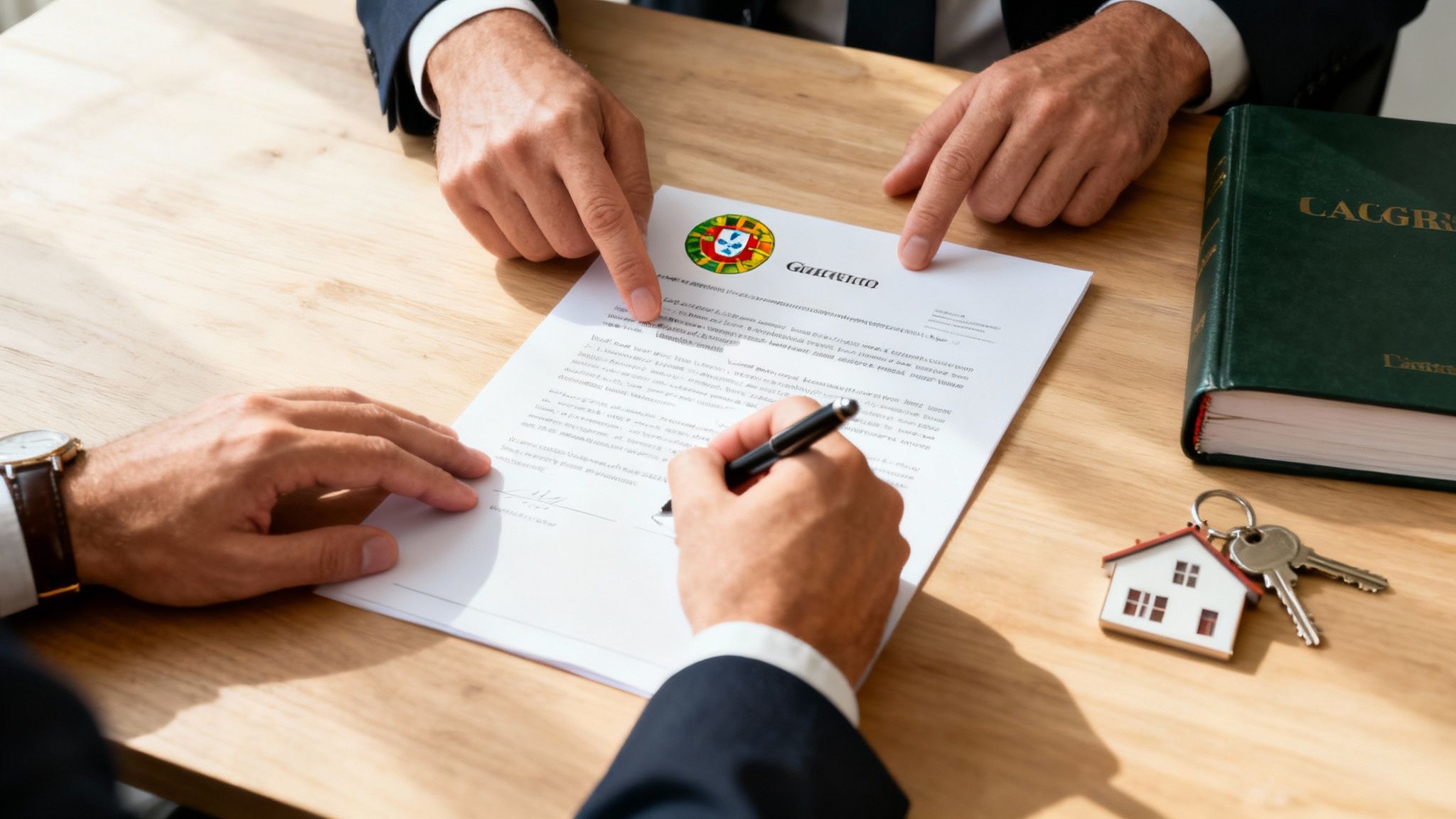
At first glance, the legal side of buying a house in Portugal can seem a bit intimidating. But in reality, it's a very structured and well-defined path. The key is to understand who does what and when. Once you get a handle on the steps, what felt like a complicated maze turns into a straightforward project.
You’ll be working with a few key people: your real estate agent, your lawyer (advogado), and a public notary (notário). The agent helps find the property and broker the deal. Your lawyer is there to protect your interests exclusively. And the notary is the state-appointed official who makes the final sale legal. Getting these roles straight from the beginning is half the battle won.
The Offer and the Promissory Contract (CPCV)
So, you've found the one. The first real step is to make a formal offer. If the seller accepts, you’ll quickly move on to signing the single most important document before the final deed: the Contrato de Promessa de Compra e Venda (CPCV). This is the Promissory Contract.
Think of the CPCV as a legally binding agreement that locks everything in stone—the price, the closing date, and any special conditions. This is also when you'll pay your deposit, which is typically between 10% and 20% of the sale price. This isn't just a gesture of good faith; it has serious legal teeth. If you back out of the deal for a reason not covered in the contract, you forfeit that deposit. On the flip side, if the seller backs out, they are legally required to pay you back double your deposit.
A crucial piece of advice: Never, ever sign a CPCV without your lawyer reviewing and approving it first. This isn't just a simple agreement; it's a binding contract. Your lawyer will ensure it contains clauses that protect you, like making the sale contingent on you securing a mortgage or the property passing a structural survey.
Due Diligence: Your Lawyer's Deep Dive
With the CPCV signed, your lawyer really gets to work on the due diligence. This is the investigation phase, and it’s arguably the most critical part of the process, especially when you’re looking to buy a cheap house in Portugal. This is where you uncover any skeletons in the closet before they become your problem.
Your lawyer’s checklist is long, but it boils down to a few core areas:
- Verifying Ownership: Are they selling you a property they actually own? Your lawyer checks the land registry to confirm the seller is the true legal owner and that the property's registered size and boundaries match what you saw.
- Checking for Debts: They’ll run a search to make sure there are no outstanding mortgages, unpaid taxes, or other liens against the property. You don't want to inherit someone else's financial mess.
- Confirming Licenses: This is a big one. They check for a valid habitation license (Licença de Utilização) and ensure any work done on the property was legally permitted. It's surprisingly common for older homes, particularly in the countryside, to have illegal extensions or pools.
This isn't just boring paperwork. It's your protection against buying a property with huge legal headaches. Discovering an unpermitted swimming pool might sound minor, but it could mean the local council one day orders you to fill it in at your own expense.
Why You Can't Afford to Skip a Professional Survey
A professional property survey isn't legally required in Portugal, but from my experience, it's absolutely essential. This is especially true for older or rural properties. Your lawyer handles the legal health of the property; a surveyor reports on its physical health.
That charming stone farmhouse might look perfect, but it could be hiding some very expensive secrets—rising damp, a leaky roof, outdated wiring, or even structural issues. A surveyor gives you an unbiased, expert report on the building's true condition and an idea of what repairs might cost. This information is gold. It can give you powerful leverage to renegotiate the price or, in a worst-case scenario, a very good reason to walk away from the deal. The cost of a good survey is pocket change compared to the cost of fixing a hidden problem.
The Final Step: Signing the Deed (Escritura)
Once your lawyer is satisfied that all the legal checks are clear and your financing is ready, it's time for the final act: signing the Escritura de Compra e Venda, the final deed of sale.
This official event takes place at a notary's office. You, the seller, and your legal teams will all be there. The notary will read the deed aloud, verify everyone's identity, witness the final payment transfer, and then oversee the signing. As soon as that ink is dry, you get the keys. You are officially the new owner.
The last step is for your lawyer to register the property in your name at the Land Registry (Conservatória do Registo Predial). This completes the entire legal transfer, known as conveyancing. To get more comfortable with the terms and the flow, our guide on what property conveyancing involves breaks it down even further.
Negotiation Tactics and Avoiding Costly Mistakes
So, you’ve found a place that feels right. This is where the real work begins. Getting the price right and sidestepping the hidden traps is how you turn a good deal into a great one, especially when you’re looking to buy a cheap house in Portugal. Older, more affordable properties, in particular, can have some expensive secrets hiding within their walls.
In Portugal, negotiation is more of a delicate conversation than a bare-knuckle brawl. Coming in with an absurdly low offer won't just get you a "no"—it might shut down the discussion for good. Portuguese sellers generally appreciate a respectful, straightforward process. Your best bet is to build a fair case for your offer.
If you’ve seen similar homes in the area sell for less, that’s a solid starting point. But your most powerful tool, by far, will be the report from a professional property survey.
Think of the survey report as more than just a list of problems—it’s your best leverage. If a surveyor points out that the roof needs €15,000 in repairs, you now have a concrete, well-reasoned argument for a price reduction.
The Land Mine of Illegal Construction
One of the biggest and most expensive mistakes I see foreign buyers make is accidentally buying a property with unapproved additions. That gorgeous covered terrace or the perfect little swimming pool? It’s possible they were built without permission from the local council (câmara municipal).
And that’s a massive headache. If the council finds out, they can hit you with fines or, worst-case scenario, make you tear it down at your own cost. It also makes the house nearly impossible to sell later on, since banks refuse to finance properties with illegal structures.
- How to stay safe: Your lawyer is your best defense here. Before you even think about signing a contract, they must cross-reference the property's official documents—the Caderneta Predial (tax registration) and the Certidão de Teor (land registry record)—with what’s actually built on the land. If anything doesn't match up, it's a huge red flag.
Urban vs. Rustic Land: A Critical Difference
Here’s another common trap. You find an amazing deal: a huge piece of land with a tiny, charming ruin, and you start picturing your dream villa.
But hold on. If that land is classified as rústico (rustic), your building dreams could be dead on arrival. Rustic land is typically reserved for agricultural use, and the rules for building new homes or even expanding old ruins on it are incredibly strict.
- How to stay safe: You have to check the local zoning plan, called the Plano Diretor Municipal (PDM), at the council office. This master plan spells out exactly what you can and can't build in the area. Never just assume you can build what you want; get it confirmed.
Uncovering Hidden Debts and Fees
In Portugal, some debts are tied to the property, not the person who owned it. This is a crucial detail. It means if you buy a house with unpaid property taxes (IMI), outstanding utility bills, or overdue condo fees, that debt can become your problem.
For apartments, those condominium fees can be a real surprise. Always ask to see the minutes from the last few condo meetings (actas de condomínio). This is where you'll find the dirt—not just the monthly fees, but any big-ticket repairs being discussed, like a new elevator or roof work. You don't want to get hit with a massive special assessment bill right after you move in.
Before closing the deal, make sure your lawyer has chased down these key documents:
- IMI Payment Records: Proof that the annual property tax is fully paid up.
- Condominium Statements: A formal declaration from the building administrator confirming there are no debts.
- Utility Bills: Confirmation that the water, electricity, and gas accounts have been settled by the previous owner.
Your lawyer should be on top of this due diligence, but knowing what to look for yourself is empowering. By keeping an eye out for these common issues, you can make sure your affordable dream home in Portugal doesn't become an expensive nightmare.
Your Top Questions About Buying a Cheap House in Portugal
Buying property in another country always sparks a ton of questions. As you get closer to turning that dream into a reality, the details really start to matter. This is where we tackle those common queries head-on, giving you clear, straightforward answers to help you move forward with confidence.
Think of this as your quick-reference guide for any lingering doubts. We’ve pulled together the most frequent questions we hear from buyers, so you have all the essential info in one place.
Do I Need Portuguese Residency to Buy a House?
This is one of the first things people ask, and the answer is refreshingly simple: no. You don’t need to be a resident of Portugal or an EU citizen to purchase property here. The market is wide open to buyers of any nationality.
But it’s crucial to understand the difference between owning property and having residency rights. Buying a home doesn't automatically grant you the right to live in Portugal long-term. If you plan on moving here, you'll need to apply for a separate visa, like the popular D7 (for passive income earners) or D8 (for digital nomads), based on your situation.
What Is a NIF Number and Why Is It So Important?
Think of the NIF (Número de Identificação Fiscal) as your golden ticket for doing anything official or financial in Portugal. It’s a nine-digit tax identification number, and getting one is one of the very first things you need to do.
Honestly, you can't get far without it. A NIF is mandatory for:
- Opening a Portuguese bank account.
- Signing any property contracts.
- Paying your property taxes.
- Setting up utilities like electricity, water, and internet.
Luckily, getting a NIF is pretty straightforward. You can arrange it through a lawyer or a specialized fiscal representation service, often before you even arrive in the country. It’s a small bit of admin that unlocks everything else.
Don't underestimate the NIF. It's the foundational piece of paperwork for your entire property journey in Portugal. Make getting it your top priority once you decide to get serious about your search.
Are There Any Hidden Annual Costs to Expect?
Yes, and knowing them upfront is key to budgeting properly. Beyond the purchase price and initial taxes, you'll have a few annual costs to cover as a homeowner in Portugal.
The main one is the IMI (Imposto Municipal sobre Imóveis), which is the annual property tax. Each local municipality sets its own rate, but it generally falls between 0.3% and 0.45% of the property's registered tax value (Valor Patrimonial Tributário). This value is usually quite a bit lower than what you actually paid for the house.
If you buy a property valued over €600,000, you might also have to pay an additional wealth tax called AIMI. And, of course, you'll have the usual expenses like condominium fees if you're in an apartment, home insurance, and utility bills. Factoring these into your annual budget from day one will save you any nasty surprises down the road.
Can I Buy a Property That Needs a Full Renovation?
Absolutely! In fact, snapping up a ruin or a house needing a complete overhaul is a very common strategy to buy a cheap house in Portugal. It's especially popular in rural areas, letting you get a property for a bargain and then design it exactly how you want.
This path, however, requires a lot more homework. Before you even think about buying, you have to do your due diligence with the local council (câmara municipal). You need to get familiar with the local zoning laws (the PDM - Plano Diretor Municipal) to confirm what you’re legally allowed to build or renovate.
Never, ever buy a ruin without first talking to an architect and a lawyer. They can check if your project is feasible and make sure you aren’t buying a pile of rocks you can't legally touch. This upfront work is non-negotiable for a successful renovation.
Ready to find your own affordable piece of Portugal? The properties you’ve been dreaming of are out there waiting. With Residaro, you can explore a huge selection of homes across Portugal’s most beautiful and budget-friendly regions. Start your search today and take the first step toward your new life in the sun. Visit https://residaro.com to begin.