What Is a Property Inspection? A Guide to Buying in Europe

Think of a property inspection as a thorough health check-up for a house. It’s a top-to-bottom, professional evaluation of a home’s real condition, done by a qualified expert who knows exactly what to look for.
This isn't about aesthetics; it's about what lies beneath. This single step is your most powerful tool for understanding what you're really buying before you sign on the dotted line.
Beyond the Surface: A Deeper Look at Inspections

When you tour a home, you see the fresh paint, the stylish fixtures, and the charming garden. An inspector sees what’s behind the walls, under the floors, and crawling through the attic. Their job isn’t to give the house a simple pass or fail grade. Instead, they deliver a detailed, unbiased report on every major system and the building's structural integrity.
This deep dive is especially crucial when you're buying abroad. A seemingly minor quirk in a Spanish villa or an Austrian chalet could actually be a symptom of a much larger, more expensive problem tied to local building codes or climate-related issues you’d never think to look for.
The True Purpose of an Inspection
At its core, an inspection is all about giving you knowledge—and the power that comes with it. The final report shines a bright light on the hidden realities of a property, so you aren't blindsided by costly surprises long after you've moved in.
This expert analysis gives you a few critical advantages:
- Financial Protection: It uncovers defects that could drain your bank account, like failing roofs, outdated wiring, or foundational cracks that might cost thousands to fix.
- Safety Assurance: The inspector is trained to spot potential safety hazards, from dodgy electrical panels to structural weaknesses that could put your family at risk.
- Negotiation Power: A detailed report is your best friend at the negotiating table. It provides concrete evidence to back up requests for repairs or a price reduction, giving you serious leverage.
- Informed Decision-Making: Ultimately, it gives you the confidence to either move forward, renegotiate the deal, or walk away from what could have been a disastrous investment.
A property inspection transforms you from an emotional buyer captivated by a beautiful view into a strategic investor who understands the asset's true condition. It is your shield against post-purchase regret.
To give you a clearer picture, here’s a quick summary of the essential components an inspector typically examines during a comprehensive evaluation.
Key Areas Covered in a Standard Property Inspection
| Component Category | What's Inspected | Why It Matters |
|---|---|---|
| Structure & Foundation | Foundation walls, floors, support structures, framing. | Identifies cracks, settling, or moisture issues that compromise the home’s stability. |
| Roofing | Shingles, flashing, gutters, chimneys, and attic ventilation. | A failing roof is one of the most expensive home repairs. |
| Plumbing | Pipes, drains, water heater, fixtures, and water pressure. | Catches leaks, corrosion, and clogs before they cause major water damage. |
| Electrical System | Service panel, wiring, outlets, switches, and grounding. | Uncovers outdated or unsafe wiring that could be a serious fire hazard. |
| HVAC System | Furnace, air conditioner, heat pump, and ductwork. | Assesses the age and condition of systems vital for comfort and air quality. |
| Interior | Walls, ceilings, floors, windows, doors, and built-in appliances. | Checks for signs of leaks, pests, or poor workmanship. |
| Exterior | Siding, trim, windows, grading, and drainage. | Evaluates the building's first line of defense against the elements. |
This table just scratches the surface, but it highlights how thorough a proper inspection really is. Every single one of these areas holds the potential for hidden problems.
Why It's a Non-Negotiable Step
The sheer demand for inspections speaks volumes. In the United States, a market that often sets global real estate trends, the building inspection industry is made up of over 30,620 businesses as of 2025. According to industry analysis from IBISWorld, this sector has seen steady growth even through economic ups and downs, proving that savvy buyers always rely on a professional evaluation.
It’s also important to know that an inspection is different from other property assessments. While it can overlap with a property survey, they serve very different functions. If you're curious about the specifics, our guide on what a property survey entails breaks it all down.
At the end of the day, skipping an inspection is like buying a car without ever looking under the hood. It’s a massive gamble that can turn your dream home into a financial nightmare.
Decoding the Different Types of Property Inspections
Not all property inspections are cut from the same cloth. Think of it like a visit to the doctor: you start with your general practitioner for a full check-up, but for a specific heart concern, you see a cardiologist. It’s the same with property. A standard home inspection gives you the big picture, but some properties need a specialist's eye.
Understanding these different layers of scrutiny is your secret weapon for effective due diligence, especially when you're looking at the diverse and character-rich properties scattered across Europe. The right inspection for you will come down to the age, location, and unique quirks of the home you’ve fallen for.
The Foundation: The General Home Inspection
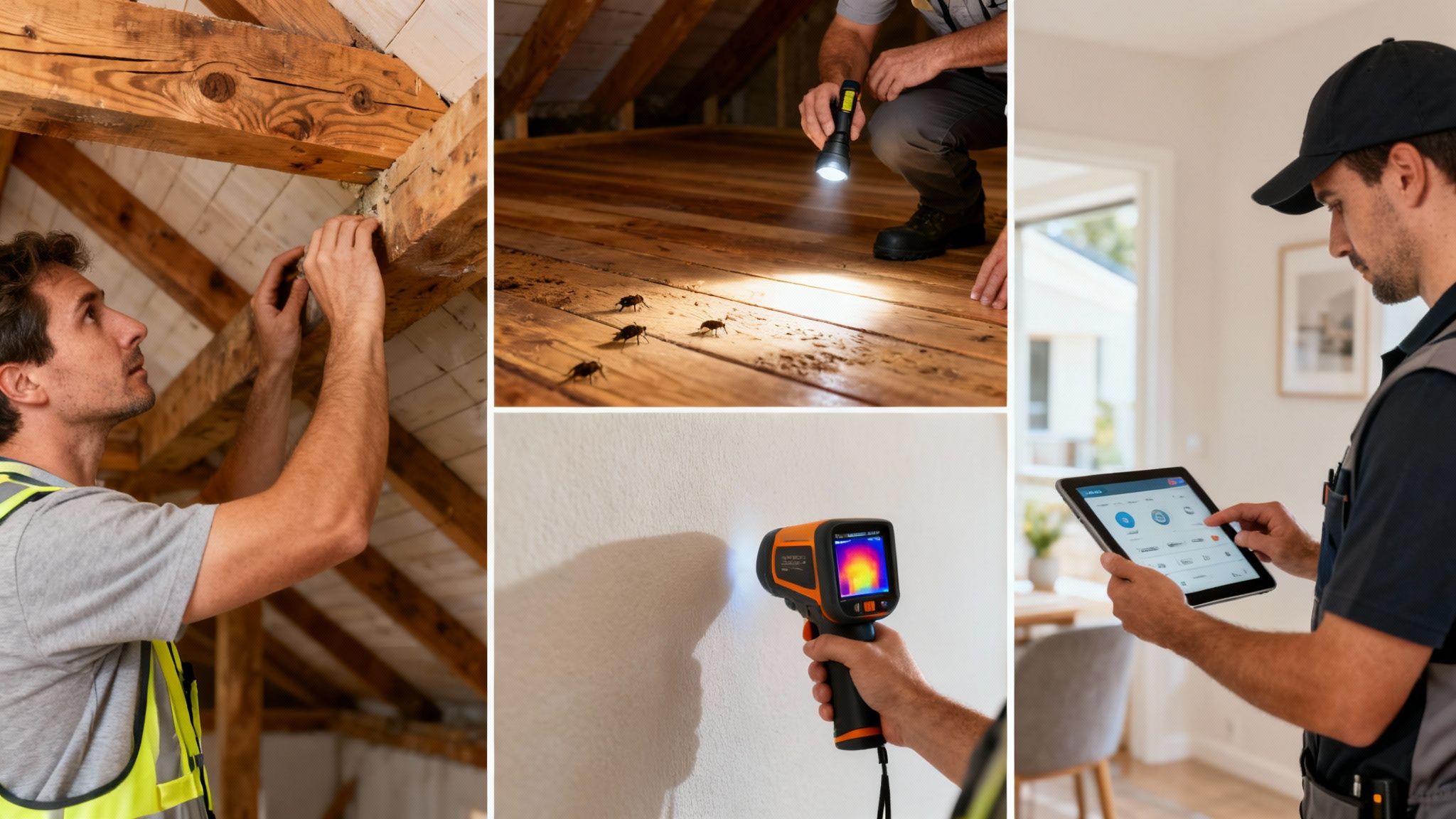
The most common starting point is the general home inspection, often called a building survey. This is your comprehensive, wide-angle look at the property’s overall health. A certified inspector will visually comb through all the major systems and components we've talked about—from the shingles on the roof right down to the foundation it sits on.
This inspection is designed to catch the most common and significant problems that could plague a typical home. It's an essential first step. For many properties, it provides all the insight you need to make a confident decision.
Keep in mind, though, that a general inspector is a jack-of-all-trades. They are trained to spot the red flags, but if they uncover a symptom of a deeper, more complex issue, they'll be the first to tell you to call in an expert.
Calling in the Specialists: When to Dig Deeper
So, when does a specialist get the call-up? It's usually when a property has unique features or when the general inspection raises a specific concern. These focused deep dives provide an expert-level analysis of a single system or potential hazard, giving you a much sharper picture of the risks and, just as importantly, the costs involved.
Here are a few common scenarios where a specialist is an absolute must:
- Structural Inspection: If your general report mentions significant foundation cracks, bowing walls, or sagging floors, it's time to call a structural engineer. Imagine a centuries-old Italian farmhouse with uneven stone walls. An engineer can tell you if that settling is just part of its historic charm or an active, dangerous problem. This assessment is non-negotiable for older or unconventional buildings.
- Pest and Timber Inspection: This is vital in regions known for wood-boring insects like termites or woodworm. A charming wooden cottage in Sweden, for example, is a prime target for timber pests and rot. A specialist will probe the structure for subtle signs of infestation and decay that a generalist might easily miss.
- Electrical or Plumbing Inspection: See some old-school wiring or galvanized steel pipes? A dedicated master electrician or plumber can assess the system's safety, remaining lifespan, and exactly what it will cost to bring it up to modern code. This isn’t something you want to guess on.
- Radon or Mould Testing: These inspections hunt for invisible dangers. Radon, a naturally occurring radioactive gas, can seep into basements, while mould can thrive behind walls after a hidden leak. Both pose serious health risks and require specialized gear to detect properly.
A general inspection tells you that a problem might exist. A specialist inspection tells you why it exists, how bad it is, and what it will take to fix it. This distinction is critical for accurate cost estimates and negotiations.
Modern Assessments for Contemporary Homes
As homes have evolved, so have inspections. Today’s buyers aren't just worried about a solid roof; they also care about efficiency, sustainability, and technology. This has given rise to a new slate of modern property inspections.
An energy efficiency audit, for example, is becoming a go-to for eco-conscious buyers. An auditor can use tools like thermal cameras to pinpoint air leaks, find spots with poor insulation, and assess HVAC systems, ultimately creating a roadmap to slash a home’s carbon footprint and utility bills.
And with the rise of connected homes, a smart home system check is no longer a luxury. This inspection verifies that all the integrated tech—from lighting and security to thermostats and entertainment systems—is working correctly and, crucially, is secure from outside interference.
Navigating the Property Inspection Process Step by Step
Alright, you know what kinds of inspections are out there. But what actually happens on the ground? From the outside, the property inspection can feel like a pretty intense, high-stakes moment, especially when you're buying in another country. The good news is that once you break it down, the process is quite straightforward. It’s all about turning that anxiety into empowerment.
And it doesn't start when the inspector shows up at the door. The real work begins with finding the right professional to be in your corner—an independent expert whose only job is to give you the unvarnished truth.

Step 1 Finding and Hiring Your Inspector
This is single-handedly the most important decision you'll make in this entire process. Your real estate agent might have a few names to share, and that's a fine starting point, but you absolutely need to do your own homework. You want someone who is completely impartial. A top-notch inspector works for you, and only you—not for the deal.
Start by looking for professionals with solid local credentials, verifiable certifications, and great reviews. If you can find feedback from other international buyers, even better. Once you've got a shortlist, ask to see a sample report. This is a brilliant way to get a feel for their work, see how detailed they are, and judge if their communication style works for you.
Step 2 The Inspection Day Itself
When the day arrives, the inspector will get to work on a deep, visual dive into the property. This usually takes 2-4 hours, sometimes longer depending on the home’s size and condition. They’ll be working through a massive checklist, methodically examining hundreds of components from the roof to the foundation.
I can't recommend this enough: be there. If you can, tag along for the inspection. Walking through the property with a pro is an incredible learning opportunity. It gives you the chance to:
- See things with your own eyes: A photo of a foundation crack is one thing, but seeing it in person gives you a real sense of scale and context.
- Ask questions on the spot: You can get instant answers and even pick up some great tips on general home maintenance.
- Get to know the home's systems: The inspector can literally point out the main water shut-off valve or walk you through how the heating system works.
This turns what could be a dry, technical report into a hands-on orientation for your potential new home.
Step 3 Receiving and Understanding the Report
Within a day or two, the inspector’s findings will land in your inbox as a detailed written report. This document is your roadmap for what comes next. A good report is easy to read, packed with detail, and uses plenty of high-resolution photos or even videos to show you exactly what they found.
Don't panic if the report looks long. Seriously, no home is perfect. The trick is to sort the findings into a few key categories:
- Major Defects: These are the big-ticket items and potential deal-breakers. Think structural problems, a roof that's on its last legs, or dangerous wiring.
- Potential Issues: These are things that aren't emergencies but will need attention soon, like an aging water heater or some minor plumbing leaks.
- Minor Imperfections: We're talking cosmetic stuff here—a cracked tile, a window that sticks, or scuffed paint.
- Maintenance Recommendations: These are simply helpful tips to keep the property in good shape for years to come.
Your job isn't to memorize every single line item. It's to understand the big picture—the overall story the report is telling about the home's health. Focus on the issues that affect safety and your wallet.
This inspection is a critical piece of your overall due diligence puzzle. To see how it fits into the broader picture, you can read our complete real estate due diligence checklist and make sure you've got all your bases covered. https://residaro.com/blog/real-estate-due-diligence-checklist
The need for these thorough checks is a constant in the real estate world, no matter which way the market is tilting. Whether you're eyeing a Spanish villa or an Austrian retreat on Residaro, an inspection is vital for uncovering hidden issues. In fact, in more balanced markets, buyers often have more power to demand comprehensive inspections before they sign on the dotted line. This gives you leverage and, most importantly, peace of mind.
Spotting Deal-Breakers: How to Read an Inspection Report
Your inspection report is where the rubber meets the road. It cuts through the sales pitch and gives you a brutally honest look at the property, translating technical findings into a practical roadmap. Your job is to learn how to read that map—to tell the difference between a small pothole and a giant sinkhole waiting to swallow your budget.
Let's be clear: not all "issues" are created equal. A wobbly doorknob is a five-minute fix. A cracked foundation is a five-figure nightmare. The real skill is learning to categorize the inspector's findings so you can focus on what truly matters and make a smart, unemotional decision.
Tier 1: The Critical Red Flags
These are the big ones. The showstoppers. Critical red flags involve the home's fundamental structure or safety systems, and they almost always come with a hefty price tag and a whole lot of stress. You simply can't ignore these.
Here’s what you should be looking for:
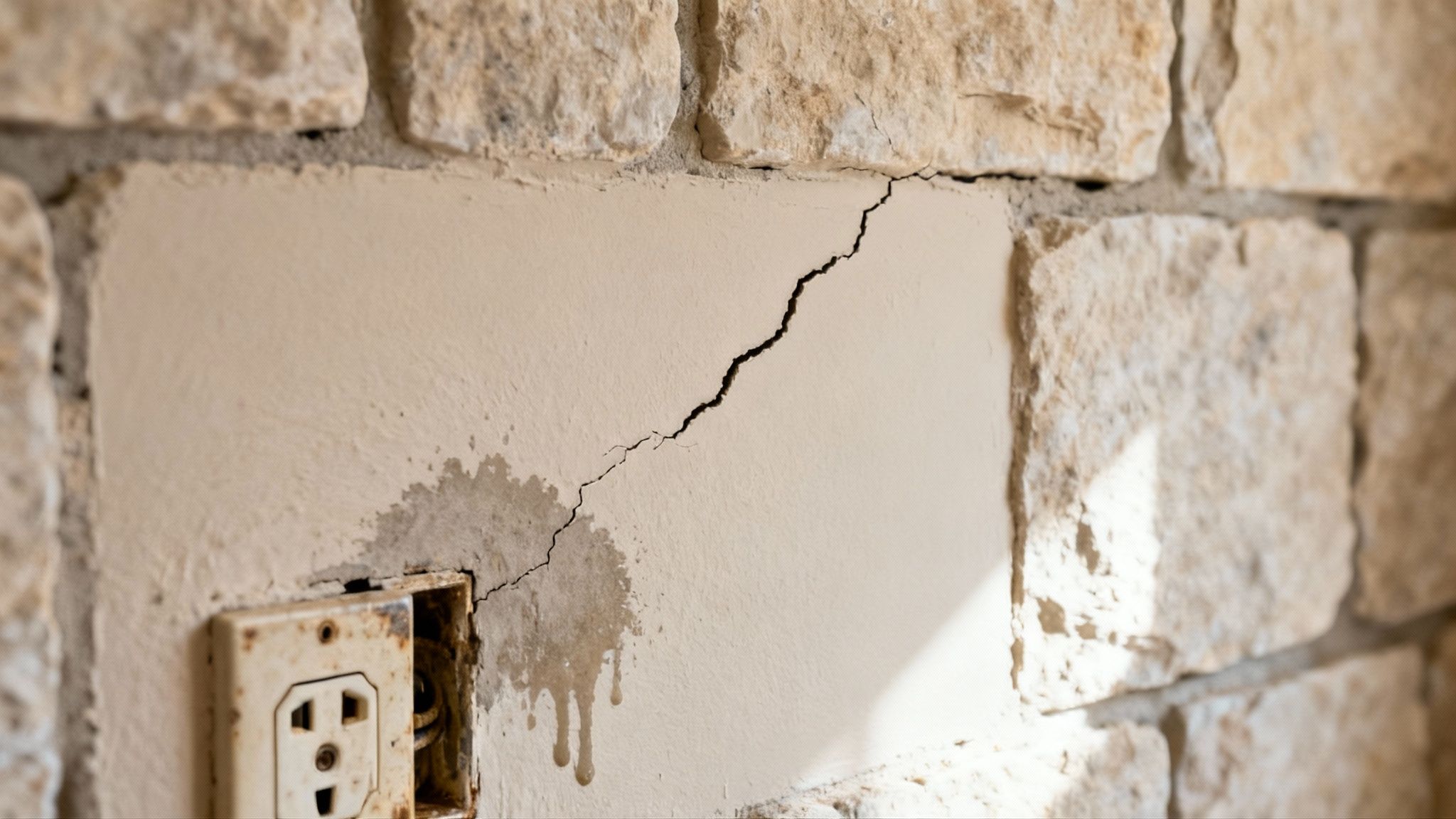
- Major Structural Problems: We're talking about things that compromise the very bones of the house—deep foundation cracks, bowing basement walls, or a visibly sagging roof. These problems scream "structural engineer" and can run into tens of thousands to fix correctly.
- Widespread Moisture and Mould: A persistently damp basement in a French country home or mould creeping up the walls of a Lisbon apartment isn't just a nuisance; it's a sign of a major water intrusion problem. This can lead to wood rot, poor air quality, and complex, expensive remediation work.
- Outdated or Unsafe Electrical Systems: Old wiring, antique fuse boxes (like the infamous Zinsco panels), or a lack of grounded outlets are serious fire hazards. Rewiring an entire house is a massive job that requires opening up walls and a significant budget.
- Failing Roof: A roof that’s past its prime or actively leaking is one of the most expensive single items to replace on any property. Don't underestimate this cost.
When an inspector flags a critical issue, it's time to hit the brakes. This isn't just a negotiating point; it's a moment to seriously ask yourself if you have the money, time, and emotional fortitude to take on a project of this magnitude.
Tier 2: Significant Concerns
This next group of issues won't necessarily send you running for the hills, but they demand your full attention. These are problems that will require a substantial investment in the near future, and you need to factor them into your overall cost of ownership.
These often involve major systems that are simply getting old. The inspector might point out:
- An Aging HVAC System or Boiler: A furnace that's 15-20 years old is on its last legs. You might get another year or two out of it, but a replacement is a predictable and significant expense you'll be facing soon.
- Plumbing Issues: Widespread slow drains, weak water pressure, or visible corrosion on pipes are all warning signs. Older materials like galvanized steel pipes can fail without warning, leading to leaks and water damage.
- Leaky or Inefficient Windows: Old, single-pane windows might have charm, but they're terrible for energy bills and can be a source of drafts and water intrusion. Replacing all the windows in a home can easily cost thousands of euros.
- Evidence of Pest Infestations: Termites, woodworm, or rodents are never a good sign. They require immediate professional treatment and can cause hidden structural damage that needs to be assessed.
Tier 3: Minor Maintenance Tasks
Finally, we get to the small stuff. These are the everyday wear-and-tear issues that you'll find in almost any home, new or old. They are part of the reality of homeownership and are rarely a reason to kill a deal.
This list includes things like:
- A dripping tap or a toilet that keeps running.
- A few cracked tiles or some scuffed paint.
- A door that sticks in humid weather.
- Loose cabinet handles or doorknobs.
Think of these as the home's "to-do list" that you'll inherit. While they paint a picture of how well the property has been maintained, they shouldn't distract you from the major issues in Tier 1 and Tier 2. The key is to see the whole report as a puzzle—and your job is to know which pieces are the most important.
How to Use Your Inspection Report to Negotiate
So, you’ve got the inspection report in your hands. This is where the real work—and the real opportunity—begins. Think of that report as more than just a list of problems; it’s your single most powerful tool for negotiation. It provides objective, third-party proof that shifts you from just another hopeful buyer to an informed negotiator who knows exactly what they’re dealing with.
The trick is to be strategic. This isn't about bleeding the seller dry over every tiny scuff mark or loose doorknob. Your goal is to build a case around the issues that genuinely matter—the ones that affect the home's safety, structural integrity, and ultimately, its value.
Prioritizing Your Requests
Before you even dream of picking up the phone, sit down with the report and your real estate agent. You need to sort the findings into two piles: the deal-breakers and the "it-would-be-nice-ifs." Minor cosmetic flaws, like a cracked light switch plate or a stiff window, are just part of a home's story. They're best left out of the conversation.
Your real leverage comes from the big-ticket items. Pour your energy into negotiating these:
- Safety Hazards: Anything the inspector called out as a risk. We're talking about outdated electrical wiring, serious mould, or missing safety features like smoke detectors. These are non-negotiable.
- Structural Problems: This is the big stuff. Think significant foundation cracks, wood rot in key supports, or a roof that's clearly on its last legs. These issues threaten the very bones of the house.
- Major System Failures: A furnace that’s about to give up the ghost or a plumbing system crying out for a complete overhaul are perfectly valid negotiating points.
When you focus on these critical areas, you show the seller you’re a serious, reasonable buyer concerned with the long-term health of the property, not just nitpicking. This approach is far more likely to lead to a productive discussion rather than a standoff.
A successful negotiation isn’t about "winning." It's about reaching a fair agreement where both parties feel the final deal accurately reflects the property's true condition and value.
Choosing Your Negotiation Tactic
Once you’ve got your priorities straight, you generally have three ways to play it. The best path forward depends on the severity of the problems, how motivated the seller is, and what the local market looks like. Sometimes, a mix of these tactics is the smartest move.
Here's a quick look at the different approaches you can take once you have the inspection findings.
Negotiation Strategies Based on Inspection Findings
| Negotiation Tactic | Best For Which Issues | Potential Outcome | Pro Tip |
|---|---|---|---|
| Request for Repairs | Clearly defined, fixable problems like a leaking roof or a faulty water heater. | The seller arranges and pays for the repairs to be completed by qualified professionals before closing. | Always ask for receipts and warranties to ensure the work was done properly. This is often the cleanest option. |
| Price Reduction | Major, expensive issues (e.g., foundation work) or when you prefer to oversee the repairs yourself. | The agreed-upon sale price is lowered to account for the estimated cost of the necessary repairs. | Get at least two quotes from contractors to justify your requested price drop with solid financial data. |
| Seller Credits | When you need funds for repairs post-closing but can't lower the sale price (often for mortgage reasons). | The seller agrees to pay a portion of your closing costs, freeing up your cash to handle the repairs after you move in. | This is a flexible solution that gives you control over the repair process and choice of contractors. |
Making the right choice here is key. Each path has its pros and cons, so weigh them carefully with your agent to figure out what makes the most sense for your situation.
Knowing When to Walk Away
Finally, we have to talk about the toughest decision you might face: walking away. Some problems are just too big, too expensive, or too uncertain to take on. If your what is a property inspection uncovered deep-seated structural damage, a pervasive mould issue, or an entire system on the brink of collapse that the seller won't budge on, the deal might not be worth it.
This isn’t a failure—it's a massive win. The inspection did exactly what it was supposed to do: it saved you from a potential money pit and years of stress. Trust the report, trust your gut, and remember that the right property is still out there waiting for you.
Understanding the Lay of the Land: Inspections Across Europe
Buying a property in Europe is anything but a standardized process. A stone farmhouse in the French countryside and a minimalist apartment in Stockholm are worlds apart—built differently, subject to different laws, and prone to completely different issues. Getting your head around these local quirks is what makes the difference between a smooth purchase and a nightmare of unexpected costs.
Think of it like this: you wouldn't use a city map to hike in the Alps. In the same way, a generic inspection checklist just won't cut it. You need to tailor your approach to each country's building codes, climate, and common construction methods. This is your single best defense against missing a region-specific red flag that could turn into a serious problem down the road.
France: It’s All About the Diagnostics
In France, the property inspection process is highly structured and centers on a bundle of legally required reports known as the Dossier de Diagnostic Technique (DDT). This isn't optional; the seller is obligated by law to provide these to you.
This file typically includes reports on:
- Lead and Asbestos: A must for older properties, flagging the presence of these hazardous materials.
- Energy Performance (DPE): An energy efficiency grade that's become a huge factor in a property's value.
- Termites: Required in designated high-risk areas across the country.
- Natural and Industrial Risks: A report outlining any local hazards like flooding, landslides, or seismic activity.
For some apartment buildings, a more comprehensive Diagnostic Technique Global (DTG) might also be on the table, which assesses the condition of the entire building. Getting to grips with these reports is fundamental to buying property in France.
Italy: Where History and Headaches Meet
Italy offers a unique set of challenges, particularly with its incredible stock of historic buildings. While a standard building survey (a perizia tecnica) is a good starting point, the real detective work often involves digging into the property's legal history.
When buying in Italy, your inspector isn't just looking for cracks in the plaster; they're looking for cracks in the paperwork. Unpermitted renovations and illegal extensions are astonishingly common and can land you in a world of legal and financial trouble.
An Italian inspector or surveyor needs to team up with a geometra (a type of technical specialist) to ensure the property's actual layout matches the official plans filed at the land registry (catasto). You also have to be on the lookout for historic preservation restrictions (vincoli storici), which can put severe limits on what you can change. This due diligence is a non-negotiable part of the Italian inspection process and is tied directly to the legal side of the purchase. You can learn more about this in our guide to what property conveyancing involves.
Spain and Portugal: Sun, Sea, and Septic Systems
Down on the Iberian Peninsula, the focus often shifts to issues born from the climate and, especially in rural areas, off-grid systems. While formal inspections aren't always legally required like they are in France, skipping one is a massive gamble.
A few key areas to keep an eye on include:
- Waterproofing and Damp: The intense, sudden downpours of a Mediterranean winter can quickly reveal shoddy waterproofing on roofs and terraces.
- Septic Systems: In the countryside, many homes rely on a septic tank (fossa). An inspection is critical to verify that it meets local regulations and is working properly.
- Unlicensed Building Work: Just like in Italy, illegal extensions are a frequent problem that needs to be sniffed out.
Sweden: A Glimpse into the Future
Head north to Sweden, and you'll find a modern, highly regulated market where energy efficiency and technical systems are king. Here, inspectors will zero in on the quality of insulation, ventilation systems (absolutely vital in a cold climate), and the condition of sophisticated heating systems.
This focus on technology is a trend that’s spreading across Europe. As homes get smarter, inspections are evolving right alongside them. By 2029, it's projected that over 190 million homes in Europe and North America will be packed with smart technology, creating a need for inspectors who can assess everything from AI-driven security to automated climate control. Buyer priorities are clearly shifting toward health, safety, and energy performance—a trend that's only going to accelerate.
Got Questions About Property Inspections? We've Got Answers.
Buying a property, especially in another country, is bound to stir up some questions. It’s a big deal! Let's clear up a few of the most common queries we hear from buyers so you can move forward with confidence.
What's the Typical Cost for a Property Inspection in Europe?
This is a tough one to nail down because the price tag can swing pretty wildly. It all depends on where you're buying, the property's size and age, and just how detailed you want the inspection to be.
For example, a standard inspection on a modern apartment in Spain might run you between €300 and €500. But if you're looking at a sprawling, historic villa in the French countryside, a full structural survey could easily top €1,000. The best approach is to get a few quotes from different qualified inspectors to see what they offer and at what price. Think of it this way: it’s a tiny price to pay to avoid a massive, wallet-draining surprise down the road.
So, Can a Property Actually "Fail" an Inspection?
That's a common myth, but the short answer is no. A property inspection isn't like a test at school; there's no pass or fail grade at the end. It's simply an objective, top-to-bottom assessment of the home’s condition on that specific day.
The goal of an inspection isn't to give a thumbs-up or thumbs-down. It's to give you information. The report will highlight everything from minor cosmetic fixes to potentially serious structural flaws, giving you the power to decide what to do next.
Think of the report like a health check-up for the house. It gives you the full diagnosis, but it doesn't judge. It just tells you what's going on so you can make an informed decision.
Should I Just Go With the Inspector My Real Estate Agent Recommends?
It's tempting to take the easy route, and an agent's recommendation can certainly be a good starting point. However, your number one priority should be finding an inspector who is 100% independent and working only for you.
When an inspector relies heavily on agent referrals for their next job, there's a subtle, unspoken pressure to not be too critical and risk killing the deal. To make sure you get a completely unbiased report, it's smart to do your own homework. Look for local inspectors online, check their credentials, read through reviews, and always ask for a sample report to see their work. This little bit of extra effort ensures their only loyalty is to you.
Ready to find your perfect European home? Start your search with Residaro and explore thousands of properties across the continent. Discover your dream property today.