Property for Sale in Abruzzo, Italy: Your Guide to Dream Homes
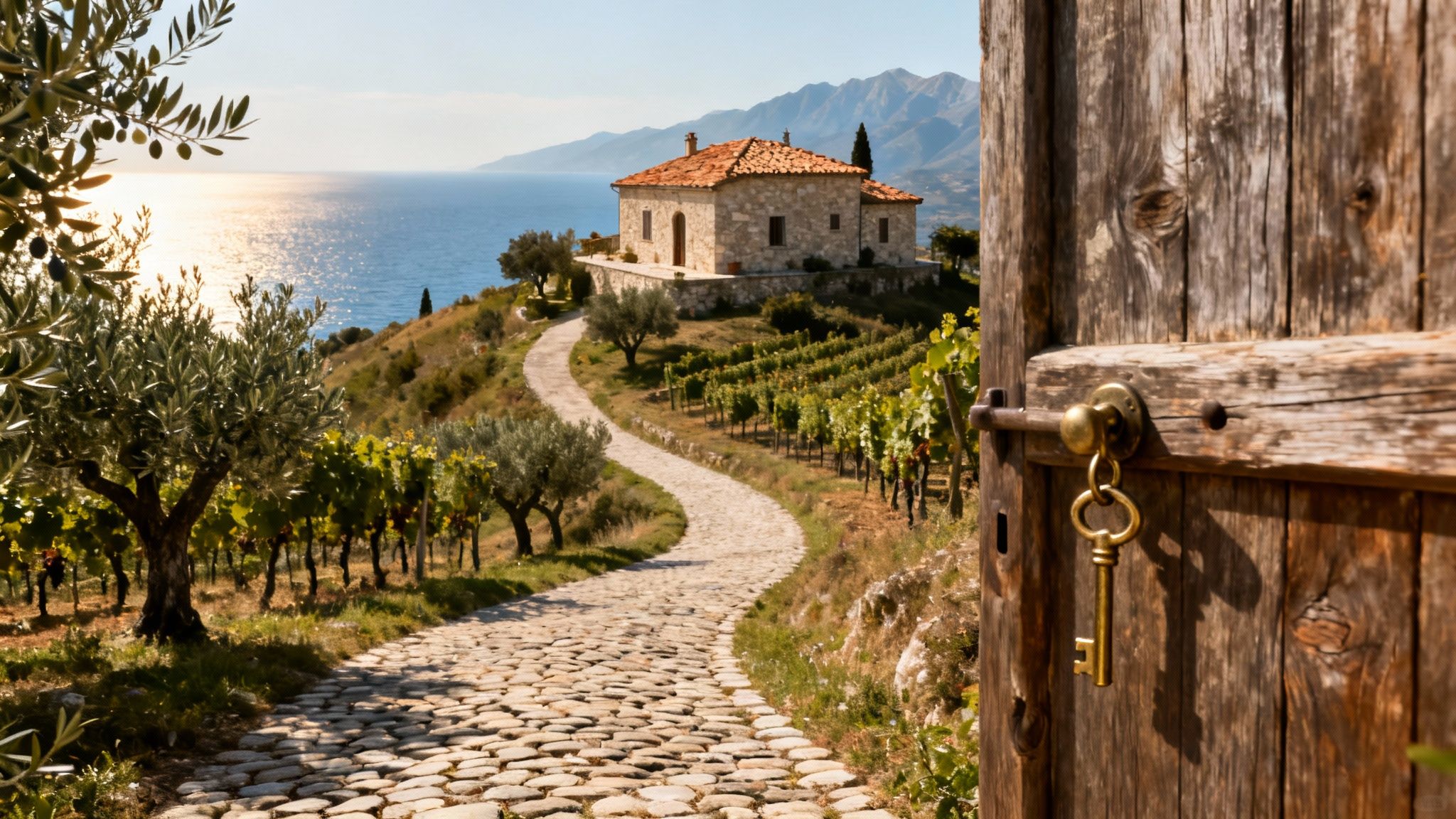
When most people picture buying a home in Italy, their minds immediately jump to the rolling hills of Tuscany or the dramatic cliffs of the Amalfi Coast.When most people picture buying a home in Italy, their minds immediately jump to the rolling hills of Tuscany or the dramatic cliffs of the Amalfi Coast. While those are stunning, the well-worn tourist trail often comes with a hefty price tag and crowds. But what if I told you there's a place with all the charm, beauty, and authentic culture, but without the premium?
That place is Abruzzo. For those searching for property for sale Abruzzo Italy, you've stumbled upon a region that offers the real Italian dream—one that's not only within reach but surprisingly affordable.
Why Abruzzo Is Italy's Best-Kept Secret for Property Buyers
Let's get one thing straight: Abruzzo isn't a "budget Tuscany." It’s a fiercely unique region with its own rugged identity. This is a land of dramatic contrasts, where the snow-dusted peaks of the Apennine mountains cascade down into olive-strewn hills, which then melt into the clear waters of the Adriatic Sea.
This isn't just a pretty picture; it's a lifestyle. It’s why the region is nicknamed the "Green Heart of Europe," boasting vast national parks and protected reserves.

The unique geography means your life here can be as adventurous or as peaceful as you want it to be. You could literally be skiing in the morning and relaxing on a quiet beach by the afternoon. It’s this incredible blend of experiences that has put Abruzzo on the radar for savvy international buyers.
An Unbeatable Value Proposition
Beyond the breathtaking scenery, the numbers just make sense. Abruzzo’s property market delivers some of the best value you'll find anywhere in Italy. You can find beautiful, character-filled homes for a fraction of what you'd pay in more famous regions, and you won't be sacrificing an ounce of quality of life.
The data speaks for itself. The average price for residential properties here recently hovered around €1,362 per square meter. That kind of stability is a huge plus for expats and retirees. We’re talking about finding renovation projects for under €25,000, or entire country homes for the price of a small apartment elsewhere. If you want to dig deeper, you can find more insights on the Abruzzo housing market and see just how attractive the prices are.
What this affordability really means is freedom. Your budget goes so much further here, whether that means buying a larger home, planning a stunning renovation, or simply having more money left over to enjoy la dolce vita.
Abruzzo represents a unique opportunity to invest in an authentic Italian experience. It's not about finding a cheaper version of Tuscany; it's about discovering a region with its own distinct identity, history, and charm that happens to be incredibly well-priced.
What Makes Abruzzo So Appealing
So, for anyone looking at property for sale Abruzzo Italy, what's the real draw? It's a combination of practical benefits and an enriching lifestyle that's hard to beat.
I've worked with countless buyers who fell in love with the region, and their reasons often boil down to a few key advantages. I've summarized the big ones in this table.
Abruzzo at a Glance: Key Buyer Benefits
| Benefit | Description |
|---|---|
| Authentic Italian Culture | Live among medieval hilltop towns and vibrant local markets. Experience age-old festivals without the crush of mass tourism. |
| Outdoor Adventure | With three national parks, this is a paradise for hikers, cyclists, and nature lovers. The wilderness is right on your doorstep. |
| Incredible Food and Wine | The cuisine is rustic and spectacular, from mountain cheeses to fresh Adriatic seafood, all paired with local wines like Montepulciano d'Abruzzo. |
| Strategic Location | Abruzzo is surprisingly well-connected. You can fly into Pescara's international airport or take the motorway and be in Rome in under two hours. |
Ultimately, what buyers find here is more than just a house; it's an investment in a way of life. It’s slower, richer, and more connected to nature and tradition. It’s the Italy you’ve always dreamed of, just waiting for you to find it.
Where in Abruzzo? A Guide to Its Four Unique Provinces

Abruzzo isn't just one place; it's a collection of four distinct provinces, each with its own soul. Thinking about buying a property for sale in Abruzzo, Italy, is a bit like choosing a good bottle of wine. Are you after something bold and mountainous, or do you prefer the light, breezy notes of the coast? Your perfect home depends entirely on the life you want to live.
Let's take a tour through L'Aquila, Chieti, Pescara, and Teramo. From rugged peaks to sun-drenched shores, understanding what makes each one tick is the first real step in finding your dream Italian address.
L'Aquila: The Majestic Mountain Heart
L'Aquila province is Abruzzo at its most raw and dramatic. This is the kingdom of the Apennine Mountains, home to Gran Sasso, the highest peak of the range. The landscape is a breathtaking canvas of ancient fortified villages, vast national parks, and an almost overwhelming sense of peace.
If you’ve ever imagined owning a stone house in a medieval hilltop town, this is where you should be looking. Towns like Santo Stefano di Sessanio and Sulmona (the birthplace of sugared almonds, or confetti) offer an immersion into authentic, old-world Italy. It’s a haven for hikers, skiers, and anyone looking to truly disconnect.
- The Vibe: Quiet, deeply connected to nature, historic, and perfect for outdoor lovers.
- What You'll Find: Mostly historic stone townhouses, rustic farmhouses (casali), and mountain chalets.
- Best For: Buyers who crave tranquility, epic mountain views, and a powerful sense of history.
Chieti: The Land of Rolling Hills and Sea
Stretching from high in the mountains right down to the Adriatic Sea, Chieti offers the best of both worlds. Its rolling hills are draped in vineyards and olive groves, producing some of the region's most celebrated wines and oils.
But the real star here is the famous Costa dei Trabocchi, or "Trabocchi Coast." It’s named for the iconic, stilted wooden fishing platforms that jut out into the sea—a truly unique sight. Towns like Vasto and Ortona serve up a perfect mix of historic centers and beautiful beaches. In Chieti, you get countryside serenity with the sea just a short drive away.
Pescara: The Vibrant Coastal Hub
Pescara is the modern, beating heart of Abruzzo. The capital city, also Pescara, is a bustling hub with an international airport, fantastic train connections, and a genuinely vibrant social scene. This is where you come for modern conveniences, great shopping, and a dose of urban energy.
The property market here reflects that pace. Think modern apartments with sea views, new-build developments, and easy access to long, sandy beaches that are packed in the summer. For anyone looking at the property for sale in Abruzzo, Italy, with an eye toward investment, Pescara offers serious potential for holiday rentals, drawing both Italian and international crowds.
Pescara is Abruzzo's modern pulse. Life here is about convenience, connectivity, and coastal energy, making it a smart choice for investment properties or for anyone who wants city amenities right on the beach.
Teramo: The Refined Northern Gem
Tucked away in the north, Teramo is another province that strikes a beautiful balance between the mountains and the sea. Inland, you'll find incredible medieval towns like Civitella del Tronto, dominated by its massive fortress. Head toward the coast, and you're greeted by popular, family-friendly beach resorts.
Teramo's coast is famous for its wide, sandy beaches and pristine waters, with towns like Roseto degli Abruzzi and Giulianova buzzing with holidaymakers all summer long. The province feels a little more polished and less rugged than L'Aquila, offering a gentle landscape for those who want easy access to both nature and well-equipped seaside towns.
- The Vibe: A perfect blend of seaside relaxation and inland historic charm.
- What You'll Find: Coastal apartments and villas, alongside traditional homes in hillside villages.
- Best For: Families, retirees, and buyers looking for that well-rounded Italian experience with great beaches and plenty of culture.
Ultimately, picking the right province is about matching its character to your own vision. Whether you picture yourself sipping an espresso in a lively piazza in Pescara or pruning an olive tree in the hills of Chieti, Abruzzo has a corner that’s just waiting for you.
Finding Your Perfect Coastal Retreat or Investment Property
While the rugged mountains give Abruzzo its soul, the sun-drenched Adriatic coastline gives it a vibrant, modern pulse. For many people looking for property for sale Abruzzo Italy, the ultimate dream is a home where you can wake up and smell the sea breeze. This stunning stretch of coast is a magnet for both holidaymakers chasing their own slice of paradise and savvy investors looking for a high-value alternative to Italy’s more crowded, and expensive, rivieras.
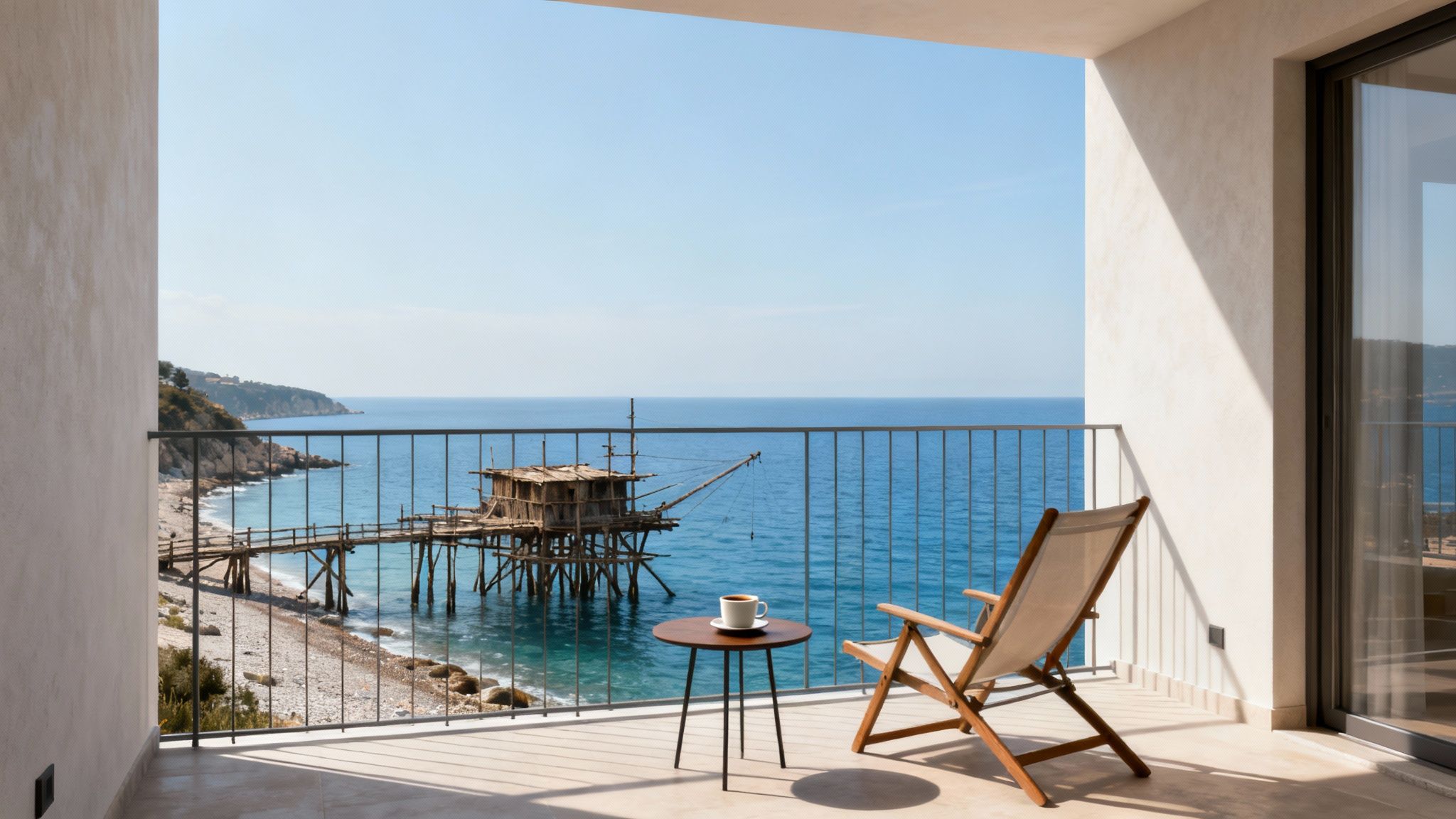
Life here is a fantastic mix of laid-back relaxation and buzzing energy. You’ll find everything from lively, family-friendly beaches loaded with amenities to quiet, hidden coves that feel like your own private escape. The coast presents a unique investment opportunity, delivering that quintessential sun, sand, and sea experience at a fraction of the cost of its more famous counterparts.
The Allure of the Costa dei Trabocchi
One of the most magical parts of the Abruzzo coastline has to be the Costa dei Trabocchi in the Chieti province. This area gets its name from the trabocchi—whimsical wooden fishing platforms that jut out over the turquoise water like ancient sea creatures on stilts. These iconic structures aren't just relics of the past; many have been cleverly converted into exclusive seafood restaurants, offering an unforgettable dining experience right over the waves.
Owning a property near this stretch means being part of a truly unique landscape. The coastline here is a dramatic mix of sandy beaches and rocky coves, with a dedicated cycling and walking path hugging the shore for much of its length. Towns like Vasto and Ortona are the gateways to this magical coast, perfectly blending historic charm with modern seaside living.
Key Coastal Towns to Watch
The entire coast is beautiful, of course, but a few towns really stand out for property buyers. Each one has its own distinct flavour, catering to different lifestyles and investment goals.
- Roseto degli Abruzzi: Known for its "seven sisters" beaches, this town in Teramo province is a beloved summer spot for Italian families. It has a long promenade, clean waters, and a lively atmosphere that makes it a fantastic bet for rental investments.
- Pineto: Famous for the beautiful pinewood forest that runs right alongside the beach, Pineto offers a more relaxed, nature-focused vibe. It’s perfect for those who want seaside tranquility but still want to be close to the amenities of a larger city like Pescara.
- Vasto: Perched dramatically on a clifftop with breathtaking views, Vasto has a gorgeous historic centre and a sprawling marina below. It offers a sophisticated blend of culture, history, and beach life that attracts a very diverse range of buyers.
The coastal property market in Abruzzo is so compelling because it offers tangible value. You aren't just buying a property; you're investing in a sought-after lifestyle that generates strong seasonal demand, promising excellent potential for rental income.
Market Trends and Investment Potential
The secret of Abruzzo's coast is definitely getting out, and property values are starting to reflect this growing interest. Coastal areas are seeing steady appreciation, yet they remain remarkably affordable. Recent data shows how towns like Roseto degli Abruzzi and Pineto are becoming smart alternatives to Italy's saturated hotspots.
For instance, while a prime seafront property in Roseto might reach €4,500 per square meter, that’s still a world away from the €10,000-€11,000 peaks you’d see in a place like Sorrento. This pricing sweet spot is a huge reason why so many are exploring the diverse range of houses for sale by the Mediterranean Sea and finding that Abruzzo hits the perfect balance.
Even within the same town, prices can vary wildly, offering options for almost any budget. In Pineto, central properties might average €3,000 per m², but homes just a little further out can dip to around €1,400 per m². It’s a dynamic market with real opportunities for everyone, from retirees to investors looking for their next promising venture.
What Kinds of Homes Can You Buy in Abruzzo?
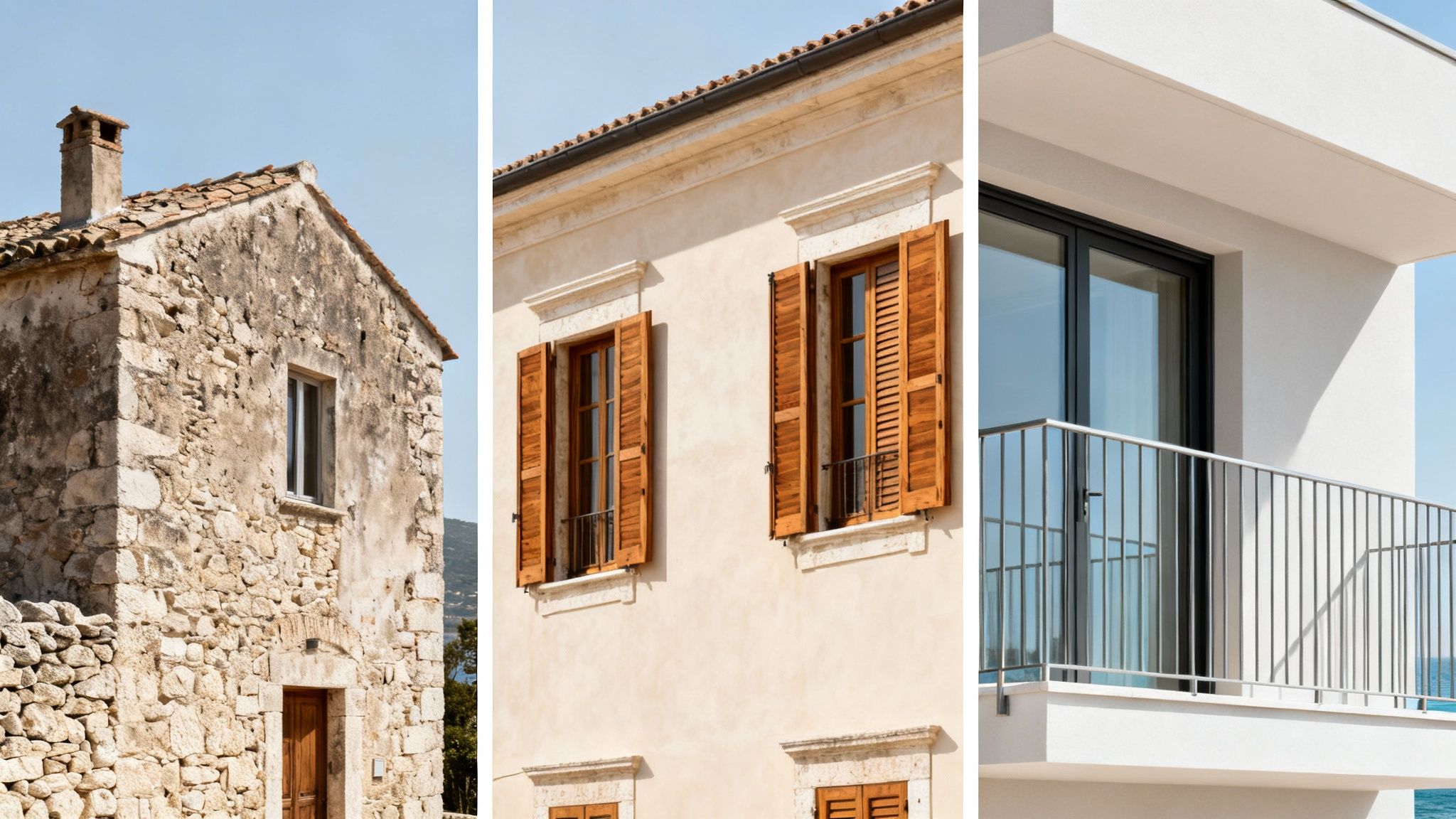
When you first start looking for a property for sale abruzzo italy, you'll quickly see that the region’s homes are as varied as its landscapes. From rustic stone farmhouses nestled in the hills to modern apartments with sea views, there’s a style to suit nearly every taste and budget.
Think of it this way: choosing a home here is like picking a car. A sleek sports car is great for city cruising but useless on a farm track. In the same way, the perfect home for a retiree seeking peace and quiet is completely different from what an investor looking for rental income needs. Let’s break down the most common property types you'll encounter.
The Classic Stone Farmhouse ('Casale')
The casale is the dream for many people picturing life in Italy. These are the traditional stone farmhouses you see scattered across the countryside, often surrounded by olive groves or vineyards. They are absolutely brimming with character—thick stone walls, exposed wooden beams, and old terracotta floors are common features.
Some have been lovingly restored, while others are a blank canvas, just waiting for someone to bring them back to life. A casale is perfect if you’re looking for space, privacy, and an authentic connection to the land. We go into more detail on this unique lifestyle in our guide on how to explore Italian countryside homes.
The Historic Townhouse ('Casa di Paese')
Wander through any of Abruzzo's medieval hilltop towns and you'll find streets lined with charming case di paese, or townhouses. These homes are typically built vertically, spanning two or three floors, and are attached to their neighbors. Living in one puts you right in the middle of village life, with the local piazza, cafes, and weekly markets just a short stroll away.
A townhouse in the centro storico (historic center) isn't just a place to live—it's a full immersion into the local culture. You become part of the community fabric, living life at that classic, unhurried Italian pace.
These properties are often surprisingly affordable and packed with original details. They’re a fantastic choice for buyers who want to feel connected to a community and enjoy the convenience of town living without giving up historic charm.
Modern Apartments and Coastal Villas
Head towards the Adriatic coast, especially around Pescara and the seaside towns of Teramo, and the architecture begins to change. Here, you'll find a much bigger selection of modern apartments, often in newer buildings with amenities like swimming pools and private parking. These make for great holiday homes or rental investments since they are easy to "lock up and leave."
You'll also find more detached villas in this area, offering more space and privacy while still being close to the beach. These homes are built for a contemporary lifestyle, mixing modern comforts with the laid-back vibe of life by the sea.
The Renovation Project: A Rewarding Challenge
For many buyers, the real magic of Abruzzo lies in its abundance of affordable renovation projects. Whether it's a crumbling farmhouse, a forgotten townhouse, or a small ruin (rudere), these properties give you the chance to build a custom home for a fraction of what you'd expect to pay.
This is where Abruzzo really shines. You get Tuscany-like charm at a much lower price point. It’s not uncommon to see renovation projects listed for under €25,000, and even spacious country homes can be found for around €350,000. The regional average sits at just €1,362 per m², a world away from Florence's €4,331 per m².
Of course, taking on a project requires vision, patience, and a reliable local crew. But the payoff is a home that is entirely your own, often with a significant bump in value once the work is done.
To give you a clearer picture, here’s a quick breakdown of what you can expect to find in Abruzzo's property market.
Abruzzo Property Types and Average Price Ranges
| Property Type | Description | Typical Price Range (€) |
|---|---|---|
| Renovation Project (Rudere) | A ruin or dilapidated structure needing a full rebuild. Offers the most creative freedom. | €15,000 - €50,000 |
| Townhouse (Casa di Paese) | A home in a historic town center, often needing some modernization. | €30,000 - €150,000 |
| Stone Farmhouse (Casale) | A traditional country home. Can be fully restored or in need of renovation. | €80,000 - €400,000+ |
| Modern Apartment (Appartamento) | Typically found in coastal cities or new developments. Ready to move in. | €70,000 - €250,000 |
| Detached Villa (Villa) | A standalone modern home, often with a garden and sometimes a pool. | €180,000 - €500,000+ |
This table should help set your expectations as you start your search. From a simple village base to a sprawling country estate, Abruzzo truly has something for everyone.
Navigating the Italian Property Buying Process
Buying property in another country can feel daunting, a bit like trying to follow a recipe written in a language you don't speak. The rules are different, the terms are unfamiliar, and it's easy to feel lost. But when it comes to buying a home in Abruzzo, the process is actually more straightforward and structured than you might think.
Let's walk through it step-by-step. I'll break down the key milestones, translate the Italian jargon you'll encounter, and introduce the professionals who will be on your team to get you across the finish line.
Your First Step: Getting a Codice Fiscale
Before you can do anything else—seriously, anything—you need a Codice Fiscale. This is your personal Italian tax identification number, and it’s an absolute must-have for any major financial transaction in Italy, from opening a bank account to, yes, buying a house.
Think of it as your official entry pass into the Italian system. Getting one is relatively painless. You can apply at the Italian consulate in your home country before you even travel, or pop into the local Agenzia delle Entrate (the tax office) once you're in Italy. It’s free to get and represents the very first concrete step on your journey.
Making an Offer: The Proposta d'Acquisto
So, you've found the perfect rustic farmhouse or seaside apartment. What next? The first formal step is to submit a written offer, known as the proposta d'acquisto. This isn't just a casual note; it's a legally binding document that lays out your proposed purchase price, the timeline, and any special conditions you might have.
Once the seller signs on the dotted line, it's a done deal—the proposal becomes a binding agreement. This is also when you'll pay a deposit (caparra confirmatoria), which is typically between 5% and 10% of the purchase price. This deposit shows you're serious. If you pull out of the deal without a valid legal reason, you forfeit it. On the flip side, if the seller backs out, they are required to pay you double the deposit amount.
The proposta d'acquisto is more than just an offer—it’s the moment the purchase becomes real. Its acceptance locks both parties into the sale, providing security and a clear path forward for everyone involved.
The Key Players on Your Team
Thankfully, you don't have to go it alone. A good team of professionals is your best asset for a smooth and secure purchase. Each person has a very specific and vital role to play.
- Real Estate Agent (Agente Immobiliare): This is your guide on the ground. They’ll help you find properties that fit your vision, handle the back-and-forth of negotiations, and act as the main line of communication with the seller.
- Surveyor (Geometra): Don't skip this one. The geometra is a technical expert who does the critical due diligence. They’ll verify that the property’s floor plans match reality, check for any unpermitted construction work (a common issue in Italy), and make sure everything is up to code.
- Notary (Notaio): The notaio is a government-appointed public official who serves as a neutral third party. Their job is to verify the legality of the entire transaction, from checking the property's title history to drafting the final deed and ensuring all taxes are paid. Their involvement is required by law and protects both you and the seller.
From Preliminary Contract to Final Deed
After your offer is accepted, you’ll often move on to the preliminary contract of sale, or compromesso. This is a more detailed agreement that fleshes out all the terms from the initial proposal and sets a firm date for the final sale. It’s also legally binding and gets officially registered to make the transaction public.
The final, and most exciting, part of the process is the rogito—the final deed of sale. This all happens at the notary's office. You, the seller, and your representatives will gather as the notary reads the entire deed aloud to make sure everything is crystal clear.
Once all parties sign, you'll transfer the final payment, and the keys to your new home in Abruzzo will be placed in your hand. That's it—you're officially a homeowner in Italy! For a more detailed look at the paperwork and legal steps, our guide on buying a house in Italy goes even deeper. Congratulations, and welcome to la dolce vita
Got Questions About Buying in Abruzzo? Let's Talk Details.
As we get closer to the finish line on this tour of the Abruzzo property market, you're probably starting to think about the practical side of things. This is where the rubber meets the road—the nitty-gritty details of taxes, banking, and closing costs that turn a dream into a reality.
Let’s tackle some of the most common questions I hear from international buyers. Getting these answers straight will give you the confidence you need to take that final, exciting step.
What Are the Annual Property Taxes Really Like?
This is usually one of the first questions people ask, and for good reason. In Italy, the main annual property tax is the IMU (Imposta Municipale Unica). The best news? If you make the property your main residence (prima casa), you're generally exempt from paying it altogether, unless it's an official luxury home.
Now, for a second home or a holiday rental, you will have to pay the IMU. The rate is set by the local town hall (comune) and usually falls somewhere between 0.4% and 1.1% of the property’s cadastral value.
But here’s the key: the cadastral value is a figure from the land registry, and it's almost always way lower than what you actually paid for the house. So, for a classic village home with a cadastral value of, say, €40,000, your annual IMU bill could be just a few hundred euros. It’s one of the things that makes owning a second home here so affordable. You’ll also have a small local tax for trash collection, called TARI, which is based on the size of your property.
Do I Absolutely Have to Open an Italian Bank Account?
Technically, no. Realistically, yes. Trying to buy and own a property in Italy without a local bank account is like trying to build a boat while you're already at sea—it’s just making things incredibly difficult for yourself.
Opening an account is simple and will become your financial home base in Italy. You’ll need it for just about everything:
- The Purchase: It’s the safest and most straightforward way to transfer your deposit and the final payment.
- Paying Bills: Setting up direct debits for electricity, water, gas, and internet is the standard here, and that requires an Italian account.
- Taxes: Paying your IMU and TARI is a breeze when you can do it through a local bank.
Italian banks are very used to working with foreign clients. Just bring your passport, your Italian tax code (Codice Fiscale), and maybe proof of address, and you'll be set up in no time. It's a small piece of admin that saves you a world of headaches.
Think of an Italian bank account as less of a legal hurdle and more of a practical necessity. It simplifies every single financial part of owning your home, from the day you buy it to the day you pay your first utility bill.
Can a Foreigner Even Get a Mortgage in Italy?
Yes, you absolutely can get a mortgage from an Italian bank as a non-resident. However, it's a good idea to manage your expectations from the start. Italian banks tend to be more cautious than lenders in other countries, particularly with international buyers.
You can typically expect to borrow up to 50-60% of the property's assessed value. The bank will want to see proof of a stable income, a solid credit history from your home country, and a clear overview of your finances. The paperwork can be pretty intensive, so I always recommend starting the conversation with a bank long before you've found the house.
A great move is to work with a mortgage broker who specializes in helping foreign buyers. They know which banks are more receptive, can navigate the Italian-language forms, and can help package your application for the best chance of success.
What Should I Actually Budget for Closing Costs?
This is a big one. It’s easy to get excited about the purchase price and forget about the other costs involved. As a solid rule of thumb, you should budget an extra 10% to 15% of the purchase price to cover all the fees and taxes.
These aren't hidden costs; they're just the standard, required steps in the Italian legal process. Here’s a quick look at where that money goes:
- Registration Tax (Imposta di Registro): This is the main one. For a second home bought from a private seller, it’s 9% of the cadastral value. If it's your primary residence, it drops to just 2%.
- Notary Fees (Parcella Notarile): The notary is a neutral public official who guarantees the sale is legal. Their fee is often between 1% and 2.5% of the property price and covers all the legal checks and registration of the deed.
- Estate Agent Commission (Provvigione): This is typically around 3-4% of the purchase price, plus Italian VAT (IVA).
- Other Professional Fees: If you hire your own lawyer for added support or a surveyor (geometra) to do a structural check, you'll need to account for their fees too.
Knowing these costs upfront means no nasty surprises on closing day. You can finalize the purchase with peace of mind and get right to the fun part: enjoying your new home in beautiful Abruzzo.
Ready to find your own piece of paradise in Abruzzo? At Residaro, we specialize in connecting international buyers with their dream homes across Italy. Explore our curated listings and start your journey today. Visit us at https://residaro.com to see what's waiting for you.