Your Guide to Italian Villas for Sale
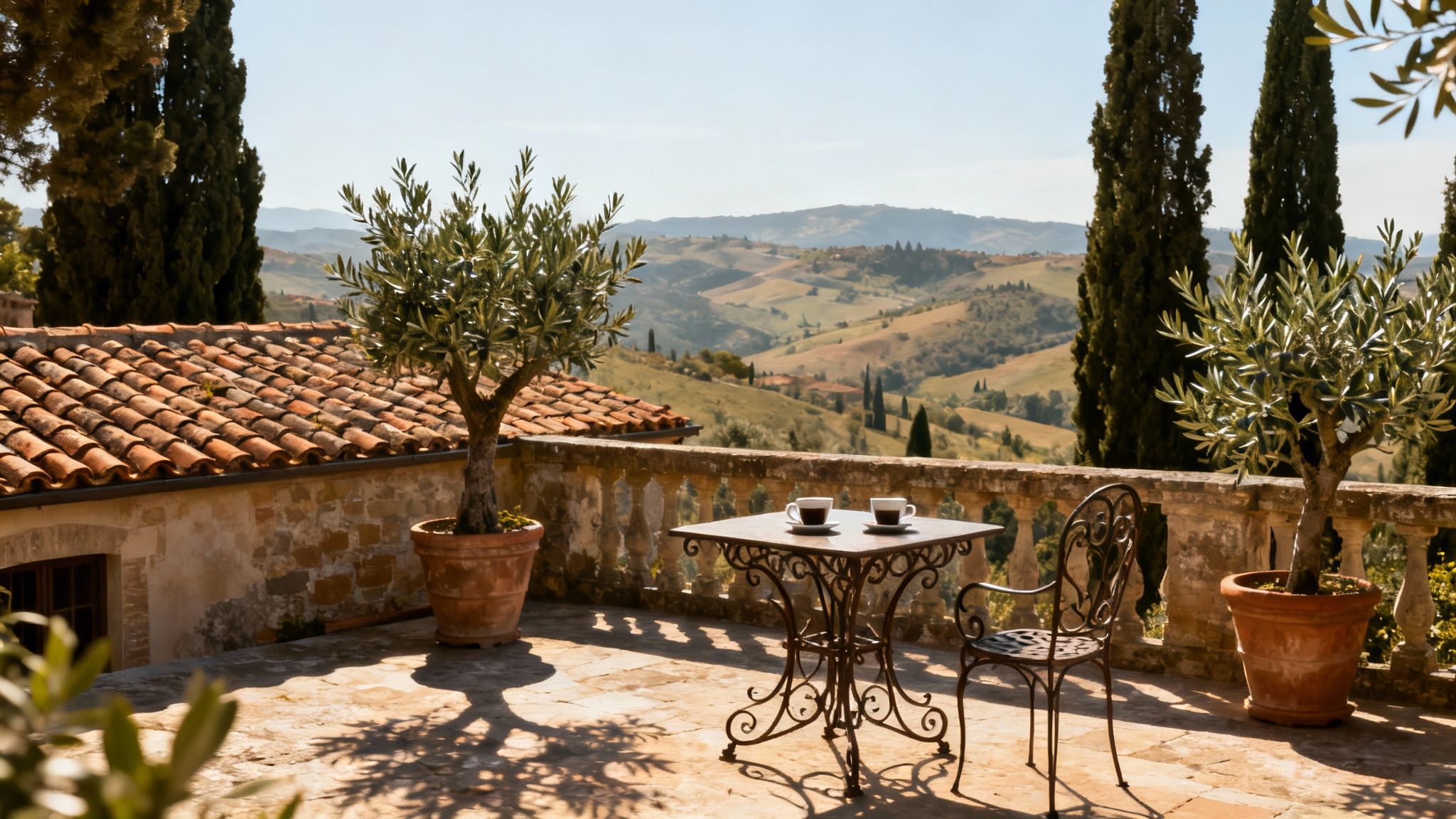
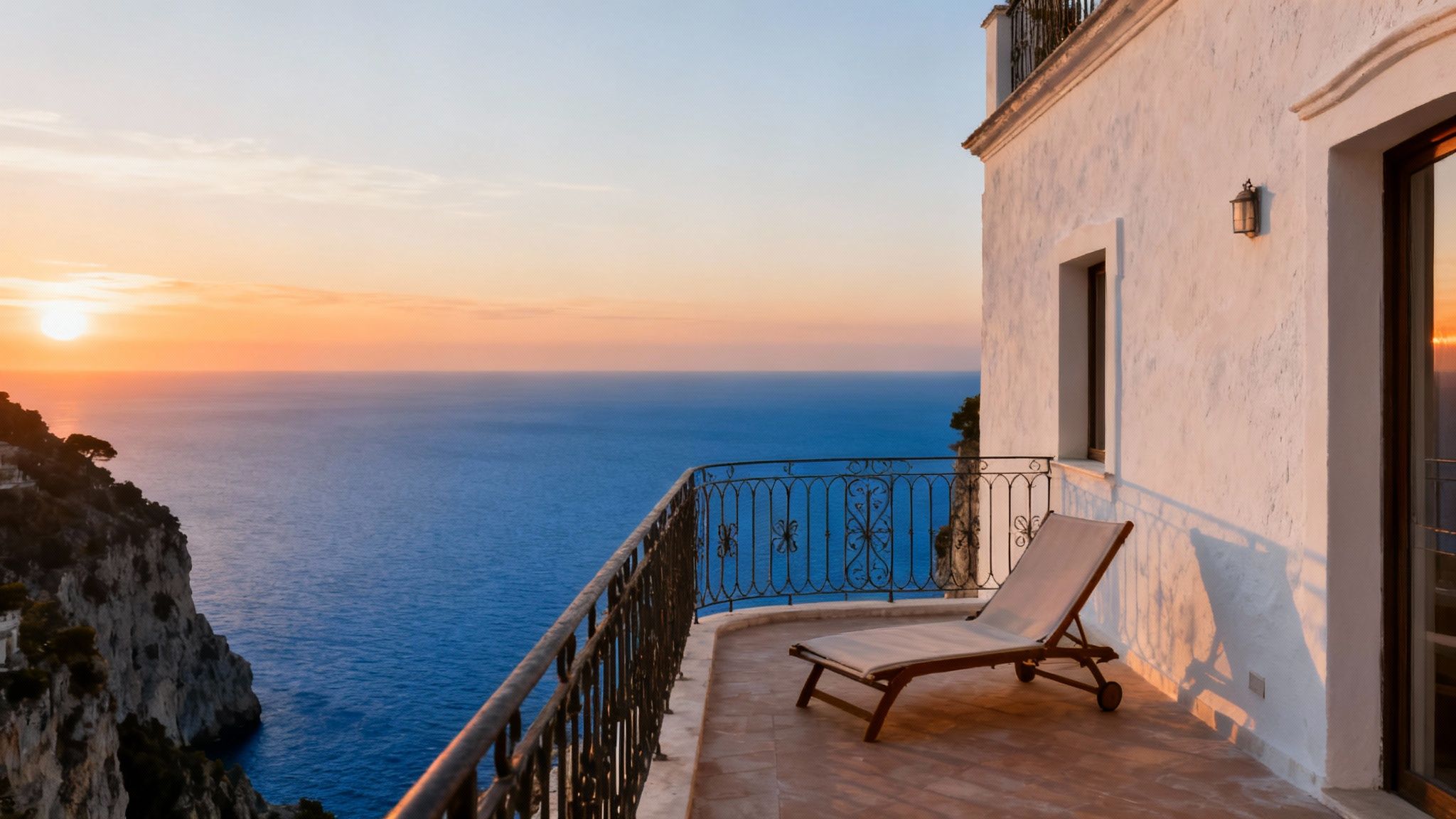
Picture this: you're sipping an espresso on a sun-drenched terrace in Tuscany, or maybe you're watching the sunset melt into the sea from your private balcony on the Amalfi Coast. This is the dream that sparks the search for an Italian villa, and this guide is your personal roadmap to making it a reality.
We're here to demystify the entire process, breaking down what can feel like a complex journey into a series of clear, manageable steps.
Your Dream Italian Villa Awaits
This guide covers everything you need to know, from getting a feel for the vibrant Italian property market and comparing the most sought-after regions to navigating the step-by-step legal process and managing the costs. Whether you're dreaming of a rustic farmhouse nestled in rolling hills or a sleek, modern estate on the coast, you'll find the practical advice you need to move forward with confidence.
The allure of la dolce vita is powerful, and it's drawing buyers from all over the world who are looking for more than just a property—they're looking for a new way of life.
Why Now Is The Time To Look For Italian Villas
The Italian property market isn't just about timeless charm; it’s also brimming with opportunity. Strong, consistent interest from international buyers continues to fuel growth, making a villa purchase a smart move for both your lifestyle and your portfolio.
Italy's luxury residential market is particularly robust. Valued at USD 29.02 billion in 2026, it's projected to grow at a compound annual rate of 6.03%, hitting an estimated USD 38.88 billion by the end of the decade. A huge driver of this is the secondary market—resales of existing homes—which makes up over 60% of all transactions.
This guide will give you the knowledge to navigate this exciting market. We'll explore:
- Market Dynamics: A real-world look at what's driving prices and demand for Italian villas.
- Regional Highlights: An insider's tour of iconic areas like Tuscany, Umbria, and the Amalfi Coast.
- The Buying Process: A step-by-step breakdown of the legal and procedural hoops you'll need to jump through.
- Financial Planning: Clear insights into total ownership costs, taxes, and potential rental income.
What To Consider Before You Begin
Jumping into the Italian property market requires a bit of thoughtful preparation. Think of it like planning a grand adventure—you need a good map, a clear destination, and a solid understanding of the local customs before you set off.
For buyers specifically drawn to the romance of rural life, our guide on purchasing Italian countryside homes offers more specialized advice for that unique search.
Owning property in Italy isn't just about the four walls and a roof; it's about investing in a lifestyle defined by culture, history, and unparalleled beauty. It's a tangible piece of "the sweet life."
Before you even think about scrolling through listings, take a moment to consider what you really want from your Italian home. Is it a quiet escape from the world, a bustling hub for family gatherings, or a strategic rental investment? Your answer to that question will shape your entire search.
To help you get started, we've put together a quick overview of the key factors to keep in mind.
Key Considerations for Buying an Italian Villa
| Factor | Key Insight | Why It Matters |
|---|---|---|
| Lifestyle vs. Investment | Define your primary goal. Is this a personal retreat or a source of rental income? | This decision influences everything from location and property size to the features you prioritize. |
| Location & Region | Italy offers diverse landscapes, from rolling hills to dramatic coastlines. | Your chosen region impacts property prices, accessibility, local culture, and potential rental demand. |
| Legal & Tax Obligations | The Italian buying process has unique legal steps and tax implications for foreigners. | Understanding these upfront prevents surprises and ensures a smooth, compliant transaction. |
| Property Condition | Many villas are historic and may require renovation. Others are modern and move-in ready. | Factoring in potential renovation costs is crucial for accurate budgeting and timeline planning. |
| Financing & Currency | Securing a mortgage as a non-resident can be complex. Currency fluctuations also play a role. | Plan your financing strategy early. Will you use cash, a local mortgage, or financing from your home country? |
Thinking through these points from the very beginning will make your property search more focused, efficient, and ultimately, more successful.
Getting to Grips with the Italian Villa Market
The first thing to understand about the Italian real estate market is that it’s not one single entity. It’s more like a patchwork quilt of distinct local markets, each with its own rhythm, history, and personality. Getting a feel for this from the get-go is the secret to finding the right Italian villa for you.
Unlike a lot of property markets driven by new construction, Italy's real magic is in its secondary market—homes that have lived a life, filled with character and stories. In a world where everyone seems to be searching for more privacy, authenticity, and a bit of breathing room, these properties have become highly sought-after. This is especially true for international buyers hunting for their own slice of la dolce vita.
This isn't just about pretty pictures, though. It’s a conscious choice. Buyers are realizing that an old stone farmhouse in Umbria, lovingly restored, offers something a brand-new build just can't touch. This deep appreciation for properties with a past is really what defines the Italian villa scene.
What's Driving the Market?
A huge part of the pull towards Italy is the simple desire for a slower, more intentional way of life. This isn't just a passing fad; it’s a real shift in what people value, where quality of life has become the new ultimate luxury. Naturally, regions known for their peaceful landscapes and stunning scenery are seeing a lot of attention.
The market’s resilience is another big draw. To see the opportunity today, you really have to look at where it's been. Italy's property prices have been on a bit of a rollercoaster, which actually tells us a lot about its strength and when to jump in. Between 2000 and mid-2008, house prices shot up a staggering 85% before the global financial crisis brought things back down to earth. But the comeback has been solid; the Housing Index hit 117.10 points in the third quarter of 2023, a healthy climb from its average of 106.73 since 2010. For a deep dive, the folks at Global Property Guide offer a great analysis of Italian property price history.
This history lesson shows us two things: the market is tough enough to handle economic bumps, making it a sound long-term bet, and those fluctuations can create perfect windows of opportunity for savvy buyers.
The Big Decision: New Build or Historic Gem?
As you start looking at Italian villas for sale, you’ll quickly come to a fork in the road: do you go for a modern new build or a historic property that’s steeped in character? They're two very different paths, each with its own set of pros and cons.
-
Historic Villas (The Secondary Market): This is the quintessential Italian dream. We're talking about stone farmhouses, palazzos with original frescoes, and sprawling country estates. They give you a direct line to Italy’s incredible past and a level of charm you just can’t replicate. The flip side? They almost always need some renovation work, which means dealing with local building codes and setting aside a budget for the restoration.
-
New Constructions: While you won't find as many classic "villas" in this category, a modern property offers move-in-ready convenience. You'll get all the latest amenities, better energy efficiency, and zero immediate repair headaches. The trade-off, however, is often a location that’s not quite as charming or central, and you miss out on that unique historical character.
For a lot of international buyers, the challenge of bringing a piece of history back to life is a huge part of the appeal. The restoration project itself becomes an adventure—a chance to weave modern comforts into the fabric of timeless Italian craftsmanship.
In the end, it all comes down to what you’re looking for. What are your goals, what’s your budget, and how much of a project are you willing to take on? Answering that question will help you focus your search and start you down the right path.
Where to Find Your Perfect Italian Villa
Looking for a villa in Italy isn't just a property search; it’s about finding the place where your vision of la dolce vita comes to life. Every region offers a completely different flavor of Italian living. The choice between a rustic farmhouse in Tuscany and a glamorous cliffside home on the Amalfi Coast will shape your entire experience, from your morning coffee to your evening glass of wine.
This is about matching your dream lifestyle to a real dot on the map. So, let's walk through some of Italy’s most sought-after regions to see which one feels like home. We’ll look at the architecture, the lifestyle, and what you can expect to pay.
Italian Villa Regional Comparison Guide
To get a clearer picture, let's break down what each region really offers. This table gives you a snapshot of what to expect in terms of cost, style, and the kind of life you can build there.
| Region | Average Price per Sq. Meter | Primary Villa Style | Best For |
|---|---|---|---|
| Tuscany | €2,500 - €6,000+ | Stone Farmhouse (Casale) | Classic countryside living, art, wine, and history lovers. |
| Umbria | €1,500 - €3,500 | Stone Farmhouse (Casale) | A quieter, more affordable version of Tuscany with authentic charm. |
| Amalfi Coast | €8,000 - €15,000+ | Cliffside, terraced homes | Breathtaking sea views, luxury, and a vibrant social scene. |
| Lombardy (Lakes) | €4,000 - €10,000+ | Neoclassical, grand estates | Lakeside elegance, watersports, and sophisticated living. |
Of course, these are just starting points. Prices can swing wildly based on the exact location and condition of a property, but this gives you a good sense of the landscape.
Tuscany: The Timeless Classic
Let's be honest—when most of us picture an Italian villa, we’re picturing Tuscany. The rolling hills, cypress-lined driveways, and ancient olive groves are the stuff of legend for a reason. This region delivers that quintessential countryside experience, blending total tranquility with easy trips to world-class cities like Florence and Siena for art, food, and wine.
The signature Tuscan villa is a restored casale (a stone farmhouse), known for its thick walls, exposed wooden beams, and terracotta floors. These homes are perfect for anyone who values history and is ready to embrace the unique character that only a centuries-old property can offer. While hotspots like Chianti come with a hefty price tag, you can still find some hidden gems if you look in less-famous corners of the region.
Umbria: The Green Heart of Italy
Often called "the green heart of Italy," Umbria has all the rustic charm of its famous neighbor, Tuscany, but with a quieter, more laid-back vibe. And, most importantly, the property prices are much more approachable. It’s a true haven for anyone seeking peace and a connection to nature without being cut off from Italy's rich culture.
Villas here are very similar to the Tuscan style—you'll find plenty of beautiful stone farmhouses, some needing work and others already beautifully restored. Life moves at a slower pace here, deeply connected to the land and local traditions. Umbria is the perfect choice if you want that classic countryside dream but need your budget to go a bit further, whether for a larger property or a more ambitious renovation.
The Amalfi Coast: Cliffside Glamour
If your dream involves waking up to jaw-dropping sea views and a touch of glamour, then nothing compares to the Amalfi Coast. This stunning stretch of coastline is world-famous for its colorful villages, like Positano and Amalfi, that seem to tumble down the cliffs into the sea. Life here is social, chic, and centered on the water—think days spent on boats and evenings enjoying dinner at a waterfront restaurant.
The villas are designed to make the most of those spectacular views, with huge terraces, infinity pools, and gardens that cascade down the hillside. Because of its global fame and the simple fact that they can’t build any more of it, this is one of Italy's priciest markets. Owning a home here is less about quiet country living and more about securing your own piece of a world-renowned paradise.
The search for a villa in Italy is an intensely personal one. The "best" region is simply the one that aligns with your financial plan, lifestyle aspirations, and vision for the future. Consider not just the property, but the community and daily life you'll be joining.
Lombardy: Lakeside Elegance
Home to the iconic Italian Lakes—Como, Garda, and Maggiore—Lombardy offers a completely different kind of Italian fantasy. Here, dramatic Alpine scenery meets a sophisticated, almost Mediterranean flair. The lifestyle is polished and active, focused on watersports, hiking in the mountains, and enjoying the elegant towns that dot the shorelines.
The properties reflect this elegance. You'll find grand, historic estates with neoclassical architecture, perfectly manicured gardens, and private boat docks. While Lake Como is famous for its celebrity homeowners and eye-watering prices, other lakes like Garda are more family-friendly and offer a more accessible entry point. This is the spot for buyers who want breathtaking natural beauty combined with an upscale, refined way of life.
While Italy doesn't have a centralized system like in the US, understanding the basics of how listings are organized can be really helpful. A quick read on topics like What Is MLS in Real Estate can give you useful context as you start browsing Italian property sites and talking to agents.
The Step-by-Step Purchase Process
Buying a property in Italy can feel like you're trying to navigate a maze in a foreign language. It's full of unfamiliar terms, strange procedures, and steps that might seem backward at first. But don't worry, there's a well-trodden path that, once you understand it, makes perfect sense. With the right team of professionals by your side, the journey becomes surprisingly straightforward.

The entire system is actually designed to protect both the buyer and the seller, with legal checks and balances built into every step. Let's break down exactly what to expect.
First Things First: Securing Your Codice Fiscale
Before you can do anything—and I mean anything—related to buying property, you need an Italian tax code, or codice fiscale. This is a unique ID number required for just about any official transaction, from opening a bank account to signing a mobile phone contract.
Think of it as your financial passport for Italy. It doesn't automatically make you a tax resident, but it officially registers you in the system. Getting one is a simple administrative step you can complete at an Italian consulate in your home country or at a local tax office (Agenzia delle Entrate) in Italy.
The Three Key Stages of Buying
The Italian property purchase process is best understood as three distinct, legally binding stages. Each one involves a specific contract and brings you one step closer to getting those keys in your hand. Knowing these milestones is the key to navigating the deal with confidence.
-
Proposta d'Acquisto (The Purchase Offer): This is your opening move—a formal, written offer to the seller. It details the price you’re willing to pay and is backed by a small deposit (caparra) to show you're serious. Once the seller signs it, it becomes a legally binding agreement.
-
Compromesso (The Preliminary Contract): This is the big one. It's a much more detailed contract that locks in every term of the sale, from the final price to the closing date and everything in between. At this point, you'll pay a much larger deposit, typically 10-30% of the purchase price.
-
Rogito (The Final Deed of Sale): This is the grand finale. The rogito is the official deed that transfers ownership, and it must be signed in front of a public notary (notaio). Here, you pay the remaining balance, the notary registers the property in your name, and you officially become the owner.
The preliminary contract, or compromesso, is a critical turning point. Once signed, backing out of the deal becomes very difficult and costly for either party, providing strong security for both the buyer and the seller as they move toward the final sale.
Your Professional Support Team
You absolutely shouldn't go through this alone. Assembling a local team of experts is essential for a smooth transaction, especially if you're buying from abroad. Each person plays a critical role in protecting your interests. For a deeper dive into the whole journey, our full guide to buying a house in Italy is a great resource.
Here are the key players you'll need on your side:
- Real Estate Agent (Agente Immobiliare): This is your guide on the ground. They'll help you find properties, handle negotiations, and act as the main go-between with the seller.
- Notary (Notaio): An impartial public official appointed by the state. The notaio is legally required to oversee the final sale, verify that all legal documents are in order, confirm the seller actually owns the property, and ensure the entire transaction complies with Italian law.
- Surveyor (Geometra): This is your technical expert. A geometra inspects the villa to make sure it complies with all building codes and planning permissions. Crucially, they check that the property's registered floor plans match its actual layout—a small detail that can prevent massive legal headaches down the road.
Building a trustworthy team is arguably the single most important thing you can do when you start looking for Italian villas for sale. Their expertise provides the peace of mind you need to turn a dream into a home.
Getting to Grips With the True Cost of Ownership
The list price of an Italian villa is just the starting point, not the finish line. To avoid any nasty surprises down the road, you need to understand the full cost of ownership, which goes way beyond that initial number. It’s a mix of one-time closing costs and the annual expenses that come with keeping your property in great shape.
Think of it like buying a beautiful classic car. The sticker price is just the beginning. You still have to factor in registration, insurance, and the inevitable tune-ups to really enjoy it. The same logic applies when you're looking at Italian villas for sale—a complete financial picture is your best friend.

One-Time Purchase Costs
When you sit down to sign the final deed of sale, known as the rogito, a handful of fees and taxes come due. These are mostly calculated based on the property’s official value and can add a fair chunk to your total investment.
Here's a quick rundown of what to expect:
- Registration Tax (Imposta di Registro): This is the big one. As a non-resident buying a second home, you'll typically pay 9% of the property's cadastral value. This is the value registered with the tax office, which is often a pleasant surprise as it can be lower than the market price.
- Notary Fees (Parcella Notarile): In Italy, a state-appointed notary (notaio) handles the legal side of the sale. Their fees usually run between 1% to 2.5% of the purchase price.
- Agent Commission (Provvigione): If an agent helped you find your dream home, their fee is usually split between you and the seller. Your share will likely be between 3% and 5% of the sale price, plus VAT.
Ongoing Ownership Expenses
Once the keys are in your hand, your financial focus shifts to yearly upkeep and taxes. These are the recurring costs that keep your villa running smoothly and ensure you're compliant with local laws.
The main one to plan for is the annual property tax, IMU (Imposta Municipale Unica). This tax applies to second homes and luxury properties, and while the rate varies from town to town, it's a critical part of your annual budget. We cover this in much more detail in our guide on https://residaro.com/blog/property-taxes-in-italy.
A good rule of thumb is to budget roughly 1-2% of your property's value for annual running costs. This should comfortably cover IMU, utilities, and basic maintenance, helping you avoid surprises and keep your investment in pristine condition.
Of course, a smart financial plan also considers potential benefits. For U.S. buyers, it's worth understanding tax deferral strategies like 1031 exchanges if you're purchasing the villa as an investment property.
Financing Your Italian Villa
While plenty of international buyers pay with cash, getting a mortgage (mutuo) from an Italian bank is certainly possible, even for non-residents. Just be prepared for a more demanding process.
Banks here are cautious and typically ask for a larger down payment, often in the 40-50% range. They'll also want to do a deep dive into your income and overall financial health.
The allure of owning a slice of Italy isn't fading, and that's having a real impact on local markets. Foreign investment is a major driver, with international buyers snapping up 40% of prime homes in Florence in 2023, pushing prices there to an average of €9,600 per square meter. This high demand also points to strong potential for rental income, which can be a great way to help offset your ownership costs.
Common Questions About Buying Italian Villas
Diving into the market for Italian villas for sale is exciting, but it naturally kicks up a lot of questions—the kind that go beyond the big-picture steps of the purchase itself. These are the practical, real-world concerns that pop up when you start imagining your life there. Getting clear answers to these is what gives you the confidence to move forward.
From navigating a new language to the delicate art of renovating a piece of history, the details really matter. So, let's walk through some of the most common questions we hear from international buyers.
Do I Need to Speak Italian to Buy a Villa?
Good news: you don't need to be fluent in Italian to buy a villa. While it will absolutely make your life richer once you're there, the legal side of the transaction is handled by professionals who bridge that language gap for you.
Your team will almost always include:
- A bilingual lawyer: Their job is to pore over the contracts and make sure your interests are locked down.
- An English-speaking real estate agent: Your guide on the ground for viewings and negotiations.
- A notaio (notary): This official is legally required to ensure you understand every single word of the final deed before you sign, usually with a translator right by your side.
Of course, while it’s not essential for the purchase, making an effort with the language will completely change your experience. It’s the difference between being a visitor and truly belonging—whether you're chatting with shopkeepers at the local market or just ordering your morning espresso.
Even just hiring a translator for the most important meetings is a smart move. It’s a small investment for total peace of mind.
What Are the Rules for Renovating a Historic Villa?
Bringing a historic Italian villa back to its former glory is a rewarding project, but it’s not a free-for-all. These properties are part of Italy's heritage, and they often come with specific protections called vincoli that govern what you can and can’t do.
You'll need a good local geometra (a type of surveyor and project manager) or an architect in your corner from day one. They are the ones who know how to work with the local municipality (comune) to get the right building permits (permesso di costruire). Any changes to the villa's structure or exterior—even something as simple as changing the window color—will need to be officially signed off on. This is a process you’ll want to factor into your timeline and your budget right from the start.
Can Foreigners Get a Mortgage in Italy?
Yes, it's definitely possible for a non-resident to get a mortgage (a mutuo) from an Italian bank. Just be prepared for a bit more scrutiny than a local would face. The banks are naturally cautious and will want to see a very solid financial picture.
You should expect to put down a significant down payment, often in the range of 40-50% of the property’s value. You’ll also need to gather a hefty pile of documents, including your income history and your codice fiscale (Italian tax code). My advice? Start talking to banks months before you plan on making an offer.
How Do I Set Up Utilities After the Purchase?
Once the final deed, known as the rogito, is signed, the villa is officially yours. The next step is getting the utilities—electricity (luce), gas, and water (acqua)—switched over to your name. It's a fairly straightforward process where you contact each provider with your proof of ownership, your codice fiscale, and an Italian bank account for payments.
This is a small task, but it can feel daunting at first. Your real estate agent or a local property manager can easily handle this for you, making sure your new home is warm, bright, and ready for you to enjoy the moment you walk through the door.
Ready to stop dreaming and start searching? At Residaro, we curate a premier selection of properties across Italy, from rustic Tuscan farmhouses to elegant coastal estates. Explore our vetted listings and find the Italian villa that's waiting for you at https://residaro.com.