Farm Portugal for Sale: Discover Top Farms in Portugal
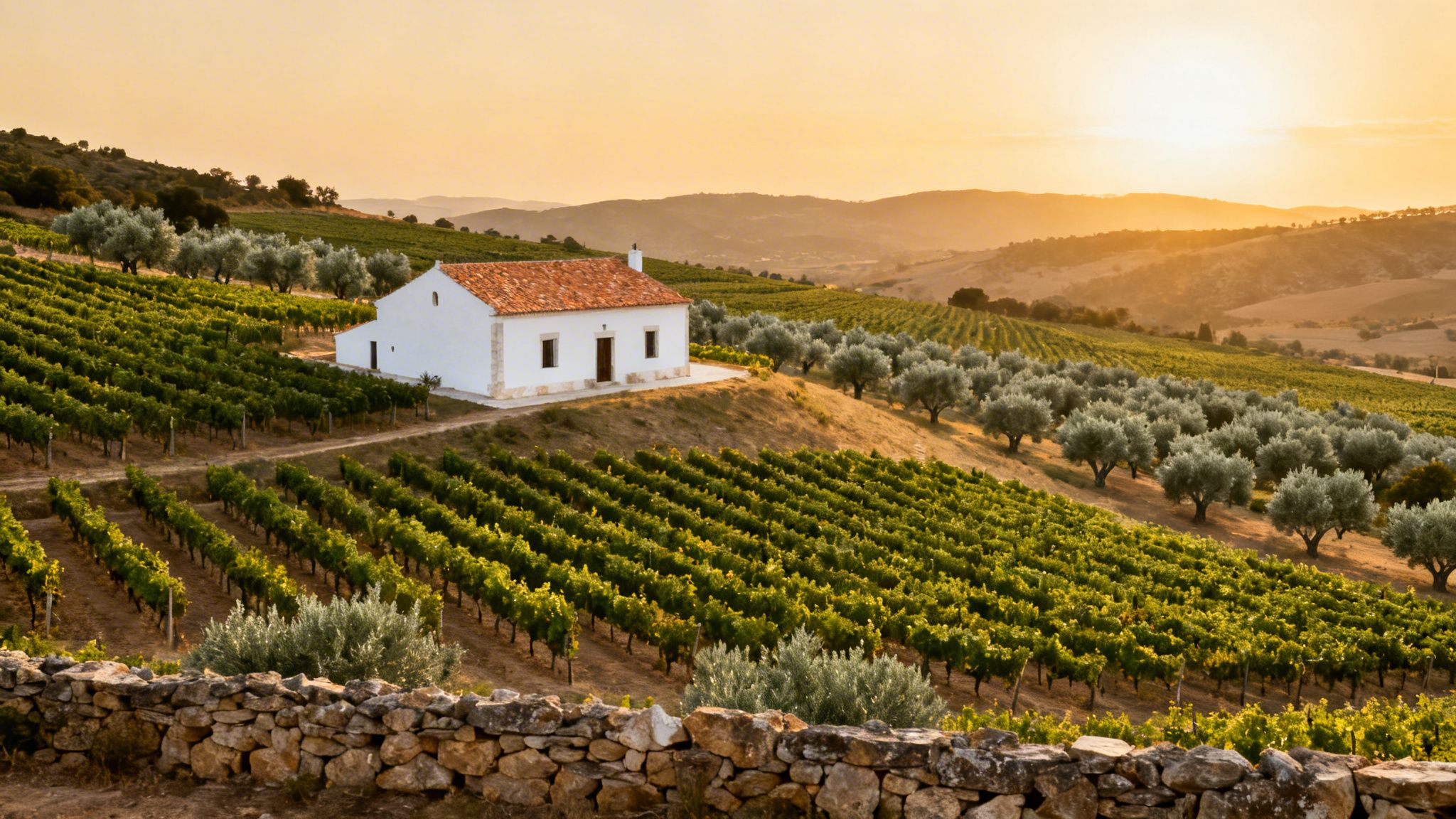
Picture this: waking up to the sun spilling over your olive groves in the Alentejo, or strolling through the terraced vineyards of the Douro Valley. This isn't some far-off fantasy; it's a real possibility for a growing number of people looking for a farm portugal for sale. Think of this guide as your boots-on-the-ground companion for turning that dream into your new reality.
Your Dream Portuguese Farm Awaits
We're going to walk through the entire process together. From getting a feel for Portugal's thriving agricultural market and zeroing in on the best regions, all the way to navigating the legal paperwork and making the most of the land. This is about more than just buying property; it’s about finding a new way of life connected to Portugal's incredible soil and culture.
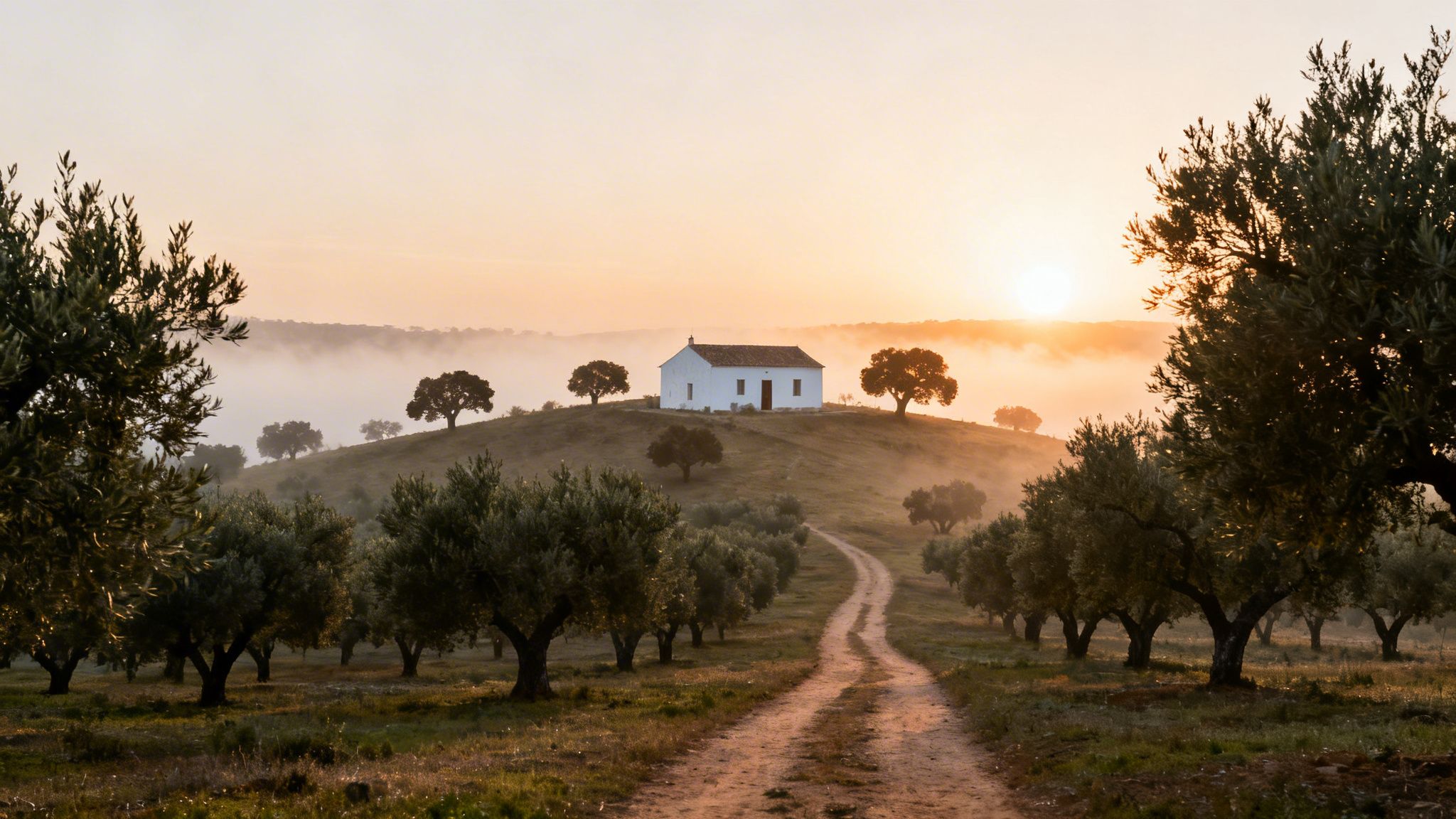
From Vision to Reality
Buying a farm here is a whole different ballgame than a typical house purchase. It's an adventure shaped by local culture, unique geography, and hundreds of years of farming know-how. You’re not just buying acreage; you’re buying into a piece of history and seeing the potential that lies in the soil.
You'll quickly notice that the word "farm" isn't a one-size-fits-all term in Portugal. The local language has specific words that paint a picture of a property's past, its scale, and what it was meant for.
- Quinta: This is the one you’ll see everywhere. It’s a classic country estate or farmhouse with land. A quinta could be a cozy plot with a few old fruit trees or a sprawling commercial vineyard.
- Herdade: Journey south into the wide-open plains of the Alentejo, and you'll find these massive agricultural estates. We're talking thousands of hectares, traditionally dedicated to cork, cattle, or wheat.
- Monte: Also an Alentejo term, a monte refers specifically to the cluster of farm buildings—the homestead itself—at the heart of a larger estate.
Embarking on Your Journey
Getting a handle on these terms is the first crucial step. Dreaming of a small, self-sufficient organic garden? You’re probably in the market for a quinta. Got grander plans for large-scale olive oil production? Your search will naturally lead you toward a herdade.
As you start to map out what you want, a practical guide to living abroad can be a huge help in planning your move to Portugal. Ultimately, success comes down to aligning your personal vision with the perfect piece of land in just the right corner of the country.
Why Portugal's Agricultural Market is a Golden Opportunity
The number of people searching for "farm portugal for sale" has skyrocketed lately, and it's not just a passing fad. It’s a sign of something bigger: a perfect storm of economic stability, a global shift in values, and some very smart government support. Think of Portugal's farm sector as a mature vineyard—its roots run deep in the national economy, it’s nourished by EU funding, and it's producing exactly what the world wants right now: high-quality, sustainable goods. This mix makes the ground here incredibly fertile for both investors and those chasing a new way of life.
The market’s appeal isn't just a feeling; you can see it in the numbers. Agriculture is a powerful and steady contributor to the national economy, making it a reliable place to put your money. For a buyer, that means you're stepping into a stable environment where land tends to hold its value and the potential for profit is tied to real, tangible demand.
A Bedrock of Economic Strength
Unlike sectors that can feel like a rollercoaster, agriculture is the steady backbone of the Portuguese economy. Anyone looking at the market will find a sector with real economic muscle, consistently adding value even as Europe’s agricultural scene changes. The industry has been putting up impressive numbers, hitting production values of €11.8 billion. This is largely driven by high-demand products like wine, cereals, fruits, vegetables, and, of course, olive oil. If you're curious, you can explore more about Portugal's agricultural production value and see the data for yourself.
This resilience means buying a farm here is more than just a lifestyle choice; it's a sound financial move backed by solid market fundamentals. The demand for Portuguese products, both at home and across Europe, ensures there’s a ready market for whatever your land produces.
The Rise of Sustainable and Organic Farming
There's a massive global shift toward sustainability happening, and it's changing the face of agriculture. Portugal is right at the heart of this movement. People are more and more willing to pay a premium for food that’s organic and ethically produced, and Portugal’s climate and farming traditions are a perfect match for this demand. This isn't just about feeling good; it's a smart business model.
Organic farming is absolutely booming here, creating a profitable niche for farm owners. The upsides are crystal clear:
- Premium Pricing: Organic goods fetch higher prices, whether you're selling at a local market or exporting. That goes straight to your bottom line.
- Access to Niche Markets: Getting certified opens up doors to specialized European buyers and a growing base of health-conscious consumers.
- Enhanced Land Value: When you farm sustainably, you're improving the health of your soil and the local ecosystem. That makes your property more valuable and resilient in the long run.
This shift makes finding a farm in Portugal for sale a chance to build a business that's not only profitable but also deeply rewarding.
Fueling Growth with Government and EU Support
Perhaps the most compelling reason the market is so attractive is the incredible support system in place for farmers. As a member of the European Union, Portugal benefits from the Common Agricultural Policy (CAP), which is a pipeline for funding and subsidies designed to help farmers and encourage sustainable practices.
Investing in Portuguese agriculture means you're not going it alone. You're stepping into an ecosystem designed to help you succeed, with financial incentives that can seriously lower your costs and take a lot of the risk out of the investment.
This support shows up in a few different ways, creating a welcoming environment for newcomers and seasoned pros alike.
- Direct Payments: These are subsidies based on the amount of land you farm. They provide a stable income floor, which helps cushion you from the ups and downs of the market.
- Rural Development Programs: You can often get funding for projects like modernizing your buildings, investing in new technology, or branching out into things like agritourism.
- Incentives for Young Farmers: There are special programs aimed at getting a new generation into farming, often with start-up grants and extra support.
These incentives make the financial reality of running a farm much less daunting. They can help you pay for crucial upgrades—like a new irrigation system or better equipment—and put you on a faster track to turning a profit. It all helps make the dream of owning a productive farm in Portugal a very real, achievable goal.
Discovering Portugal's Prime Farm Regions
Choosing the right region for your farm in Portugal is a lot like a winemaker picking the perfect grape for their soil. It’s a foundational decision that shapes everything to come. Each part of the country has its own distinct blend of climate, culture, and agricultural DNA, so matching your vision to the unique character of the land is key.
Let's take a trip through the country's most sought-after farming havens, starting in the sun-baked plains of the south and moving up to the lush, terraced valleys of the north. This journey will help you find the perfect backdrop for your dream farm.
Portugal's agricultural potential is immense. The country boasts 39,700 km² of agricultural land, a vast patchwork of arable fields, permanent crops, and sprawling pastures. This landscape is home to 259,000 active farms, many of them smaller, family-run operations passed down through generations. For international buyers, the real draw is the affordability—average prices per hectare are often a fraction of what you'd find in other popular European countries. You can dig deeper into the numbers with Portugal's agricultural land data on Statbase.org.
Alentejo: Portugal's Agricultural Heartland
They call it the "breadbasket of Portugal" for good reason. The Alentejo is a sprawling, sun-drenched region covering nearly a third of the country. Think vast, rolling plains dotted with iconic cork oaks and ancient olive groves. If your vision involves large-scale agriculture or you just crave a sense of boundless open space, the Alentejo is where you're headed.
This is the world's leading producer of cork and a powerhouse for phenomenal olive oil and robust wines. The properties here are often huge estates known as "herdades," perfectly suited for serious commercial ventures.
- Typical Farms: Large-scale cork plantations, olive groves, vineyards, cattle ranches, and grain fields.
- Climate: Hot, dry summers and mild winters make it perfect for drought-resistant crops.
- Lifestyle: It’s slow, traditional, and deeply connected to the land. This is a place for tranquility and immense natural beauty.
Douro Valley: The Kingdom of Wine
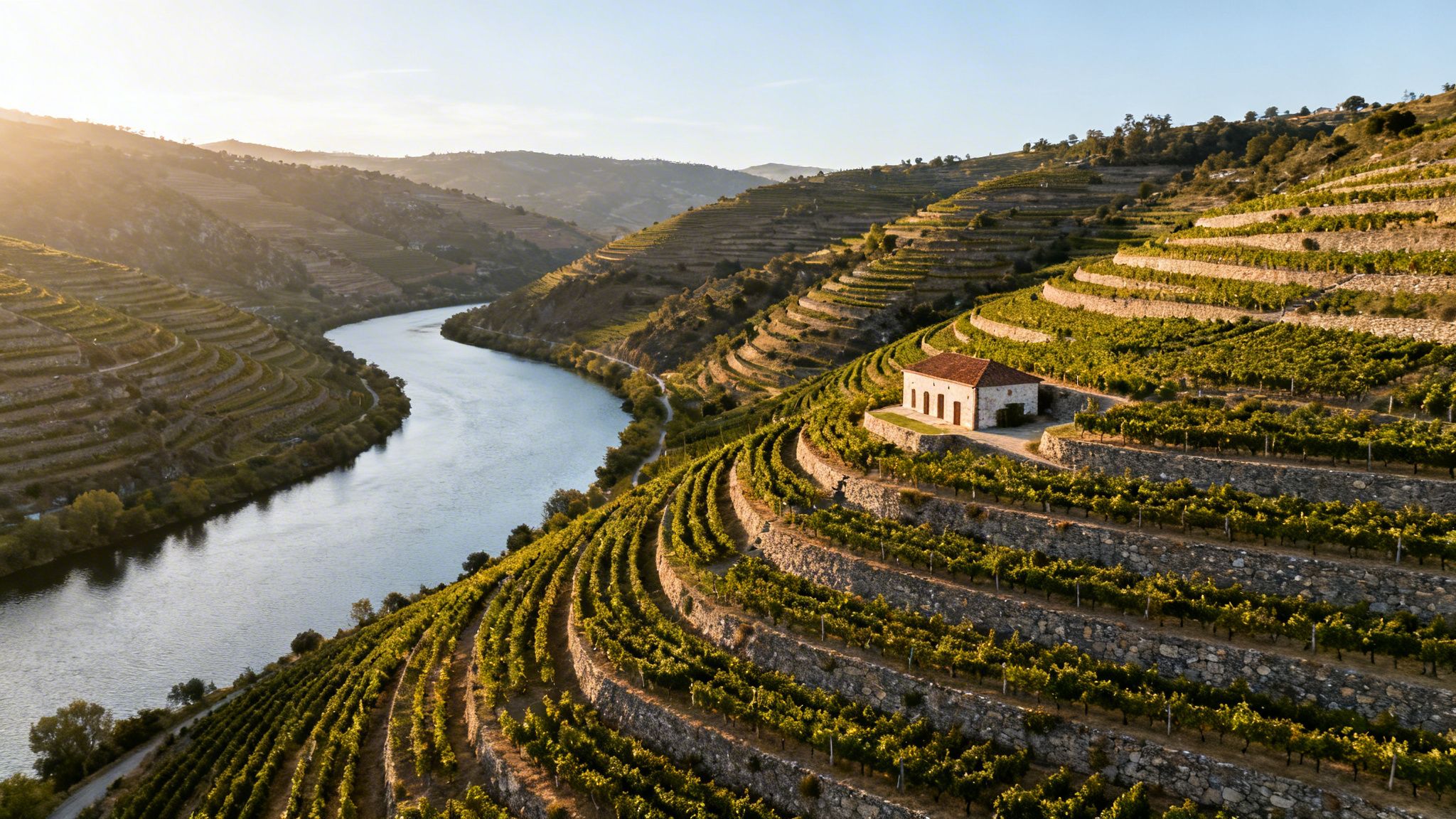
Head north and you’ll find the breathtaking Douro Valley, a UNESCO World Heritage site defined by its steep, terraced vineyards that plunge dramatically down to the Douro River. This region is the undisputed heart of Portugal’s wine industry, legendary for Port and now producing increasingly acclaimed red table wines.
Buying a farm here—typically called a "quinta"—means stepping into a rich, centuries-old winemaking legacy. The focus is almost exclusively on viticulture, often with jaw-dropping views and fantastic potential for wine tourism.
Owning a farm in the Douro is less about acreage and more about heritage. You are not just buying land; you are becoming a custodian of a world-renowned terroir, with the potential to produce truly exceptional wines.
The lifestyle here is sophisticated yet still tied to the rhythms of the harvest. It's a magnet for anyone with a true passion for oenology and a desire to create a premium product in one of the most beautiful wine regions on earth.
Algarve: Sun-Kissed Harvests
Known worldwide for its golden beaches, the Algarve's fertile coastal plains and sunny interior offer a totally different kind of agricultural paradise. With over 300 days of sunshine a year, this southern region has a unique microclimate perfect for growing citrus fruits, figs, almonds, and, more recently, avocados.
Farms here are generally smaller quintas, often geared toward high-value fruit production or tapping into the booming tourism market. This makes it an ideal spot for ventures like farm-to-table restaurants, agritourism B&Bs, or supplying organic produce to local markets.
- Typical Farms: Citrus orchards (oranges, lemons), avocado plantations, carob groves, and small-scale vegetable farms.
- Climate: The warmest and sunniest in Portugal, with very mild winters.
- Lifestyle: A vibrant mix of relaxed coastal living and a bustling international community.
Centro: A Region of Diversity
The Centro region, or Central Portugal, is perhaps the most diverse of them all. It stretches from the rugged Serra da Estrela mountains all the way to the sandy beaches of the Silver Coast. This variety in terrain and climate creates a patchwork of farming opportunities, from olive groves and vineyards to cherry orchards and livestock grazing.
This region offers a wonderful balance, often with more accessible land prices compared to the hotspots in the Douro or Algarve. It's a fantastic choice if you're looking for a mixed-use farm or want the flexibility to experiment. Plus, its central location gives you great access to markets in both Lisbon and Porto.
To help you get a clearer picture of your options when searching for a farm in Portugal for sale, here's a quick reference guide.
Comparing Portugal's Top Agricultural Regions
This table breaks down the key differences between Portugal's main farm regions, helping you compare everything from typical crops and price ranges to the kind of lifestyle you can expect.
| Region | Primary Farm Types | Avg. Price per Hectare (€) | Best For |
|---|---|---|---|
| Alentejo | Cork, Olives, Vineyards, Livestock | 5,000 - 12,000 | Commercial-scale farming and seclusion |
| Douro Valley | Vineyards (Port & Table Wine) | 15,000 - 40,000+ | Premium winemaking and wine tourism |
| Algarve | Citrus, Avocados, Agritourism | 10,000 - 25,000 | High-value fruit production and tourism |
| Centro | Mixed Agriculture, Olives, Cherries | 7,000 - 18,000 | Diversified farming and value for money |
Ultimately, the "best" region is the one that aligns with your goals. Whether you dream of crafting world-class wine in the Douro, harvesting sun-ripened oranges in the Algarve, or managing a vast cork estate in the Alentejo, Portugal has a piece of land waiting to bring your vision to life.
The Legal Roadmap: From Offer to Ownership
Buying property in another country can seem daunting, but the Portuguese system is refreshingly logical and secure once you understand the steps. Think of this section as your roadmap, breaking down the legal and financial journey into manageable stages so you can move forward with confidence.

Before you can even think about planting your first olive tree, you need to lay the proper groundwork. It all starts with two simple but absolutely essential items that unlock every other part of the buying process.
Getting Your Foot in the Door: NIF and a Bank Account
The very first thing you need is a NIF (Número de Identificação Fiscal). This is your personal Portuguese tax number, and nothing happens without it. You can't buy property, open a bank account, or even get your electricity turned on. The good news is that a lawyer or a specialized service can get one for you quite easily, often without you even being in the country.
With your NIF in hand, your next move is to open a Portuguese bank account. While it's not technically required until the final deed signing, getting it done early makes every transaction that follows infinitely smoother. It also shows sellers you're a serious, organized buyer, which can give you a real edge when it comes time to negotiate.
The Property Health Check: Due Diligence
Once you’ve found a farm in Portugal for sale that feels right, the real detective work begins. This is the due diligence phase—a comprehensive "health check" on the property where your lawyer takes the lead to uncover any potential problems before you're financially committed.
This investigation is thorough and covers a few crucial areas:
- Verifying the Title: Your lawyer will pull the official land registry certificate (Certidão de Teor). This confirms who legally owns the property and reveals if there are any mortgages, debts, or other claims against it.
- Checking Building Legality: Every single structure on the farm—from the main house down to the smallest shed—must have a habitation or usage license (Licença de Utilização). This is the official proof that it was built legally and is fit for its stated purpose.
- Matching the Paperwork: The property’s tax registration (Caderneta Predial) must line up perfectly with the details in the land registry. Any mismatch is a major red flag that has to be sorted out before the sale can proceed.
Beyond the Farmhouse: Land Use, Water, and Permits
For a farm, due diligence goes much deeper than just checking the house. You're not just buying buildings; you're buying the right to work the land. This is where you absolutely have to understand the local zoning and agricultural rules.
Your lawyer will dig into the municipal master plan, known as the PDM (Plano Diretor Municipal). This document is the bible for what you can and can't do on your land. A classic mistake is falling in love with a plot only to find out it’s designated as RAN (Reserva Agrícola Nacional) or REN (Reserva Ecológica Nacional), which brings heavy restrictions on any new construction.
A farm's true value is tied to its proven resources. Never, ever rely on a seller’s verbal promise about something as crucial as water. Your lawyer must get official, documented proof that every water source is registered and legally tied to the property.
Speaking of which, confirming water rights is non-negotiable. Whether the farm has a borehole (furo), a well (poço), or pulls water from a stream, its legality must be verified in the official records. In dry regions like the Alentejo, a property without guaranteed, legal water is practically worthless. It’s also smart to check for existing agricultural permits that might come with the sale, as these can be a huge bonus for your new venture.
Of course, the financial side of things is just as important. Beyond the asking price, you need to budget for property taxes. To get a clear picture of these costs, check out our guide on property taxes in Portugal for a detailed look at things like IMT and IMI. A little planning here will save you from any nasty financial surprises down the road.
Unlocking Modern Sustainable Farming Opportunities
Buying a farm in Portugal is just the first step. The real adventure—and the real opportunity—begins when you decide what to do with the land. Your new property isn't just a collection of buildings and fields; it's a launchpad for innovation, a place where you can blend timeless Portuguese tradition with profitable, modern ventures. The possibilities go far beyond just planting and harvesting, inviting you to tap into a growing global hunger for sustainability, authenticity, and unique rural experiences.
Portugal's agricultural scene is in the middle of a major shift. The country has gone all-in on organic farming, with the area dedicated to it exploding by an incredible 278.4% between 2012 and 2022. That's a growth rate that leaves the EU average in the dust and puts Portugal on a clear path to smash the European Green Deal's goal of 25% organic land by 2030. For anyone searching for a farm in Portugal for sale, this trend is a massive green flag. Imagine taking an existing olive grove or vineyard, getting it certified organic, and suddenly boosting your potential returns. These products often fetch a 20-50% price premium in European export markets. The European Environment Agency's website has all the details on this amazing growth story.
Cultivating Creative Income Streams
The smartest farm owners today don't put all their eggs in one basket. By thinking creatively, you can turn your farm into a multifaceted business with several different revenue streams. This approach doesn't just make your farm more profitable; it makes it more resilient.
Here are a few powerful ideas to get you started:
- Agritourism: Portugal’s tourism industry is on fire, and more and more visitors are looking for genuine countryside experiences. You could convert old stone barns into charming guesthouses, host farm-to-table cooking classes with your own produce, or run vineyard tours and tastings.
- Boutique Production: Forget competing on volume; focus on quality. You could create artisanal products like small-batch olive oil, organic fruit jams, craft gin infused with local botanicals, or specialty sheep cheeses. These high-value items can be sold directly to consumers online or at local markets, where they command top dollar.
- Niche Crops: The country's diverse microclimates are a gift, making it perfect for experimenting with high-demand niche crops. Think about growing saffron, medicinal herbs, gourmet mushrooms, or even exotic fruits like avocados, which are absolutely thriving down in the Algarve.
The Power of Sustainable Practices
Adopting sustainable farming methods isn't just an ethical decision—it's a brilliant business strategy. These practices improve your land and your bottom line at the same time, aligning with what today’s consumers care about while boosting the long-term health and productivity of your farm.
Sustainable farming is an investment in your property's future. It enriches the soil, conserves precious water resources, and creates a healthier ecosystem, all of which directly translates to increased property value and a more resilient agricultural operation.
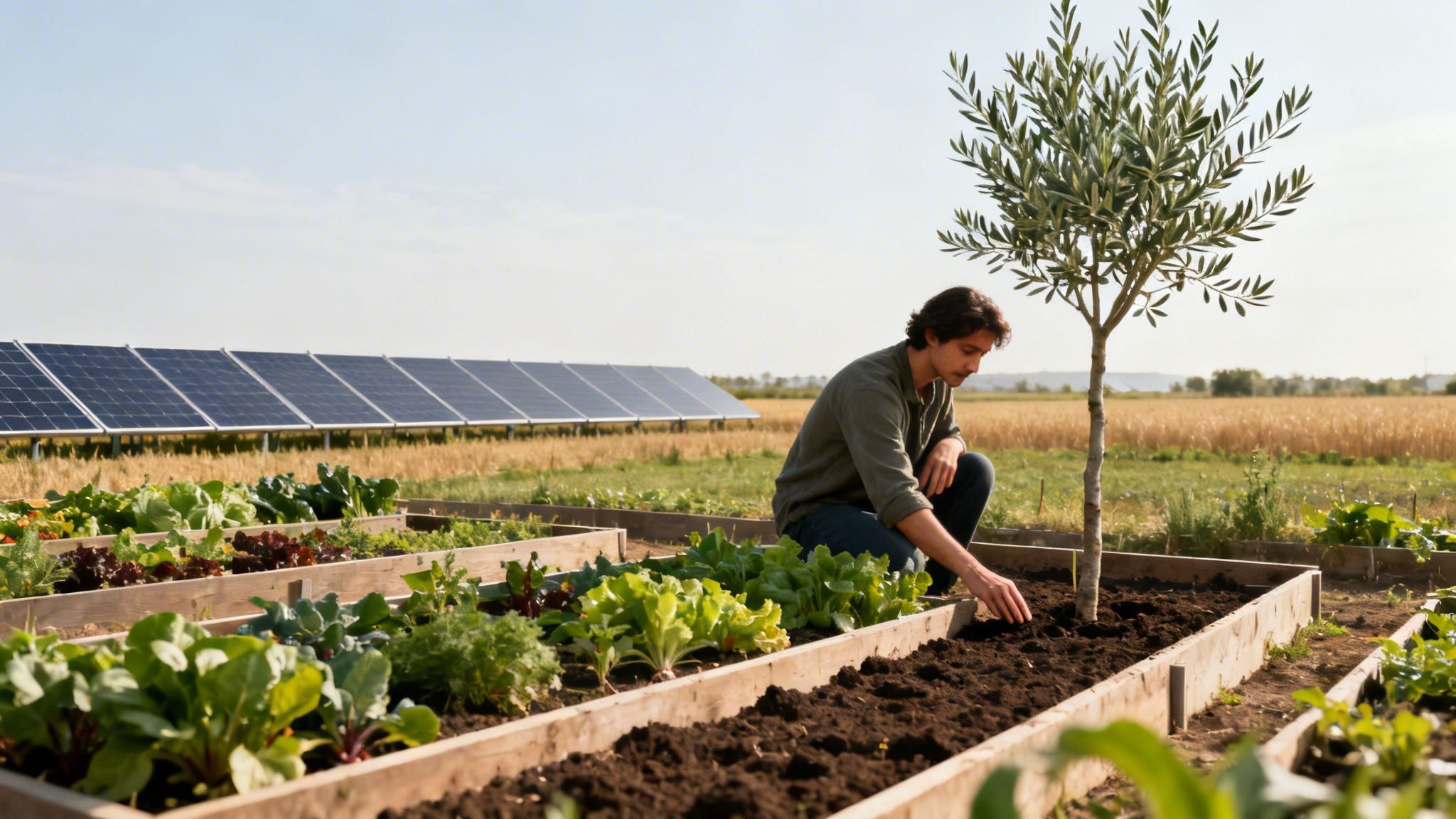
Bringing sustainability into your operation can take many forms. For those looking at a classic Portuguese crop, understanding proven olive oil harvesting methods is a great place to start. Other game-changing practices include installing solar panels to slash energy costs, setting up water-wise irrigation systems, and using regenerative techniques like cover cropping to naturally build up your soil fertility year after year.
Real-World Success Stories
All across Portugal, people are breathing new life into traditional farms. In the Douro Valley, quinta owners who used to just sell their grapes to the big Port houses are now bottling their own award-winning table wines and opening up stunning boutique hotels. Over in the Alentejo, farmers are blending ancient cork harvesting traditions with eco-tourism, offering guests a chance to witness a process that has been part of the landscape for centuries.
These examples prove that with a little vision, your farm can become so much more than a piece of land. It can be a profitable business, a hub for sustainable living, and a source of incredible personal satisfaction. The key is to see the potential hiding in plain sight on your property and match it with what the modern world is looking for.
How to Find and Secure Your Perfect Farm
This is where the dream starts to feel real. Finding the right farm in Portugal is part research, part legwork, and all about knowing what to look for. It's a journey from scrolling through online listings to walking the land yourself and, finally, closing the deal.
Your search will likely start online, but don't stop there. The big property websites are great for getting a feel for the market, but the best deals are often found through people on the ground. A good local agent, someone who really knows the region, is worth their weight in gold. They hear about properties coming up for sale long before they're officially listed. Once you've zeroed in on a potential Portugal farms for sale, it's time to put on your boots and get serious.
Mastering the Property Viewing
It’s easy to fall in love with a postcard view of rolling hills and olive groves. But a successful farm viewing is less about romance and more about investigation. You need to look past the charm and assess the property’s true condition and potential.
Think of it as a health check-up for the land. Here’s what to focus on:
- Water Source Reliability: Don't just take their word for it. Ask to see the borehole (furo) or well (poço) running. What's the pressure like? Crucially, ask how it performs in August and September when things are at their driest.
- Soil Quality and Land Health: Kick the dirt. Is it rich and loamy, or is it sandy, rocky, and thin? Look for tell-tale signs of erosion on slopes, which could mean a lot of work and money down the line.
- Building Integrity: Poke around every single building, not just the main house. Check for damp spots on the walls, look for significant cracks, and get a good look at the roof. Those beautiful old stone barns can hide some very expensive problems.
A property viewing is your chance to verify everything you've been told. You're not just a potential buyer; you're an inspector. A stunning view is wonderful, but a reliable water source is what makes a farm work.
Strategies for Negotiation and Closing the Deal
Negotiating in Portugal can feel different. It's often more personal, and building a good relationship with the seller—who might have lived on that land their entire life—can make a real difference.
Your offer should be based on a solid understanding of the property's real value and condition. When you make an offer, be ready to explain your reasoning. For example, if you know the irrigation system needs a €10,000 replacement, that's a fair and concrete point to bring to the table. A well-justified offer carries much more weight than simply trying to lowball them.
Once the seller accepts, your lawyer takes the lead, guiding you from the promissory contract (Contrato de Promessa de Compra e Venda) to the final deed (Escritura). This is the final step in making that dream of a life in the Portuguese countryside a reality.
Frequently Asked Questions About Buying a Farm in Portugal
When you're getting close to a decision, the small, practical questions often become the most important. I've compiled answers to the most common queries I hear from international buyers to help you navigate these final details with confidence.
Do I Need to Be a Resident to Buy a Farm in Portugal?
The short answer is no. Portugal welcomes buyers of all nationalities, and you don't need residency to purchase property.
However, you will need two things to make the transaction happen: a Portuguese tax number, known as a NIF, and a local bank account. These are standard procedural steps for any property purchase here.
While owning a farm doesn't automatically give you residency, it can significantly bolster a visa application if your plan is to live here and work the land. For a full breakdown of the different routes available, you can learn more about how to get residency in Portugal.
What Are the Main Hidden Costs to Consider?
Once you agree on a price, you need to account for the closing costs. The big ones are the Property Transfer Tax (IMT) and Stamp Duty (IS), which together usually add 6-8% to the purchase price. On top of that, notary and land registry fees will add another 1-2%.
But for a farm, the real "hidden" costs are often buried in the land itself. I’ve seen buyers caught off guard by expenses like:
- Drilling a new borehole or overhauling an old irrigation system.
- The sheer cost of clearing land that's been left untended for years.
- Bringing a beautiful but crumbling farmhouse or barn up to modern living standards.
This is where a thorough, professional inspection pays for itself. It’s the only way to uncover these potential budget-busters before you sign on the dotted line.
A smart rule of thumb is to budget an extra 10% of the purchase price for closing costs and immediate upgrades. This buffer keeps a surprise expense from turning your dream project into a financial nightmare.
Can I Get a Mortgage as a Non-Resident?
Yes, it's definitely possible for non-residents to get a mortgage from a Portuguese bank. Just be prepared for a higher bar. Lenders are naturally more cautious with international clients.
You should expect to put down a larger deposit, typically in the 30-40% range. The bank will also want to see extensive proof of your income, a solid credit history from your home country, and overall financial stability.
My best advice? Get pre-approved for a mortgage before you start seriously looking. It gives you a rock-solid budget to work with and shows sellers you're a credible, serious buyer.
Are There Restrictions on Farming Activities?
Absolutely, and this is a critical point. Land use is tightly controlled by local zoning laws. Much of Portugal's agricultural land is classified as either RAN (Reserva Agrícola Nacional) or REN (Reserva Ecológica Nacional).
These designations are there to protect prime farmland and ecologically sensitive areas, and they come with strict rules about what you can and cannot build or do.
Your lawyer's due diligence must include a thorough check of the property's official classification. This is the only way to be certain that your plans—whether it’s planting a vineyard, raising livestock, or starting an agritourism business—are actually allowed on that specific piece of land.
Ready to find your slice of the Portuguese countryside? At Residaro, we specialize in connecting international buyers with their dream properties. Explore our curated listings and start your journey today at https://residaro.com.