Your Guide to Finding Portugal Farms For Sale
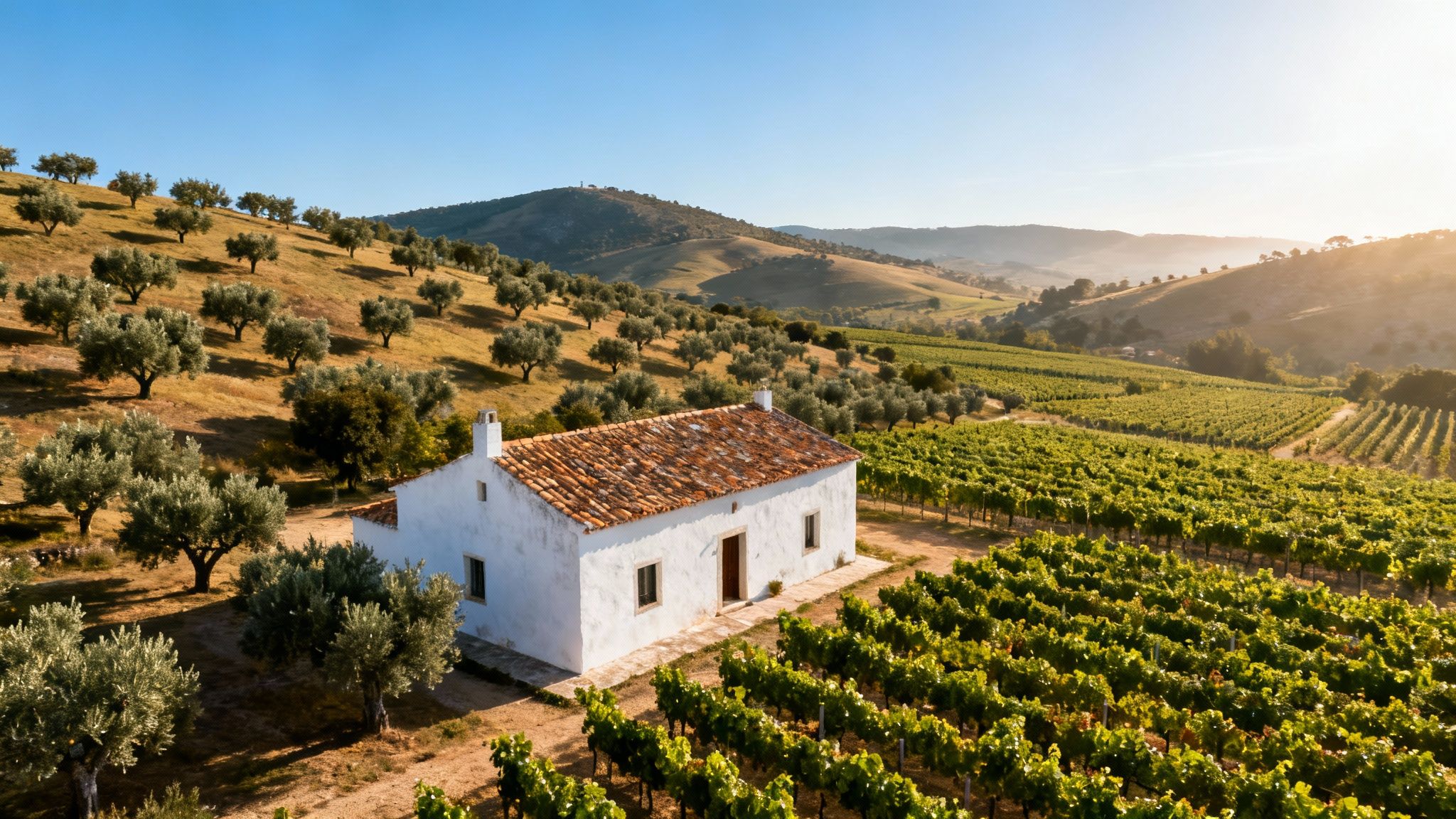
Picture this: waking up to the sight of rolling hills, ancient olive groves, or vineyards basking in the morning sun. This isn't just a daydream—it's a very real possibility when you start looking at Portugal farms for sale. More and more international buyers are discovering the appeal of Portugal's countryside, drawn by the incredible lifestyle, solid investment potential, and sheer natural beauty.
Your Dream of Owning a Portuguese Farm Starts Here
Think of this guide as your personal roadmap to the exciting world of Portuguese rural properties. We're here to pull back the curtain on the entire process, from finding a sprawling Alentejo estate to a charming Algarve quinta (the local term for a traditional farmhouse). It’s everything you need to turn that vision into a solid, actionable plan.
The magic of owning a farm in Portugal goes far beyond just a pretty view. It’s a chance to connect with a deep agricultural history, slow down your pace of life, and put your money into a real, tangible asset that's only growing in value. The country's varied climate and rich soil can support almost anything, from vineyards that produce world-class wine to cutting-edge organic farms.
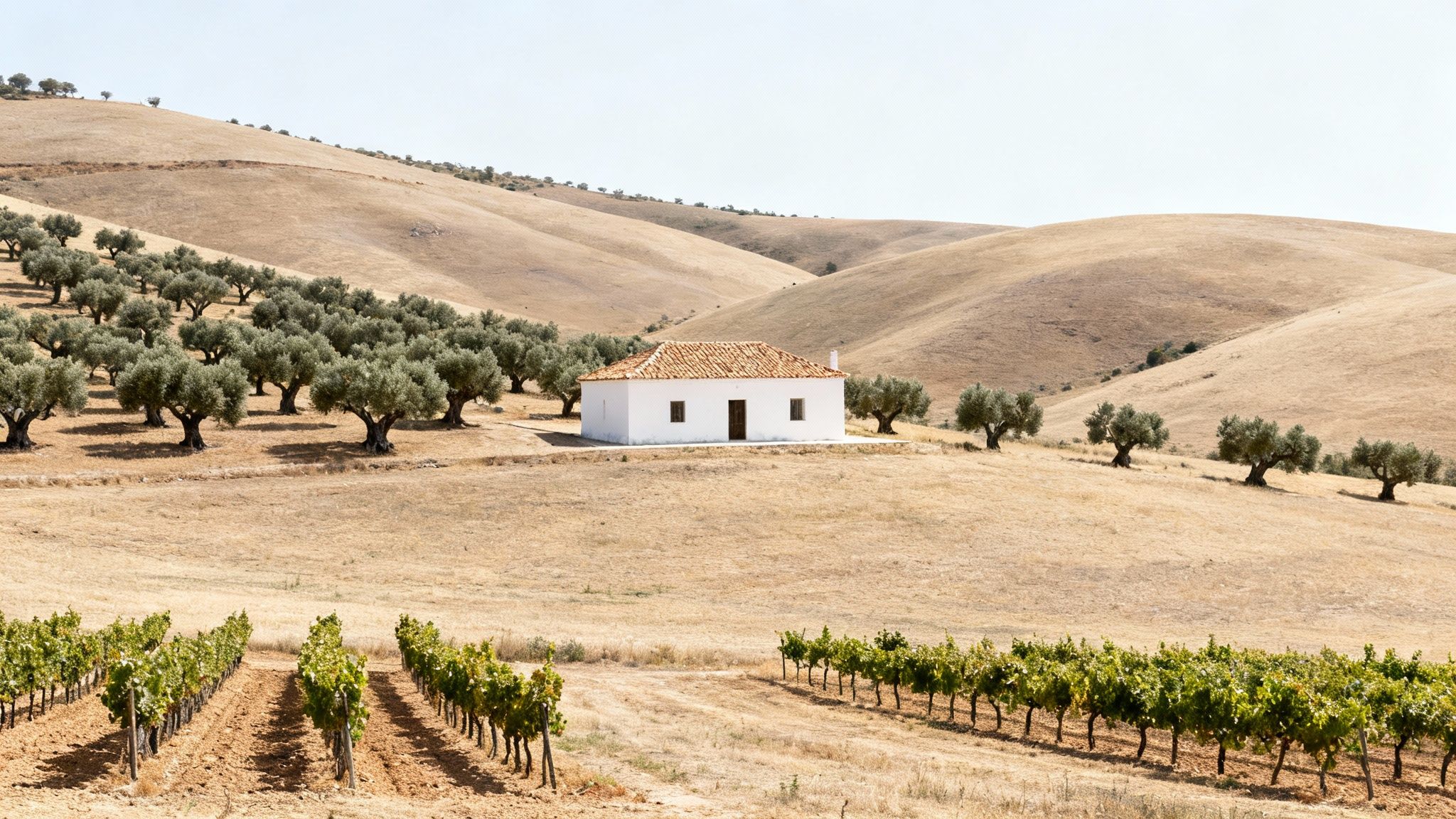
Why International Buyers Choose Portugal
So, what’s the big draw? For most people, it's not just one thing. Portugal offers a unique mix of benefits that make it an almost perfect spot for both an agricultural investment and a significant life change. We'll get into the details, breaking down what can feel like a complex process into simple, manageable steps.
- Lifestyle and Climate: Many regions in Portugal enjoy over 300 days of sunshine a year. This means an incredible quality of life for you and perfect growing conditions for your land.
- Investment Potential: There's a strong demand for high-quality Portuguese produce. When you add in the possibility of EU agricultural subsidies, the financial side of owning a farm here starts to look very attractive.
- Accessibility: As a full member of the European Union, Portugal offers a stable, secure, and predictable environment for international buyers. The laws around property ownership are refreshingly straightforward.
- Cultural Richness: Owning a farm here isn't just about the land; it’s an invitation to become part of the local culture. You can find yourself immersed in timeless traditions, from the community olive harvest in the Alentejo to the winemaking festivals in the Douro Valley.
Our goal with this guide is simple: to give you the confidence and knowledge you need to make a smart decision. We’ll cover everything from the differences between regional markets and legal must-knows to financing options and practical tips for finding and checking out properties. By the time you're done reading, you'll be ready to start the search for your perfect Portuguese farm.
Getting to Grips with the Portuguese Farm Market
When you start looking at farms for sale in Portugal, you’re not just browsing real estate—you’re stepping into a rich and varied world. Each region has its own unique character and opportunities, all underpinned by a fantastic climate, a prime location within the EU, and surprisingly robust government support. This isn't just about buying a piece of land; it's about plugging into a living, breathing agricultural system.
To really see the potential, you have to get a feel for the different kinds of properties on offer. The landscape here is a mosaic of everything from classic family-run farms to massive commercial estates. Each has its own story and its own possibilities.
Learning the Lingo: Quinta vs. Herdade
The first thing you’ll notice when you start digging into listings is the local terminology. Two words pop up constantly, and understanding them is the key to narrowing down your search from the get-go.
-
Quinta: This is the classic Portuguese country home or small farm. Picture a charming stone farmhouse nestled among a few hectares of olive trees, a small vineyard, or a citrus grove. A quinta is often the perfect fit for someone looking for a lifestyle change, or perhaps to launch a boutique agricultural business or a rural tourism project.
-
Herdade: This term signals something on a much grander scale. A herdade is a large estate or ranch, the kind you'll find sprawling across the vast, rolling plains of the Alentejo. These properties can run to hundreds, sometimes thousands, of hectares and are geared for serious commercial farming—think cork, olives, cattle, or grains. These are major agricultural enterprises for dedicated investors.
These two distinct property types create a fantastic spectrum of options, meaning there's an entry point for almost any ambition or budget.
The Numbers Game and EU Support
Investing in Portuguese agriculture is about more than just a beautiful setting; it's a financial decision with real potential. The market has a solid foundation. Portugal is home to around 259,000 active farms spread across 3.6 million hectares, with family farms forming the backbone of the industry. To give you an idea of scale, the total value of agricultural production hit €11.8 billion in 2021. This isn't a niche market; it's a vital part of the national economy.
What really sweetens the deal for many investors is the European Union's Common Agricultural Policy (CAP). This isn't just bureaucratic red tape; it’s a program that provides direct financial support to farmers, which can seriously improve your bottom line. You can dive deeper into Portugal's CAP Strategic Plan on the European Commission's website.
Think of the CAP as both a financial safety net and a catalyst for growth. It offers direct payments and funds rural development, making it much easier to invest in sustainable farming, buy modern equipment, or even add new income streams to your property.
For a buyer coming from abroad, this means you're not just acquiring a static piece of land. You're buying an active investment that can produce income from what you grow and from subsidies. The CAP is particularly helpful for Portugal’s star sectors:
- Wine production, especially in world-renowned regions like the Douro Valley.
- Olive oil, the lifeblood of Alentejo agriculture.
- Fruit and vegetables, which grow beautifully in the mild climate.
- Cereals and livestock, which are farmed all over the country.
This framework creates a really fertile environment for new owners. The sheer number of traditional, family-run farms also presents a unique opening. Many of these properties are ready for a new lease on life, giving you the chance to bring in modern techniques, switch to high-value organic farming, or build an agritourism business from the ground up. It’s this blend of tradition and modern financial support that makes the Portuguese farm market so compelling.
Finding the Right Region for Your Farm
Choosing where to buy a farm in Portugal is a lot like picking the right canvas for a masterpiece. Every region has its own distinct palette—a unique blend of climate, culture, and agricultural potential. A sprawling farm on the sun-baked plains of the Alentejo feels a world away from a terraced vineyard clinging to the hills of the Douro.
Think of this as your regional compass. We’ll walk through Portugal’s prime farming areas, exploring the character, common crops, and typical costs of each. My goal is to help you match your personal dream—whether it’s a vast commercial operation or a small lifestyle farm—with the perfect piece of land.
Alentejo: The Agricultural Heartland
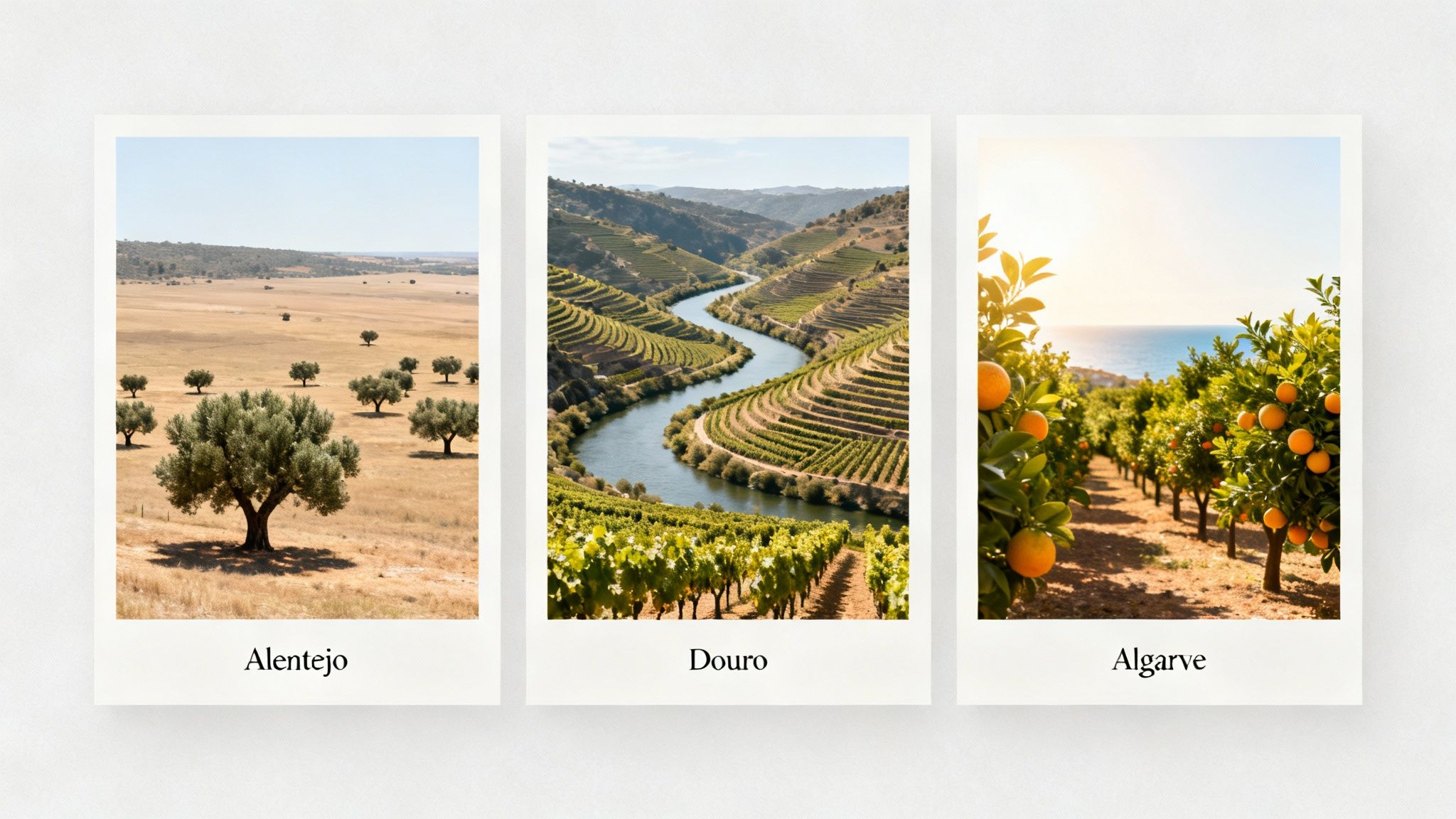
Locals call the Alentejo Portugal’s “breadbasket,” and for good reason. This vast, beautiful region of rolling plains, ancient olive groves, and iconic cork forests covers nearly a third of the country. It’s the undisputed heart of Portuguese agriculture, and life here moves at a slower pace, dictated by the land and the seasons.
If you’re thinking big, this is your place. Farms here are often expansive estates known as herdades, making it the go-to region for large-scale commercial farming. The climate—hot, dry summers and mild winters—is perfect for drought-resistant crops.
- Primary Agriculture: The Alentejo is the world's leading producer of cork, a truly unique industry. It’s also famous for its exceptional olive oil and robust red wines.
- Lifestyle: This region offers a truly authentic, rural Portuguese experience. It’s a land of wide-open spaces, whitewashed villages, and a deep, unshakable connection to tradition.
- Property Prices: While the total price for a large estate can be substantial, the cost per hectare is often lower here than anywhere else in the country, offering fantastic value for serious investors.
The Douro Valley: World-Famous Vineyards
For anyone who loves wine, the Douro Valley is nothing short of legendary. This UNESCO World Heritage site is a breathtaking landscape of dramatic, terraced vineyards that plunge down steep hillsides to the Douro River. As the oldest demarcated wine region in the world, it’s most famous for giving us Port wine.
Buying a farm here, typically a smaller property called a quinta, often means you're buying a piece of winemaking history.
Owning a farm in the Douro is less about industrial-scale farming and more about becoming a custodian of a prestigious legacy. The focus is on producing high-quality grapes for Port and other acclaimed Douro wines.
The climate is one of extremes—scorching summers and cold winters—which is exactly what gives the grapes their unique character. Life here is sophisticated yet deeply tied to the rhythm of the harvest. You’ll find that Portugal farms for sale in this iconic region command premium prices due to their prestige and scarcity. You can get a feel for the market by exploring the range of farmhouses available in Portugal.
The Algarve: Sun-Kissed Southern Coast
The Algarve is globally famous for its golden beaches, but venture inland and you'll discover a thriving agricultural scene. Its special microclimate, with the mildest winters in mainland Europe, allows farmers to grow crops that simply won't survive elsewhere in the country. This makes it an exciting prospect for anyone looking to cultivate high-value fruits.
The farms here tend to be smaller and more manageable than the massive estates of the Alentejo, making them perfect for lifestyle farmers or niche commercial projects.
- Key Crops: The Algarve is Portugal’s citrus capital, producing an abundance of oranges, lemons, and tangerines. It's also becoming a major hub for avocado and carob cultivation, both crops with booming demand.
- Lifestyle & Climate: Here you get the best of both worlds: rural tranquility with easy access to coastal towns and amenities. With over 300 days of sunshine a year, the quality of life is simply unbeatable.
- Investment Focus: The proximity to a bustling tourism industry makes these farms ideal for agritourism, farm-to-table restaurants, or supplying local hotels.
Comparing Top Regions For Farm Purchases In Portugal
To make things easier, here’s a quick-reference table that boils down the key differences between these popular regions. Use it to compare them at a glance and see which one aligns best with your vision.
| Region | Primary Agriculture | Typical Property Type | Lifestyle And Climate | Price Indicator |
|---|---|---|---|---|
| Alentejo | Cork, olives, wine, grains | Large estates (Herdades) | Rural, traditional, slow-paced. Hot summers, mild winters. | $$ |
| Douro Valley | Wine grapes (Port & table wines) | Hillside estates (Quintas) | Sophisticated, wine-focused. Extreme heat & cold. | $$$$ |
| Algarve | Citrus, avocados, carob, figs | Smaller, manageable farms | Coastal access, sunny. Mildest winters in Europe. | $$$ |
Ultimately, your choice depends entirely on your goals. Do you see yourself as a commercial cork producer, a boutique winemaker, or a cultivator of exotic fruits under the southern sun? Each of these regions offers a unique path to living your Portuguese farming dream.
Investing in Organic and Sustainable Farming
When you start looking at Portugal farms for sale, you’re doing more than just buying land. You're tapping into one of the most significant shifts in modern agriculture: the move toward organic and sustainable farming. This isn't just an ethical fad; it's a smart business move that positions your investment for the future. Portugal has really stepped up, becoming a European leader in this space, which makes it a fantastic place for international buyers to put down roots.
This whole movement is driven by two powerful forces: consumers who want to know where their food comes from and a government that's actively supporting greener agriculture. For you, the buyer, this is a golden opportunity. Finding a farm with organic potential means you can access premium markets where everything from olives and wine to fruits and vegetables fetches a higher price.
The Organic Boom in Portugal
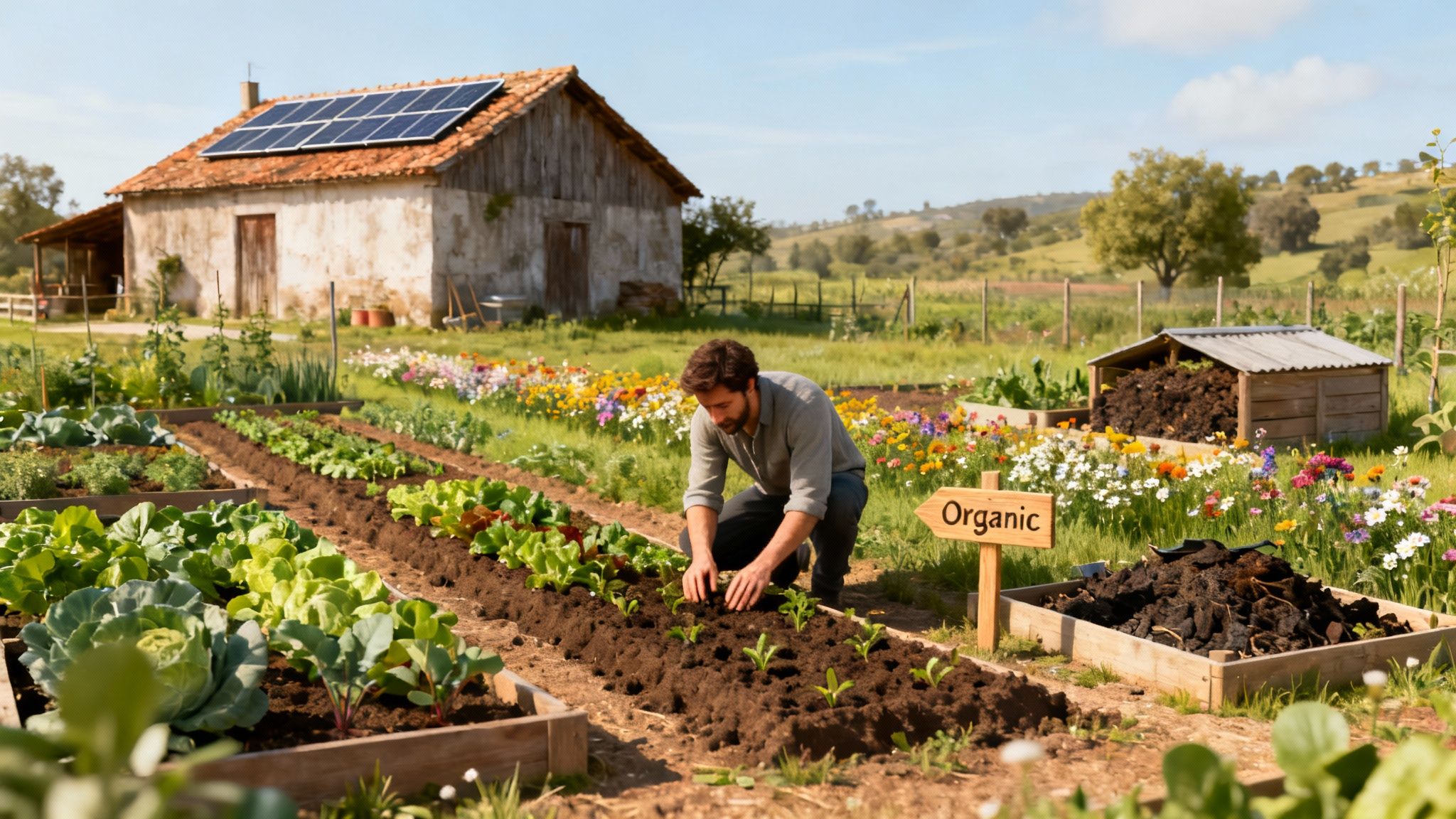
Portugal's dedication to green farming is the real deal. The country's agricultural scene has exploded with organic production. Between 2012 and 2022, the amount of land used for organic farming jumped by a staggering 278.4%. That growth blows the EU average out of the water. This incredible expansion is backed by a solid national strategy and a growing public appetite for organic goods, creating some serious opportunities in regions like the Alentejo and the Douro Valley.
So, what does this mean for you as a buyer? It means real, tangible benefits. If you buy a farm that’s already certified organic—or one that could be converted—you may be eligible for specific subsidies under the EU's Common Agricultural Policy (CAP). These aren't just token amounts; they're significant financial incentives designed to help farmers adopt and maintain sustainable practices, giving your bottom line a healthy boost from the start.
Investing in an organic-ready farm is like buying into a high-growth sector. You gain a competitive edge, appeal to a conscious consumer base, and benefit from a supportive policy environment designed to reward ecological stewardship.
Building a Future-Proof Agricultural Business
Going sustainable is about more than just what you grow. It’s a whole philosophy of land management. Think healthy soil, smart water conservation, and promoting biodiversity. This holistic approach creates a farm that's not just productive but also resilient enough to weather environmental changes.
As you think about how to apply these methods, looking into sustainable landscaping solutions can give you some great ideas for managing your land in an eco-friendly way. These practices don’t just help the planet; they can seriously improve your property’s value and make it run more efficiently.
Here are a few of the key advantages of taking this path:
- Access to Niche Markets: Getting that organic certification opens doors to specialized buyers, both in Portugal and abroad, who are happy to pay more for quality.
- Reduced Input Costs: Over the long haul, sustainable farming means you'll spend less on expensive chemical fertilizers and pesticides, which directly improves your profit margins.
- Enhanced Soil Health: Techniques like cover cropping and composting build rich, fertile soil that gets more productive year after year.
- Alignment with EU Green Deal: The European Union is all-in on sustainability, which means farms that embrace green practices will continue to get strong policy and financial backing.
Ultimately, putting your money into an organic and sustainable farm in Portugal isn't just about owning a piece of the countryside. It’s about building a profitable, modern, and resilient agricultural business that’s perfectly in sync with where the world is heading.
A Step-by-Step Guide to Buying Your Farm
Buying a farm in another country can feel like a massive undertaking, but it doesn't have to be overwhelming. When you break it down, the process is actually a logical series of steps. Think of it as a clear roadmap that takes you from the first spark of an idea to holding the keys to your new life in Portugal.
We'll walk through the entire journey, from building your team to signing the final papers. Each step is designed to protect you and ensure the whole transaction is smooth and secure.

Step 1: Assemble Your Professional Team
Before you even start looking at properties, your very first move should be to get your professional team in place. You wouldn't climb a mountain without an experienced guide, right? The same logic applies here. This is probably the single most important thing you can do to protect your investment.
Your essential team members are:
- A Reputable Real Estate Agent: Find someone who truly specializes in rural properties. They’ll understand the unique challenges and opportunities that come with buying agricultural land.
- An Independent Lawyer (Advogado): Your lawyer is your champion. They'll handle all the due diligence, check the contracts, and make sure every part of the deal is above board. Crucially, never use the seller's lawyer—you need someone who is 100% on your side.
Getting these experts lined up early gives you a solid foundation for everything that follows.
Step 2: Get Your NIF Number
Next up is a bit of essential paperwork: getting your Número de Identificação Fiscal (NIF). This is simply your Portuguese tax ID number, and you can't do much without it. You'll need a NIF to buy property, open a bank account, or even set up utilities.
Don't worry, it's a straightforward process. Your lawyer can usually sort this out for you pretty quickly. It's a small but vital step that officially gets you in the game.
Step 3: The Property Search and Initial Offer
Now for the fun part—finding that perfect farm. Using a dedicated platform is the smartest way to start your search for Portugal farms for sale. It lets you narrow things down by region, price, and land size, helping you create a shortlist of properties that actually fit your vision.
Once you find a farm that captures your imagination and you're ready to get serious, it’s time to make a formal offer. If the seller accepts, you’ll head into the most critical phase of all: due diligence.
Step 4: Conduct Thorough Due Diligence
This is where your lawyer really shines. Due diligence is basically a deep-dive investigation into the property to make sure there are no nasty surprises waiting for you. It's like giving the farm a complete health check-up before you commit.
Your lawyer will meticulously comb through several key documents:
- Caderneta Predial (Land Registry Document): Confirms the property’s official tax details, including its size, boundaries, and any registered buildings.
- Certidão de Teor (Property Registration Certificate): This is the proof of ownership. It also shows if there are any mortgages, debts, or other claims against the property.
- Licença de Utilização (Usage License): For any house or liveable structure, this license is essential. It proves it was built legally and is approved for residential use.
- Water Rights (Direitos de Água): Absolutely critical for a farm. Your lawyer will verify the legal status and sufficiency of the water source, whether it's a well (furo), dam (barragem), or mains connection.
- Land Classification: Is the land part of a protected reserve like Reserva Agrícola Nacional (RAN) or Reserva Ecológica Nacional (REN)? This is vital to know, as it can severely restrict what you can build.
This investigation is your safety net. It ensures the property is exactly what the seller claims it is, with no hidden legal skeletons in the closet.
Step 5: Sign the Promissory Contract (CPCV)
With the due diligence done and all your questions answered, the next formal step is signing the Contrato de Promessa de Compra e Venda (CPCV). This is a binding preliminary contract between you and the seller.
The CPCV locks in all the details of the sale: the final price, the closing date, and exactly what’s included. You’ll also pay a deposit at this point, which is typically 10-20% of the purchase price.
This contract legally commits both sides. If you back out for a reason not covered in the contract, you lose your deposit. If the seller pulls out, they usually have to pay you back double your deposit.
Step 6: Final Deed and Ownership Transfer
This is the final hurdle! The Escritura Pública de Compra e Venda, or the final deed, is signed at a notary's office.
Before the signing, you'll need to pay the property taxes, mainly the Property Transfer Tax (IMT) and Stamp Duty (IS). Your lawyer will calculate these for you. Once the Escritura is signed and notarized, the farm is officially yours. Your lawyer will then update the Land Registry with your name, and the process is complete.
Exploring a complete guide to buying a farm in Portugal can give you even more in-depth information for each of these stages.
Financing Your Purchase and Navigating Taxes
Turning the dream of owning a Portuguese farm into a reality often starts with figuring out the funding. For most international buyers, this means looking into a mortgage from a local Portuguese bank. It might seem daunting, but the process is surprisingly well-trodden.
Portuguese banks are quite used to working with foreign buyers. They typically offer loan-to-value (LTV) ratios of 60-70% for non-residents, which means you’ll need to have a down payment of at least 30-40% ready. To get approved, they'll want to see that you have a steady income, a solid credit history, and a clear financial standing—basically, proof you can handle the mortgage payments without any trouble.
Understanding the Key Purchase Taxes
Beyond the sticker price of the farm, you'll need to budget for the taxes and fees that come with the deal. These are one-off costs that you pay before signing the final deed, so it’s crucial to know what they are upfront to avoid any last-minute surprises.
There are two main taxes you'll face:
- Property Transfer Tax (IMT - Imposto Municipal sobre as Transmissões Onerosas de Imóveis): This is the big one. It's calculated on either the purchase price or the property's official tax value—whichever is higher. The good news for farm buyers is that for rural or agricultural land, it’s a simple, flat rate of 5%.
- Stamp Duty (IS - Imposto do Selo): This is an additional tax on the transaction, charged at a fixed rate of 0.8%. It's calculated on the same value used for the IMT.
Think of these taxes as the final administrative hurdles to clear before the property is officially yours. Factoring them into your budget from the very beginning takes the stress out of closing day and gives you a true picture of your total investment.
Linking Property Ownership to Residency
Buying a farm in Portugal can be more than just a property investment; it can be your ticket to living here. While just owning property doesn't automatically give you the right to residency, it gives your visa application a serious boost by proving you have deep, tangible ties to the country.
One of the most popular paths is the D7 Visa, often called the "passive income visa." It’s a great fit for retirees or anyone who can show a reliable income from pensions, remote work, or investments. Having a farm gives you a permanent address and a compelling reason for wanting to be in Portugal, which makes your application much stronger.
When you're sorting out your finances, it helps to understand the bigger picture of financing investment property internationally. For a more detailed breakdown of the local costs, check out our complete guide on property taxes in Portugal. Getting your financial plan and residency strategy aligned from the start is the best way to build a solid foundation for your new life in the countryside.
Common Questions About Buying a Farm in Portugal
As you get closer to making an offer on your dream farm, a handful of practical, last-minute questions always seem to pop up. Let's tackle some of the most common ones we hear from international buyers, so you can move forward with total clarity and confidence.
Do I Need a Portuguese Bank Account to Buy a Farm?
Yes, for all practical purposes, you absolutely do. You’ll need a local bank account and a Portuguese tax number, known as a NIF (Número de Identificação Fiscal), to complete the purchase.
This account is essential for handling the transaction itself, paying property taxes like IMT and Stamp Duty, and eventually setting up your bills for water and electricity. Don't worry, though—it's a standard part of the process, and your lawyer can help you get it sorted out early on.
What Are the Biggest Challenges When Buying Agricultural Land?
Two hurdles tend to catch foreign buyers by surprise: verifying water rights and untangling land zoning restrictions.
First, water is gold in much of Portugal. You have to be certain the property has legal, registered water rights (direitos de água) and that the supply is sufficient for your plans, whether that's for a small vegetable garden or a commercial vineyard.
Second, much of the country's prime agricultural land falls under a protected designation called RAN (Reserva Agrícola Nacional). If a property is in a RAN zone, your ability to build new structures can be severely limited. This is where a sharp lawyer is indispensable—their due diligence is what separates a dream farm from a regulatory nightmare.
"Verifying water rights and zoning restrictions isn't just paperwork; it's the foundation of your farm's viability. A small oversight here can lead to major limitations down the road, so expert legal review is non-negotiable."
Can I Get Residency in Portugal by Buying a Farm?
Buying a farm isn’t a direct ticket to a Golden Visa anymore, as the rules for that program have changed. However, owning a significant property can still be a huge asset for other residency pathways, like the D7 Visa, which is designed for people with a steady passive income.
Owning a farm demonstrates a serious, tangible commitment to Portugal, and that's a powerful and positive factor in any residency application. Your best bet is to talk to an immigration specialist who can map out the best route for your personal situation.
How Can I Find Verified Portugal Farms For Sale?
Starting your search on a specialized real estate platform is easily the most efficient way to see what's out there. These sites bring together listings for farms, quintas, and rural estates from all over the country, saving you the hassle of scouring dozens of local agency websites.
The real advantage is in the details. You can filter by region, price, and land size, and the best platforms provide high-quality photos and crucial market data. This helps you quickly discover and properly evaluate potential Portugal farms for sale that actually align with your budget and what you're hoping to create.
Ready to find your perfect rural escape? At Residaro, we simplify the search for exceptional properties across Europe. Explore our curated listings of farms, quintas, and country estates in Portugal and start your journey today.