Vacation Rental Property Insurance A European Investor's Guide

Here's a common, and frankly, costly mistake I see new hosts make all the time: assuming their standard homeowner's policy has them covered. The second you accept money from a guest, you've crossed a line in the insurance world. Your home is now considered a business, and that personal policy? It likely has a 'business exclusion' clause that just made your coverage vanish.
This is where specialized vacation rental property insurance steps in. It's not a luxury; it’s the essential safety net designed specifically to bridge this critical gap and protect your investment from the unique rollercoaster of risks that come with hosting.
Why Your Standard Home Insurance Falls Short

It’s an easy assumption to make, but thinking your homeowner’s insurance will protect your rental can lead to financial ruin. Let me put it another way: you wouldn't expect your personal car insurance to cover you if you started driving for a ride-sharing app full-time, right? The risk profile is completely different, and the exact same logic applies here.
The moment you host a paying guest, you're no longer just a homeowner; you're a business operator. Standard policies are written for personal, residential use—not for the commercial realities of running a rental.
The Business Exclusion Clause Explained
The linchpin of this whole problem is the business exclusion clause. It's buried in the fine print of nearly every standard homeowner's policy, and it's ruthless. The clause essentially says that the insurer won't pay for any losses or damages that stem from business activities on your property.
What does that mean for you? If a guest gets hurt or causes significant damage, and you file a claim, it's almost guaranteed to be denied. You'll be left holding the bag for everything, from a guest's medical bills to the cost of rebuilding a damaged kitchen.
Unique Risks of Short-Term Rentals
The very nature of vacation rentals creates a whole new world of risks that your average insurance policy was never built to handle. Once you see them laid out, the need for proper coverage becomes crystal clear.
Here's what you're up against:
- Frequent Guest Turnover: A revolving door of guests, all unfamiliar with your home, dramatically increases the odds of accidents. Think broken furniture, wine-stained rugs, or worse.
- Guest Liability: This is the big one. If a guest slips on a wet tile or trips over a loose cord, you could be on the hook for their medical bills, lost wages, and steep legal fees.
- Property Damage: Let's be honest, guests won't treat your property with the same loving care that you do. The potential for damage runs the gamut from minor scuffs to major structural problems.
The global short-term rental market is a massive industry, with over 2.4 million listings pulling in serious revenue. But here’s the scary part: a huge number of those hosts are unknowingly operating with the wrong insurance, creating a protection gap that leaves them completely exposed.
This is why smart investors are moving to specialized vacation rental property insurance, which can offer liability coverage up to $1 million or more. The market is growing, and you can discover more insights about vacation rental statistics to see just how big it's getting. Operating without the right protection isn't just running a business—it's gambling with your most valuable asset.
Understanding Your Insurance Options for Short-Term Rentals

Diving into the world of insurance can feel like a chore, but for a property investor, it's one of the most important decisions you'll make. When you break it down, you really have three main paths to choose from. Each one offers a different level of protection, from a simple patch on your existing policy to a complete financial shield built for your business.
Think of it like choosing a vehicle for a job. You wouldn't use a family sedan to haul commercial cargo, right? The same logic applies here. Let’s look at your options, starting with the most basic—and often riskiest—choice.
Level 1: Homeowner's Insurance Endorsement
The most straightforward option is a homeowner's insurance endorsement. This is simply an add-on, or "rider," to your personal home insurance policy. It's designed for someone who rents out a room very occasionally.
While it's a quick fix, this endorsement usually comes with heavy restrictions, like a strict cap on the number of nights you can rent per year. For anyone serious about their rental business, this minimal coverage is almost always a bad fit, leaving you exposed to major financial risks.
Level 2: Landlord Insurance (DP-3 Policy)
A step up is landlord insurance, sometimes known as a DP-3 policy. This is a much better policy designed for property owners who rent to long-term tenants—think a family signing a twelve-month lease. It provides solid property and liability protection for that specific scenario.
But landlord insurance has a critical blind spot: it wasn't created for the constant turnover and commercial activity of a vacation rental. These policies often exclude coverage for damage caused by short-term guests, theft of your belongings, or loss of rental income—all core risks for a host.
Level 3: Dedicated Vacation Rental Insurance
This is the real deal. Dedicated vacation rental property insurance is a specialized commercial policy built from the ground up for the unique risks of short-term renting. It's the only option that treats your rental like the business it truly is.
This policy combines the best parts of homeowner's, landlord, and business insurance into a single, comprehensive package.
Here’s what you can typically expect:
- Commercial General Liability: Protects you from lawsuits if a guest gets injured on your property. Coverage usually starts at $1,000,000.
- Full Property and Contents Coverage: This covers the building itself, plus all the things inside it that your guests use—from the furniture and linens to the smart TV and coffee maker.
- Loss of Rental Income: If your property becomes unrentable due to a covered event like a fire, this feature reimburses you for the income you lose during repairs.
- No Occupancy Restrictions: Unlike a standard homeowner's policy, it covers your property whether it’s occupied by you, a guest, or sitting vacant between bookings.
For an insightful analysis of different policy types, reviewing the best insurance for Airbnb hosts can offer more detail on how these commercial policies compare.
Ultimately, a dedicated policy eliminates the dangerous gray areas and coverage gaps left by other options. When your property is a key asset, this level of protection isn't just a smart move—it's essential.
Comparing Insurance Policies for Your Vacation Rental
Choosing the right insurance can be confusing. This table breaks down the three main options side-by-side to help you see which policy truly fits your needs as a vacation rental owner.
| Feature | Homeowner's Insurance Endorsement | Landlord Insurance (DP-3) | Dedicated Vacation Rental Insurance |
|---|---|---|---|
| Best For | Very occasional, infrequent renting | Long-term tenants (12-mo lease) | Professional short-term rental business |
| Liability Coverage | Limited; personal liability only | Covers tenant-related incidents | Commercial liability (guest injuries, etc.) |
| Property Damage | Basic; many exclusions for guests | Covers building, not guest damage | Covers building, contents, and guest damage |
| Loss of Income | Not included | Typically not included | Yes, covers lost bookings |
| Guest Theft/Vandalism | Rarely covered | Excluded | Yes, typically included |
| Cost | Low (add-on to existing policy) | Moderate | Higher, but comprehensive |
| Flexibility | Very low; strict rental limits | Low; designed for long-term | High; covers owner, guest, and vacant stays |
As you can see, while a homeowner's endorsement or a standard landlord policy might seem like an easy solution, they leave significant gaps. For any serious investor, a dedicated vacation rental insurance policy is the only way to truly protect your property, your income, and your peace of mind.
What a Good Vacation Rental Policy Actually Covers

Think of a solid vacation rental insurance policy less like a document and more like a financial fortress. When you start comparing providers, you'll be swimming in options, but a few core coverages are completely non-negotiable. These are the pillars that hold up your business when something goes wrong, turning a potential disaster into a manageable problem.
Getting these key components right means you’re buying real protection, not just a policy full of dangerous gaps. Let's pull back the curtain on what every single vacation rental owner needs to have covered.
Liability Protection: Your Shield Against Guest Lawsuits
Liability coverage is, without a doubt, the most critical piece of the puzzle. It's what protects you from financial ruin if a guest gets hurt on your property and decides to sue. This is the legal shield standing between a lawsuit and your personal savings.
Picture this: a guest at your Portuguese villa slips on a wet tile near the pool and breaks their leg. Without the right liability coverage, you could be on the hook for their medical bills, lost wages, and legal fees—a bill that can easily soar into the six-figure range.
A dedicated vacation rental policy needs to include commercial general liability. You'll typically want a limit of at least $1,000,000 per incident. This type of coverage is specifically designed for business activities and covers things a standard homeowner's policy would instantly deny.
Property and Contents Damage: Protecting Your Physical Investment
Your property is your main asset, and everything inside it creates the experience that gets you five-star reviews. This coverage is pretty straightforward: it pays to repair or replace your building and its contents if they're damaged by something like a fire, storm, or burst pipe.
But for a vacation rental, "contents" isn't just about your personal knick-knacks. It has to cover everything your guests use.
That includes:
- Furniture and Appliances: From the comfy sofa to the high-end coffee maker.
- Electronics: Smart TVs, Wi-Fi routers, and sound systems that guests interact with daily.
- Linens and Kitchenware: Towels, sheets, pots, pans, and all the little things that make a rental feel like home.
For international buyers, property damage is a huge deal. Accidental fires or water leaks are far more common than people think. Making sure your policy explicitly covers damage caused by guests is absolutely essential.
Loss of Rental Income: Keeping the Lights On
So, what happens if a fire makes your property unbookable for three months? You're not just facing a massive repair bill; you're also losing all the booking revenue you were banking on. This is where loss of rental income coverage becomes your financial lifeline.
This feature reimburses you for the money you lose while your property is being fixed up after a covered incident. It ensures a single disaster doesn't torpedo your entire investment strategy by providing cash flow precisely when you need it most.
A policy without loss of income protection is only doing half the job. It might cover the cost of rebuilding the house, but it does nothing to replace the business income that house was generating.
Other Vital Coverages People Often Forget
Beyond the big three, a truly great policy includes protection for less obvious, but equally costly, risks. These details are what separate a basic policy from an exceptional one. Don't sign anything until you've confirmed these are in there.
Here are a few more must-haves:
- Legal Defense Costs: Covers your attorney fees and court costs if you have to defend yourself against a liability claim, even if the lawsuit is completely frivolous.
- Pest Infestations: Bed bugs are a host's worst nightmare. Specialized coverage can help pay for extermination and replacing furniture—a common exclusion in standard policies.
- Theft and Vandalism: This protects you if a guest steals property or intentionally trashes your rental.
Making sure your policy includes these elements gives you a complete shield. You can explore a deeper dive into the specifics by reading our other post on insurance for holiday homes. Each piece of coverage works together to protect your investment from all angles.
Navigating Insurance Laws in Top European Markets
Getting the right insurance is the cornerstone of protecting your vacation rental. But here’s something a lot of investors miss: your policy doesn't just need to be comprehensive, it needs to be compliant with the local laws where your property sits. European insurance rules aren't one-size-fits-all. What keeps you safe in Spain could leave you completely exposed in France.
For anyone investing from abroad, getting a handle on these local quirks isn’t just good business—it’s non-negotiable risk management. If your policy doesn't tick the right legal boxes, it could be worthless when you actually need to make a claim. Let's walk through what you need to know in some of Europe's hottest rental markets.
France: The "Assurance Villégiature" Quirk
France has a unique insurance concept called "assurance villégiature," or resort insurance. In a nutshell, it's liability coverage that many French residents already have as part of their standard home insurance, and it’s meant to cover damage they might cause while staying in a rental.
Now, you might think this lets you off the hook. Don't fall into that trap. Relying on your guest's policy is a massive gamble, and here's why:
- Your Guests Might Not Have It: International travelers—a huge slice of the French tourist pie—almost certainly won't have this specific type of French insurance.
- The Coverage is Often Minimal: Even if they do have it, their policy limits could be far too low to cover a serious fire or major water damage.
- You're Not in Control: You have no real way to verify their coverage, let alone manage a claim through an insurance company that isn't yours.
Bottom line: your own dedicated vacation rental insurance is absolutely essential in France. Think of it as your primary shield, protecting you no matter what kind of coverage your guest walks in with.
Spain: A Patchwork of Regional Rules
When it comes to vacation rental laws, Spain is incredibly decentralized. Each of its 17 autonomous communities makes its own rules. This means the insurance you need in Catalonia is likely different from what’s required in Andalusia or the Canary Islands.
Some regions, for example, flat-out require you to have a minimum amount of civil liability insurance just to get a rental license. Trying to operate without it can get you slapped with huge fines or even have your permit pulled. You absolutely must work with an insurance provider who gets these regional differences and can build a policy that meets the specific legal demands of your property's location.
Investing in Spain is about more than just finding a great property; it's about mastering local compliance. A generic, off-the-shelf policy won't cut it in places like the Balearic Islands, which have some of the toughest regulations in the country.
Italy: The "Locazione Turistica" Landscape
In Italy, short-term rentals—known as "locazione turistica"—are also governed by regional laws. While a specific insurance policy isn't always a legal mandate, it's a commercial necessity. Italian law puts a heavy "duty of care" on property owners to provide a safe environment for their guests.
If a guest gets injured on your property, you could find yourself in a complicated legal mess. Your insurance has to include substantial liability coverage that holds up in the Italian court system. This is what protects you from personal injury claims and ensures you have the money for a legal defense if you need one.
Portugal, Sweden, and Austria
These countries show a more common European approach. While they might not have a specific law called "vacation rental insurance," the minute you're running a commercial rental, your risk profile changes dramatically.
- Portugal: The tourism industry here is booming, and Portuguese law holds property owners highly accountable for guest safety. A standard homeowner's policy is simply not enough; a commercial liability policy is what serious investors carry.
- Sweden: Known for its ironclad consumer protection laws, Sweden has high expectations for property owners. Any hint of negligence that leads to an incident can result in a significant claim against you.
- Austria: Especially in alpine regions full of ski chalets, the risk of guest injuries is plain to see. Austrian courts don't mess around with liability, making robust insurance a basic cost of doing business.
No matter the market, the principle is the same: the moment you take money for a stay, you're running a business. Your insurance has to reflect that reality and square with local laws to offer real, dependable protection for your European investment.
Budgeting for and Finding the Right Insurance Policy
Trying to figure out the cost of vacation rental insurance can feel a bit like guesswork, but it doesn't have to be. The first thing to understand is that your premium isn't a fixed, one-size-fits-all number like a mortgage payment. It’s a custom price tag that changes based on the specific risks tied to your property and how you run your rental business. Getting a handle on these factors is the key to budgeting properly.
So, what actually drives the cost? A handful of key things. A coastal villa in Spain with a swimming pool is a world away, risk-wise, from an alpine chalet in Austria. This means location and property type are massive drivers of your premium. The more your property is worth and the more cool amenities you offer—think hot tubs, fireplaces, or kayaks—the higher that premium will probably be. Your own claims history matters, too.
Estimating Your Annual Insurance Costs
While it's impossible to give an exact figure without a quote, most hosts should plan on spending somewhere between $1,500 and $3,500 per year for a solid, dedicated vacation rental insurance policy. That number might seem steep next to your standard homeowner's insurance, but it’s a reflection of the fact that you're running a commercial business. The policy is built to protect you in that context, covering things like liability and lost rental income that a standard policy just won't touch.
As you map out your budget, remember that your insurance premium is a legitimate business expense. It's just as crucial as your marketing budget or cleaning fees and can often be included in your short term rental tax deductions. Treating it this way from the start is fundamental for your long-term financial health.
Finding the Right Insurance Provider
Once you have a budget in mind, it's time to find an insurer who actually gets the short-term rental world, especially the ins and outs of the European market. This is a big deal—not all providers are the same, and picking the wrong one can be just as bad as having no insurance at all.
Here’s a simple, straightforward process for finding and vetting your options:
- Seek Out Specialists: Your first move should be to look for insurance brokers or companies that specifically offer "vacation rental" or "short-term rental" policies. A general agent might try to fit you into a standard landlord policy, which we’ve already seen leaves some pretty serious coverage gaps.
- Verify European Expertise: This is a must for any international investor. You need to ask potential providers point-blank about their experience insuring properties in your specific country, whether it's Portugal, France, or Sweden. They absolutely have to know the local laws and liability norms.
- Gather at Least Three Quotes: Don't just jump on the first offer you get. Getting quotes from at least three different specialist insurers gives you a much better feel for the market rate and helps you compare what’s being offered. It’s the only way to know you’re getting good value.
- Scrutinize the Policy Details: Look beyond the price. You have to get into the nitty-gritty of the policy documents. Make sure it explicitly includes the essentials: commercial liability, full replacement cost for your contents, and loss of rental income. And pay just as much attention to the exclusions list—that’s where the nasty surprises hide. For more on protecting your investment right from the purchase, our guide on what property title insurance is is a great resource.
The smartest move you can make is to partner with a specialist insurance broker. These pros work with a wide range of insurance companies and act as your advocate, using their inside knowledge to find the best-fitting and most affordable policy for your European rental.
Your Pre-Guest Insurance and Safety Checklist
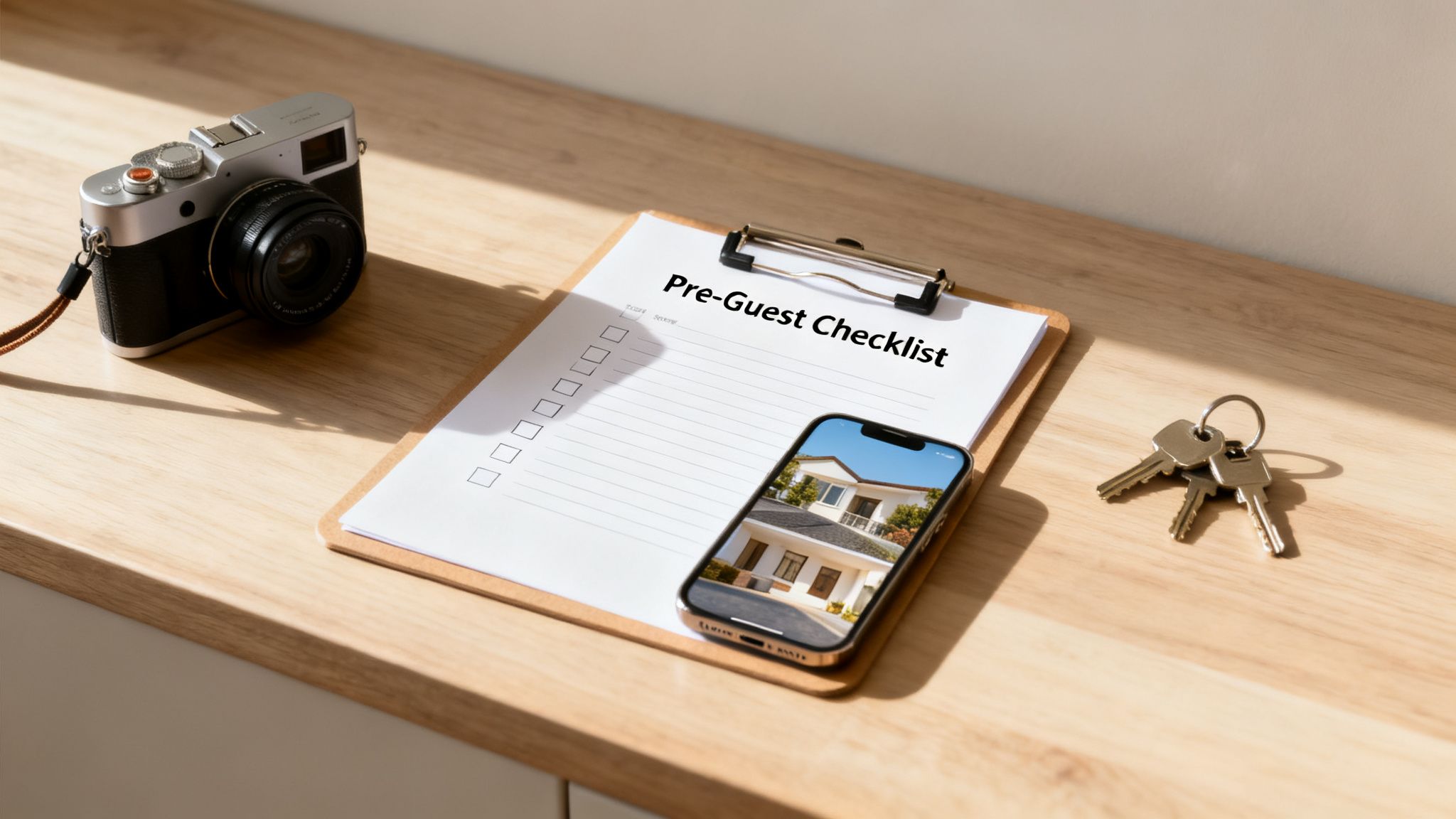
Before you hand over the keys to your first guest, it’s worth taking a moment for one last, crucial review. This isn’t just about making sure the place is sparkling clean; it’s about double-checking that your financial safety net is properly secured. Think of this checklist as your final pre-flight walkthrough before your rental business really takes off.
Ticking these boxes gives you the confidence that you're ready for just about anything. That peace of mind lets you stop worrying and start focusing on what really matters: creating an unforgettable experience for your guests.
Final Policy and Property Review
The time for making assumptions is over. Right now, it's all about verifying the details and documenting everything so your protection is rock-solid. These steps confirm that your coverage is active, sufficient, and perfectly matched to your property.
-
Confirm Your Old Policy is Obsolete: First things first, get written confirmation that your old homeowner's or landlord policy has been canceled. At the very least, have it in writing that you understand its limitations. This crucial step eliminates any gray areas about where your old coverage ends and your new vacation rental property insurance begins.
-
Compare at Least Three Quotes: You should have at least three quotes from specialized insurers in hand. Don't just glance at the price—lay them out side-by-side. Scrutinize the coverage limits for liability, your personal property, and loss of income to make sure you've truly found the best overall value.
-
Read the Exclusions List Carefully: This is non-negotiable. Zero in on what your policy doesn't cover. Look for specific exclusions that might affect you, like certain dog breeds, undeclared amenities like trampolines or hot tubs, guest occupancy limits, or specific kinds of water damage.
-
Document Everything with Photos and Video: Grab your phone and do a complete walkthrough of your property. Take detailed photos and videos of every room, your furniture, and its overall condition. This visual inventory is your best friend if you ever need to file a damage claim. Upload the files to a secure cloud service for safekeeping.
Operational and Legal Compliance
Your insurance policy is most effective when it's backed by smart on-the-ground practices. This last check ensures your day-to-day operations are aligned with your coverage and that you're compliant with all the rules—from local laws to platform requirements. For a deeper dive into running your property smoothly, our guide on property management for vacation homes is a great resource.
Peace of mind isn't just about having a policy; it's about knowing you’ve done everything possible to create a safe, compliant, and well-documented business environment before welcoming a single guest.
Here are the final compliance steps to tick off:
- Understand the Claims Process: The middle of a crisis is the worst time to figure out how to file a claim. Take a few minutes now to read your insurer’s instructions. Save the claims department's phone number and email somewhere you can find it in a hurry.
- Verify Platform Compliance: Log in to your Airbnb, Vrbo, or other booking platform accounts. Make sure your new policy meets their minimum insurance requirements and upload proof of insurance if their system asks for it.
- Check Local Regulations: Finally, do one last check to confirm your coverage amounts and policy type meet any specific insurance rules set by your local city hall or regional authority, whether you're in Spain, France, or anywhere else in Europe.
Frequently Asked Questions About Vacation RentaI Insurance
Jumping into vacation rental insurance can feel like untangling a knot, especially when you're managing properties from another country. Let's tackle some of the most common questions that pop up for international investors. This should clear up any lingering confusion and reinforce what you need to know to keep your investment safe.
Does Airbnb or Vrbo Host Protection Cover Everything I Need?
Think of the protection offered by platforms like Airbnb (AirCover) or Vrbo as a helpful first layer, but not the whole suit of armor. It’s more of a safety net with some pretty big holes.
These host protection plans are great for certain things, but they often leave you exposed. For example, they might not cover damage to your own property caused by a guest, lost rental income if a burst pipe makes your place unbookable, or a slip-and-fall accident in a shared hallway.
That's where a dedicated vacation rental policy comes in. It's built specifically to fill these gaps, giving you the comprehensive coverage you actually need. Your own policy is the real bedrock of your financial security.
What if My Property Is in a Country with Different Legal Standards?
This is a fantastic question, and it gets right to the heart of why specialized insurance is so critical. A standard policy from your home country just won't cut it.
You absolutely need to work with an insurer who knows the ins and outs of the local market, whether that's in France, Spain, or Italy. They craft policies that are designed to meet specific legal requirements, like mandatory liability limits that can vary wildly from one country to the next.
Trying to use a generic policy is a huge gamble. If it doesn't comply with local laws, it could be worthless when you file a claim, leaving you completely on your own in a foreign legal system.
The global vacation rental insurance market was valued at $1.2 billion and is projected to surge to $3.8 billion by 2033. This isn't just a random statistic; it's a signal. This explosive growth shows that smart international investors are waking up to the need for proper, specialized coverage. You can read the full research about vacation rental insurance market trends to see where the industry is heading.
What this trend really tells us is that specialized insurance is no longer a "nice-to-have." For serious investors, it's a non-negotiable part of a successful international property strategy. It's simply the smart way to manage risk and protect your profits.
Can I Get One Policy for Multiple Properties in Different Countries?
Yes, you can, and it's a game-changer for investors with a growing portfolio. Many specialist insurers offer "portfolio policies" that bundle all your properties under one master plan. This makes managing your insurance so much simpler and can often be more cost-effective than buying separate policies for each location.
When you're exploring this option, the key question to ask is how the policy handles the different legal requirements for each country. A solid portfolio policy will seamlessly adapt, providing compliant coverage whether you own a villa in Portugal or a chalet in Austria. It should give you peace of mind knowing your entire investment is buttoned up.
Ready to find your dream investment property in Europe? At Residaro, we connect international buyers with exceptional homes in premier destinations. Explore our listings today and take the first step toward making your European real estate goals a reality. Visit us at https://residaro.com.