Your Complete Guide to Portugal Houses for Sale

If you’re looking for Portugal houses for sale, you’ve picked an interesting time. The market has shifted gears, moving away from the breakneck speed of recent years into a more stable, mature rhythm. This isn't a downturn; it's a new chapter, and it opens up some fantastic opportunities for savvy buyers, whether you're dreaming of a sun-bleached villa in the Algarve or a stylish city pad in Lisbon.
Getting a feel for this new market climate is your first, and most important, step toward making a great investment.
The Current State of the Portuguese Property Market
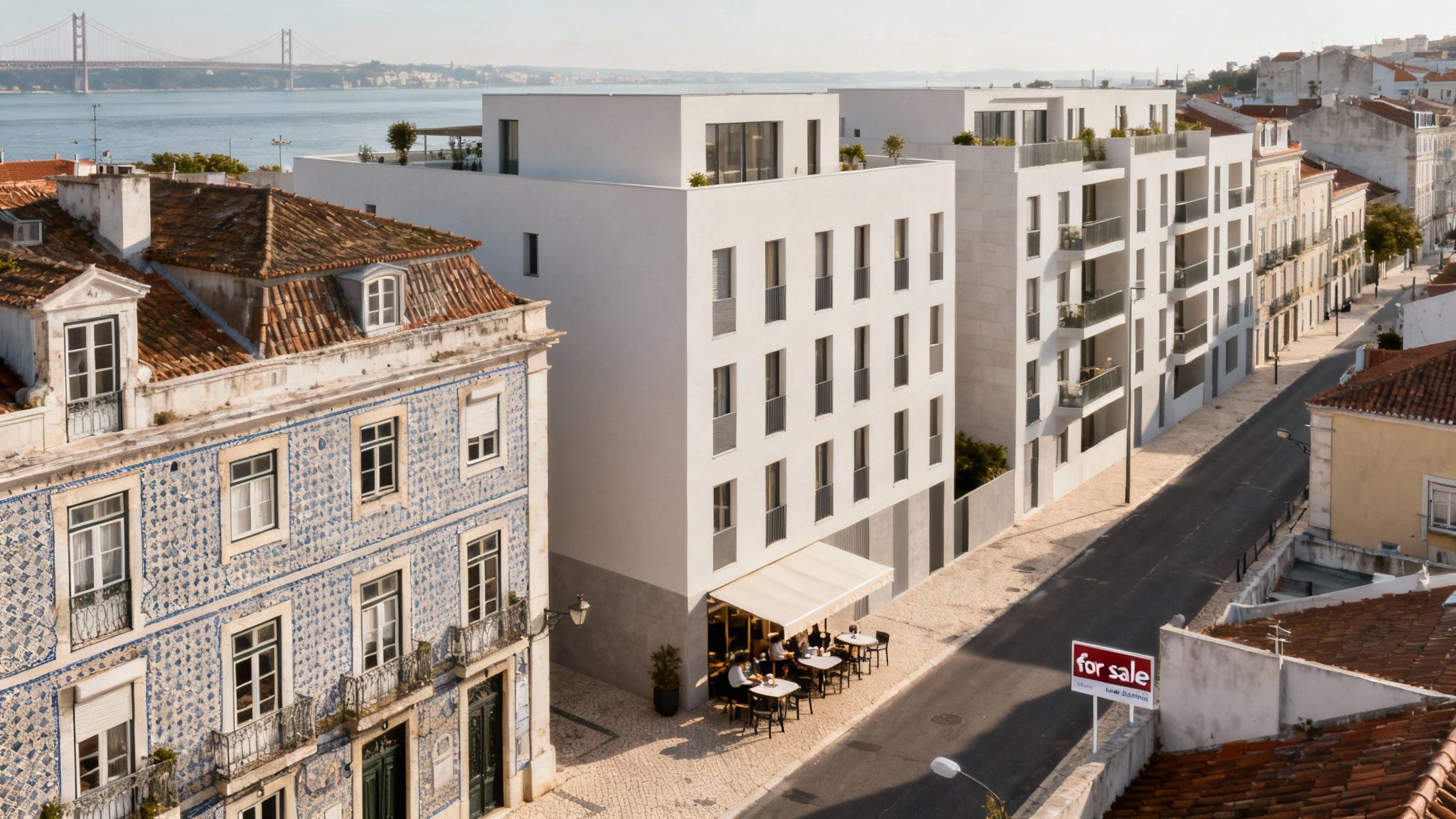
For years, Portugal's real estate market has been a hot topic for international investors, expats, and anyone chasing a better quality of life. After a wild ride of soaring prices, things are now settling into a phase of more sustainable growth. Think of it less like a sprint and more like a steady, confident marathon.
So, what's keeping the market so robust? A few key things. Foreign investment is still flowing in, thanks to the country's solid political climate, incredible lifestyle, and modern infrastructure. At the same time, a red-hot tourism sector keeps demand high for short-term rentals, while a growing wave of digital nomads and remote workers are looking for places to call home long-term.
Put it all together, and you have a property landscape that's both resilient and incredibly diverse, with something for almost every budget. While the days of flashy double-digit growth may be behind us, the market's foundation is stronger than ever, pointing to healthy, steady appreciation for years to come.
Understanding the Price Spectrum Across Regions
One of the best things about the Portuguese market is just how different it is from one region to the next. What you'd pay for a two-bedroom apartment in Lisbon is a world away from the price of a sprawling farmhouse in the Alentejo. This variety is a huge advantage, letting you find incredible value if you’re willing to look beyond the big city lights.
The latest numbers really tell the story. Across the country, the average price for a home hit €3,019 per square meter by the end of 2025. But that’s just an average. Dive deeper, and you see the real picture:
- Lisbon’s metropolitan area is the priciest, averaging around €4,935 per square meter.
- Porto, with its booming tech scene, isn't far behind at €3,950 per square meter.
- The Algarve, a perennial favorite, holds strong at €3,467 per square meter.
For a more detailed look at these numbers, check out our guide to Portugal house prices.
To give you a quick snapshot, here’s how prices and buyer motivations differ across some of the most popular regions.
Portugal Property Price Snapshot by Region
| Region | Average Price per m² | Key Attraction for Buyers |
|---|---|---|
| Lisbon | €4,935 | Bustling urban life, cultural hub, and strong rental yields. |
| Porto | €3,950 | Thriving tech scene, historic charm, and a more relaxed city vibe. |
| Algarve | €3,467 | World-class beaches, golf courses, and a massive holiday rental market. |
| Madeira (Funchal) | €3,864 | Subtropical climate, stunning natural beauty, and a haven for expats. |
| Alentejo | €1,025 | Unspoiled countryside, affordability, and large, traditional properties. |
This table shows that from the premium urban centers to the peaceful, affordable countryside, there's a fit for every kind of buyer. This diversity is what makes the market so resilient and full of opportunity.
This regional price disparity isn't a weakness; it's the market's greatest strength. It ensures that opportunities exist for all types of buyers, from luxury investors to first-time homeowners looking for a foothold in Europe.
Key Drivers Shaping the Market
There are a few powerful forces steering the market for Portugal houses for sale. Getting to know them will give you a better sense of where things are headed.
- Foreign Investment: International buyers, especially from the US, UK, and other EU countries, see Portugal as a safe bet. This steady stream of demand helps keep prices stable, particularly in prime spots.
- Lifestyle Appeal: It’s no secret—Portugal consistently ranks as one of the best places in the world for its quality of life, safety, and amazing weather. This is a massive draw for expats, retirees, and families.
- Welcoming Policies: While programs like the Golden Visa have changed, Portugal still has clear pathways to residency that encourage people to put down roots and invest in property.
- Urban Modernization: Cities like Lisbon and Porto are doing an incredible job of blending their historic charm with modern infrastructure and amenities, which only makes them more attractive and valuable.
This mix of economic stability, lifestyle perks, and smart growth has created a market that is built to last. As you start your search, keeping this big picture in mind will help you make a decision you can feel confident about.
Exploring Top Regions to Find Your Dream Home
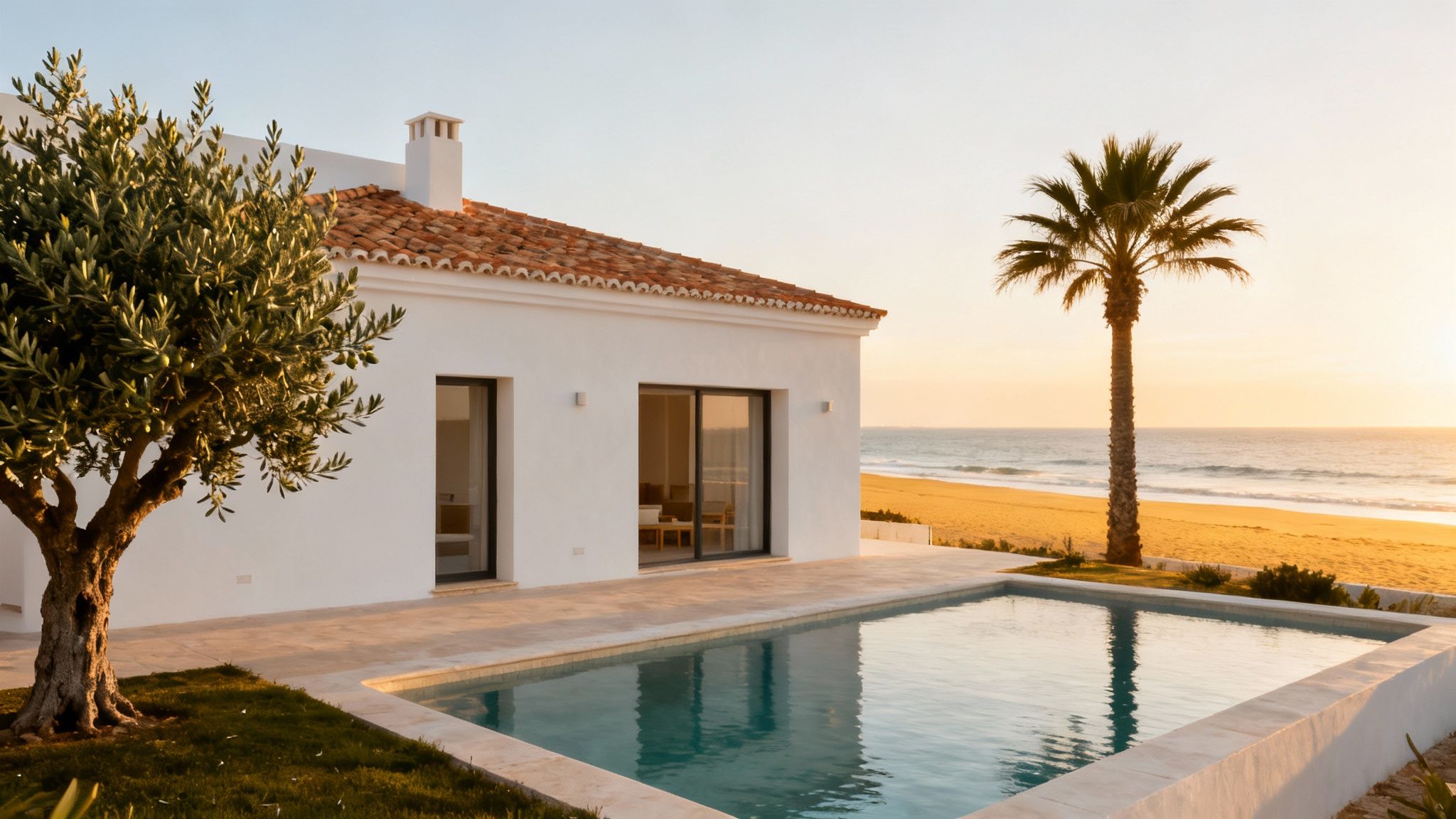
The magic of Portugal is its incredible diversity. When you're looking for a home here, it’s not about finding the "best" place, but about discovering the one that just feels right for you. Each region has its own personality, from sun-drenched coastlines and buzzing cities to the quiet calm of the countryside.
Think of it like picking out a new car. You wouldn't buy a two-seater sports car for a family of five, and a massive SUV would be a nightmare in a tiny, historic village. It’s the same with property in Portugal—the perfect spot depends entirely on your lifestyle, your budget, and what you’re hoping to get out of your new life here.
Let's walk through some of Portugal's most popular areas to help you find that perfect match.
The Algarve: For Sun Seekers and International Living
The Algarve is, without a doubt, Portugal's most famous coastline, and for good reason. It's the go-to destination for anyone chasing year-round sunshine, picture-perfect beaches, and a thriving international community. This is where you’ll find an abundance of luxury villas, modern apartments with sea views, and world-class golf resorts.
Life here is all about the outdoors. Whether you're drawn to the glamorous marinas in Vilamoura and Albufeira or the charm of quieter fishing villages, the region is well-equipped for expats and holidaymakers. English is spoken everywhere, and the amenities are second to none. That convenience, of course, comes at a price, with property averaging around €3,467 per square meter.
The Algarve isn't just a holiday destination; it's a lifestyle. If you value convenience, a ready-made community, and a smooth transition into expat life, there's no better place to begin your search for houses for sale in Portugal.
If waking up to the sound of waves is non-negotiable, you’ll want to dive deeper. Our guide to Portugal's beachfront real estate is a great resource for understanding the nuances of finding that perfect seaside home.
Lisbon and Porto: For the Urban Explorer
If you thrive on the energy of city life, your search will likely lead you to Lisbon or Porto. Lisbon, the capital, is a stunning mix of old-world grandeur and modern dynamism. You can find gorgeous renovated apartments in historic Pombaline buildings, chic lofts in trendy spots like Chiado, or family homes in the quieter suburbs.
Porto, its northern cousin, offers a slightly more laid-back—and more affordable—urban experience. It's become a hub for tech and creatives, famous for its iconic Douro River views. Demand has shot up for its traditional townhouses and sleek, new apartments, but it still offers a rich cultural life at a lower cost than Lisbon.
A Quick Comparison
| Feature | Lisbon | Porto |
|---|---|---|
| Vibe | Cosmopolitan, fast-paced, historic | Creative, industrial-chic, relaxed |
| Property Types | Renovated historic flats, luxury condos | Traditional townhouses, modern apartments |
| Price Point | Higher (avg. €4,935/m²) | More accessible (avg. €3,950/m²) |
| Best For | Buyers seeking a major European capital | Buyers wanting urban life with a local feel |
The Silver Coast and Alentejo: For Authenticity and Value
For those looking to step off the beaten path and get more for their money, the Silver Coast (Costa de Prata) and the Alentejo region are Portugal's best-kept secrets. The Silver Coast, running north from Lisbon, boasts rugged shorelines and charming towns like Nazaré and Óbidos, with property prices that are much friendlier than the Algarve's.
The Alentejo is the rustic soul of Portugal. This vast, sun-baked landscape is defined by rolling plains, cork forests, and whitewashed villages. It's the place to find sprawling quintas (country estates) and traditional farmhouses for a fraction of what you'd pay on the coast, with prices hovering around €1,025 per square meter. This is the spot for anyone craving space, peace, and a truly authentic Portuguese way of life.
Madeira: The Island Paradise
Looking for something completely different? The island of Madeira is in a league of its own. Known as the "Pearl of the Atlantic," its subtropical climate creates a lush, green paradise all year round. The property market, especially in the capital city of Funchal, is booming, fueled by international buyers seeking luxury villas and modern apartments with jaw-dropping ocean views.
Though it's an island, Madeira is quintessentially Portuguese. It offers a remarkably safe and clean environment with a very high quality of life, making it a hotspot for retirees and remote workers who want an island escape with all the benefits of being in Europe.
Your Step-by-Step Guide to Buying a House in Portugal

Buying a house in another country can feel like a huge, complicated puzzle. But in Portugal, the process is surprisingly straightforward once you know the lay of the land. Think of it as a clear sequence of events, where each step logically builds on the last, leading you straight to the keys to your new home.
This guide will walk you through that exact sequence, cutting through the legal jargon and clarifying the role of everyone involved. With the right team and a solid roadmap, you can confidently find and secure one of the many fantastic Portugal houses for sale.
Step 1: Assemble Your Professional Team
Before you even start browsing listings seriously, your first move should be to build a reliable team. Trust me, this is not a journey to take alone. You'll need two key professionals in your corner: an independent lawyer (advogado) and a reputable real estate agent.
Your agent is your scout on the ground, helping you find the right property. Your lawyer, on the other hand, is your legal guardian, protecting your interests from start to finish. It’s absolutely essential that your lawyer is independent—not one recommended by the seller or their agent—to avoid any hint of a conflict of interest. This team will be your guide, your translator, and your advocate.
Step 2: Get Your Paperwork in Order
With your team in place, the next job is to tackle a couple of essential administrative tasks. These are non-negotiable and form the bedrock of your property purchase.
- Obtain a NIF Number: The Número de Identificação Fiscal (NIF) is your Portuguese tax number. You simply cannot buy property, open a bank account, or sign any contracts without it.
- Open a Portuguese Bank Account: You'll need a local account to handle the deposit, final payment, taxes, and fees. It also makes life much easier for paying future utility bills and property taxes.
Getting these two things sorted out early will save you from major headaches and delays down the road. Your lawyer can often help you get a NIF, sometimes even without you being in the country.
Step 3: Making an Offer and Due Diligence
Once you’ve found a home you love on a platform like Residaro, it's time to make an offer. If it gets accepted, this is where your lawyer really starts to earn their keep. They'll launch into a thorough due diligence process to uncover any potential red flags with the property.
This involves digging into the Land Registry (Conservatória de Registo Predial) to confirm the seller is the true legal owner and checking for any outstanding debts or charges against the property. They'll also verify that the property has a valid habitation license (Licença de Utilização), which is official proof that it's legally fit to live in.
This due diligence phase is your safety net. It's where potential deal-breakers, like illegal construction or unpaid taxes from a previous owner, are brought to light before you are financially committed.
Step 4: The Promissory Contract (CPCV)
After the due diligence comes back clean, you'll move on to signing the Contrato de Promessa de Compra e Venda (CPCV). This is a legally binding promissory contract between you and the seller that officially locks in the deal.
When you sign the CPCV, you’ll typically pay a deposit, usually somewhere between 10% and 20% of the purchase price. This contract meticulously outlines all the terms of the sale: the final price, the timeline for completion, and the penalties if either party backs out. If the seller pulls out after signing, the law requires them to pay you back double your deposit.
Step 5: The Final Deed and Ownership
The final step is the big one: signing the Escritura Pública de Compra e Venda (Final Deed of Purchase and Sale). This official ceremony takes place at a notary's office, where the final payment is transferred and ownership of the property legally passes to you.
Once the deed is signed, the notary registers the sale in your name at the Land Registry, and you are officially the owner. This exciting milestone is becoming more common; in the first half of 2025 alone, a total of 84,247 homes were sold across the country. That's a 20.0% year-on-year jump, largely thanks to better financing options and new government incentives for younger buyers. This surge really underscores the confidence that both locals and international buyers have in the Portuguese property market. You can explore more about the trends shaping Portugal's real estate history on globalpropertyguide.com.
Congratulations, you've successfully navigated the process and can now pour a glass of vinho and enjoy your new home in Portugal
Navigating Costs, Taxes, and Financing Options
The price you see on a property listing is just your starting point. To get a real sense of what you’ll actually spend, you need to factor in the various taxes and fees that come with buying a home in Portugal. It’s a bit like buying a car—the sticker price is one thing, but the final on-the-road cost is what truly matters.
A good rule of thumb is to budget an extra 6% to 10% of the purchase price for these additional costs. Having this buffer ready means you can move through the buying process without any last-minute financial stress. So, let's break down where that money goes.
Deconstructing the Main Purchase Taxes
When you buy a home in Portugal, there are two main taxes you'll pay right at the time of purchase. They are an unavoidable part of the deal.
First up is the Property Transfer Tax (IMT), officially the Imposto Municipal sobre as Transmissões Onerosas de Imóveis. This is the big one. The IMT is calculated on a sliding scale that depends on the property’s price, its type (urban or rural), and whether it will be your main home or a second home. For example, on a primary residence valued at €300,000, you could expect the IMT to be around €8,165.
The second tax is Stamp Duty (IS), or Imposto do Selo. Thankfully, this one is much simpler. It's a flat 0.8% of the property's purchase price. For that same €300,000 house, the stamp duty would be €2,400. You'll pay both of these taxes right before you sign the final deed.
For a deeper dive into this topic, be sure to check out our complete guide to property taxes in Portugal.
When you're putting together your budget, it's helpful to see all the potential costs laid out in one place.
Estimated Buyer Costs in Portugal
| Cost Item | Typical Percentage/Fee | Notes |
|---|---|---|
| Property Transfer Tax (IMT) | 0% - 8% | Sliding scale based on price, type, and use. |
| Stamp Duty (IS) | 0.8% | Flat rate on the purchase price. |
| Notary & Registration Fees | 0.2% - 1.2% | Covers the legal formalization and land registry. |
| Legal Fees | 1% - 2% | Essential for due diligence and contract review. |
This table gives you a clear snapshot, but remember these are estimates. Your lawyer will give you a precise breakdown before you sign anything.
Additional Professional Fees to Expect
Taxes aren't the only extra costs. You'll also need to pay the professionals who guide you through the process and protect your interests.
- Notary and Registration Fees: These costs, typically ranging from 0.2% to 1.2% of the property’s value, cover the notary’s work in officially witnessing the final deed and the fees for legally registering the property in your name at the Land Registry.
- Legal Fees: Hiring a good, independent lawyer is absolutely crucial. Their fee, usually between 1% and 2% of the purchase price, covers everything from conducting vital due diligence to reviewing contracts and ensuring the entire transaction is above board.
Securing a Mortgage as a Foreign Buyer
Good news—getting a mortgage in Portugal as a non-resident is quite common. Local banks are very familiar with international buyers and offer a range of financing options. Just be aware that the lending criteria can be a little tighter than for Portuguese residents.
Most banks will offer a Loan-to-Value (LTV) ratio between 65% and 75% for non-residents. This simply means you'll need to have a down payment of at least 25% to 35% of the purchase price ready in cash.
To get the ball rolling on a mortgage application, you’ll need to pull together some key documents. Banks will typically ask for proof of income (like recent payslips or tax returns), bank statements, a copy of your passport, and your Portuguese taxpayer number (NIF).
Having this paperwork organized ahead of time will make the whole process much smoother. It puts you in a much stronger position to act quickly when you find the perfect property. Getting your finances in order is the first step toward a confident and successful purchase.
A Look at Portugal's Rental Investment Scene
If you're eyeing Portugal houses for sale with an investor's mindset, the rental market here is telling a very compelling story. It’s not just about the summer holiday rush anymore. The country has become a hotspot for a whole new crowd—digital nomads, international students, and professionals from all over the world are setting up shop here, creating a steady, year-round demand for rentals.
This constant influx of tenants means a property isn't just a place to live; it's a hard-working asset. The real trick is to get a feel for the market's rhythm. You have the seasonal ebb and flow of tourism on one hand, and the consistent demand from the growing expat and local community on the other. For a savvy investor, this creates a flexible strategy that isn't overly reliant on a single source of tenants.
Where to Find the Best Rental Yields
For years, everyone flocked to Lisbon and the Algarve. They're still fantastic places, but the gold rush has tempered a bit, with rental yields now hovering around a more modest 3-4%.
The real action for investors chasing growth is happening in Portugal's "second cities." These are the places that offer that sweet spot: lower property prices combined with rental income that's climbing fast.
Keep an eye on cities like Braga and Setúbal. They are absolutely booming. Universities are expanding, new businesses are moving in, and they're attracting people who've been priced out of the bigger city centers. As a result, rental prices in these areas have shot up by more than 17% in a single year. Investors here are seeing gross rental yields in the 5-6% range, which is a much more attractive number for anyone looking to build a portfolio.
The smartest money often goes where others aren't looking yet. Lisbon has the name recognition, but places like Braga and Setúbal are where you'll find the real growth today.
The Rules of the Game for Landlords
Renting out your property in Portugal means playing by the rules, and the rulebook is different depending on who you're renting to.
-
Short-Term Holiday Lets: If you're aiming for the tourist market, you'll need an Alojamento Local (AL) license. Think of it as your official permit to operate a holiday rental. Getting one involves registering with your local town hall and making sure your property is up to code with safety and quality standards.
-
Long-Term Leases: For renting to long-term tenants, you'll use standard lease agreements governed by Portuguese law. This route offers a more predictable, stable income stream, perfect for investors who prefer consistent cash flow over the highs and lows of the tourist season.
Market Trends and Smart Tax Breaks
Right now, the story of Portugal's rental market is simple: high demand, not enough supply. In the first quarter of 2025, the average rent for a new lease jumped 10% from the year before, hitting €8.22 per square meter. What’s really telling is that while rents went up, the number of new rental contracts actually dropped by 10.4%. It's a classic sign that the shortage of available properties is what's driving prices skyward. You can dive deeper into the numbers with this report on Portugal's rental market.
The government sees this and is trying to encourage more landlords to enter the market. In late 2025, they rolled out a significant tax reform. The income tax rate on rental income was cut from 25% down to just 10% for landlords who participate in a "moderate rent" program. The goal is to make more housing available for everyday working families, which creates a fantastic opportunity for investors to do well while also doing some good.
Finding Your Perfect Portuguese Home with Residaro
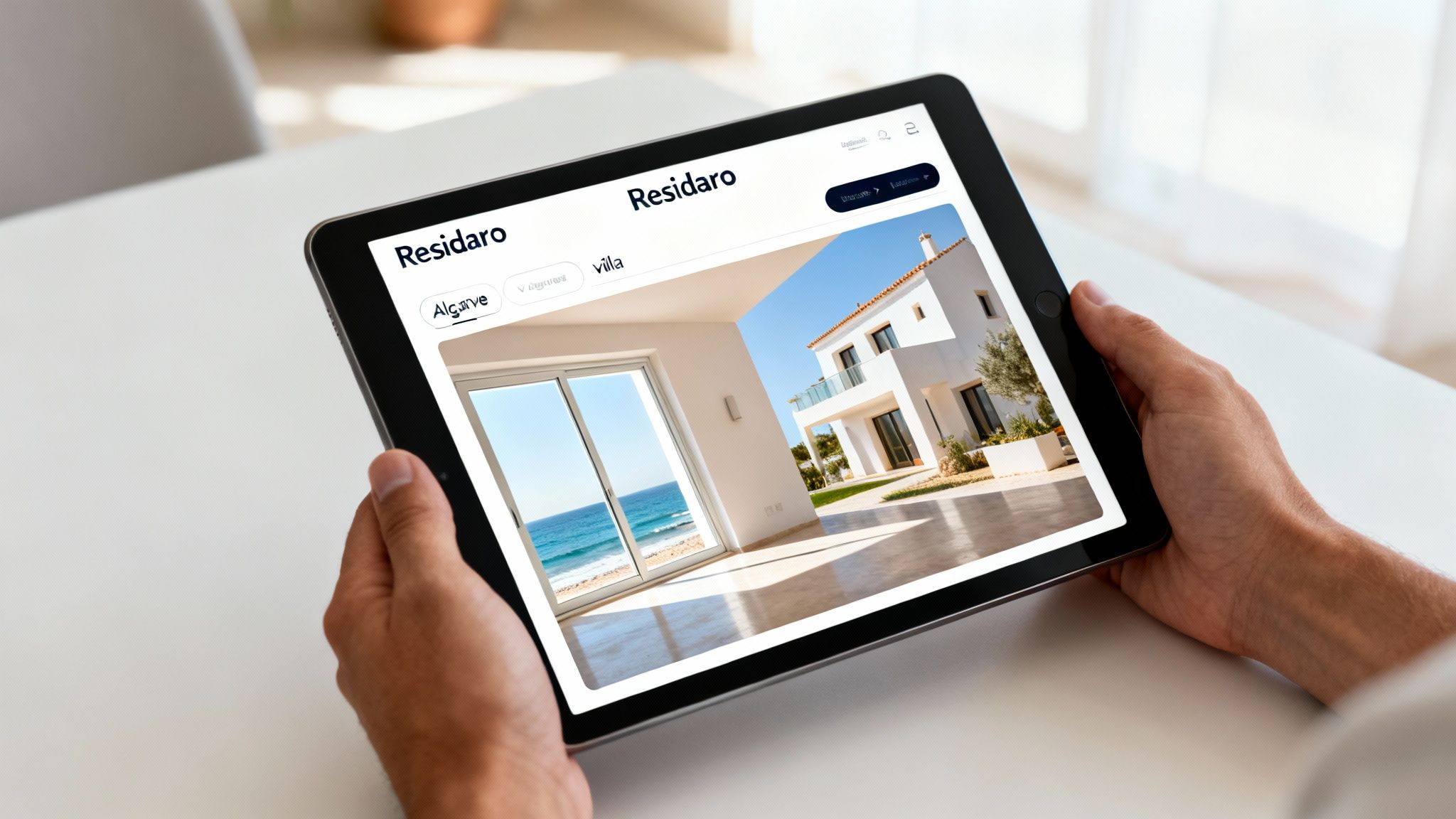
While sorting out the legal side and getting a feel for the market is essential, the real fun begins with the property search. This is where the dream starts to take shape, and a tool like Residaro can make all the difference in navigating the huge variety of Portugal houses for sale.
Think of Residaro as your digital starting point. Instead of juggling dozens of different websites, our platform aggregates listings from across the country into one easy-to-use space. The idea is to help you move from a fuzzy vision of "a place in Portugal" to a focused list of homes you can actually imagine yourself in.
Mastering Your Property Search
A good search is all about knowing how to zero in on what truly matters to you. Residaro's search tools are designed to be straightforward, letting you filter through thousands of listings to find the handful that actually fit the bill.
You can start with a wide net and then dial it in with specific filters:
- Location: Pop in the region you're drawn to, whether that's the sun-drenched "Algarve," the bustling streets of "Lisbon," or the rolling hills of the "Alentejo."
- Property Type: Are you picturing a modern "villa" with a private pool? Or maybe a practical "apartment" in a city center, or a traditional "quinta" (country house) with a bit of land?
- Price Range: Set your budget from the get-go. This is a simple but powerful way to make sure everything you look at is a realistic possibility.
This initial filtering is the first step in turning a massive national market into a curated, personal list of houses for sale in Portugal that you can actually get excited about.
Bringing Your Portuguese Dream to Life
To give you a taste of what’s out there, here are a few examples of the kinds of properties you'll come across on Residaro:
1. The Modern Algarve Villa Think of a sleek, minimalist villa near Lagos, with huge glass windows that open up to an ocean view. It's the perfect setup if you’re after luxury, sunshine, and great rental income potential, putting you right in the middle of Portugal's most famous coastal region.
2. The Charming Alentejo Quinta Now picture a rambling, whitewashed farmhouse surrounded by its own olive groves and cork trees. This is the ultimate escape for anyone wanting peace, authenticity, and room to breathe. It’s a chance to step into a slower, more traditional way of life, far from the tourist crowds.
Your perfect property isn’t just about the building; it’s about the lifestyle that comes with it. The right search tool helps you find the home that enables the life you want to live in Portugal.
With a smart approach and the right platform, finding your ideal home doesn't have to be overwhelming. It becomes an exciting adventure. Start exploring what's possible and see what Portugal houses for sale are waiting for you on Residaro.
Frequently Asked Questions
As you get closer to the finish line, you're bound to have a few lingering questions. It's completely normal. Here are some of the most common queries we hear from buyers as they prepare to finalize their purchase.
Getting these last details sorted out is key to moving forward with confidence.
Can Foreigners Get a Mortgage in Portugal?
Yes, absolutely. Portuguese banks are very experienced in lending to international buyers looking at Portugal houses for sale. The process is quite similar to what you might be used to, but the terms for non-residents are a bit different.
Most banks will offer a Loan-to-Value (LTV) ratio somewhere between 65% and 75%. This just means you'll need to have a down payment of 25% to 35% ready in cash. When you apply, they'll ask for the usual documents: proof of your income, bank statements, your passport, and of course, your Portuguese NIF number.
What Are the Ongoing Costs of Owning Property?
Once you have the keys, your financial commitments shift from one-off purchase costs to regular running costs. The main one to plan for is the annual Municipal Property Tax, or IMI (Imposto Municipal sobre Imóveis). The rate varies depending on the municipality, and it's calculated on the property's tax value (Valor Patrimonial Tributário).
Beyond the IMI, a few other things to budget for include:
- Condominium Fees: If you own a property in a shared building or complex, you'll pay a monthly or quarterly fee for the upkeep of common areas like pools, gardens, and elevators.
- Utilities: Your standard bills for electricity, water, gas, and internet.
- Insurance: Home insurance is a must, and it's mandatory if you have a mortgage.
Do I Need to Be in Portugal for the Entire Buying Process?
Not at all. This is a huge relief for many international buyers. You can handle the entire purchase from abroad by giving your lawyer a Power of Attorney (Procuração).
A Power of Attorney is a secure and standard legal document that authorizes your lawyer to sign crucial documents on your behalf. This includes the Promissory Contract (CPCV) and the Final Deed (Escritura), allowing them to manage the whole transaction without you needing to be physically present. It makes the logistics so much simpler.
Ready to turn your dream of owning a home in Portugal into a reality? Start your search on Residaro, where you can browse thousands of listings from across the country. Find your perfect property today at https://residaro.com.