Your Guide to Investing in Andalusia Real Estate
Picture this: you own a little slice of sun-drenched Spain, a place where vibrant, ancient culture blends seamlessly with modern life. That's the promise of the Andalusia real estate market. It’s become one of Europe's hottest property destinations because it offers that rare mix of an incredible lifestyle and rock-solid economic sense, drawing in everyone from investors and retirees to a new generation of remote workers.
Why Invest In Andalusia Real Estate Right Now
Andalusia is far more than just a beautiful place for a holiday. The region is in the middle of a serious property boom, driven by powerful economic shifts and a collective desire for a better way of living. Think of it less like just buying a house and more like investing in a lifestyle that also happens to deliver strong financial returns. It’s an almost magnetic appeal, pulling in a diverse crowd from all over the world.
This surge isn't just a happy accident. It’s the result of a compelling cocktail of factors creating a near-perfect storm for property buyers. From its world-famous climate to its surprisingly robust infrastructure, Andalusia simply offers an exceptional quality of life that very few places on earth can compete with. It’s this unique combination that has the real estate world paying close attention.
The Allure for International Buyers
International investors, retirees, and a growing wave of digital nomads are all making a beeline for Andalusia's shores, and for very good reasons. The region’s appeal is broad, offering something for just about everyone, and this global interest is what underpins the market's current strength and resilience.
What’s pulling this diverse audience in? A few key things stand out:
- An Unbeatable Lifestyle: We're talking over 300 days of sunshine a year, breathtaking coastlines, and a cultural heritage that’s as rich as it is accessible. It’s a place that manages to feel both relaxed and vibrant at the same time.
- Strong Investment Potential: The market has a track record of steady property value appreciation. On top of that, you’ll find attractive rental yields, especially in the popular coastal towns and major cities. This makes it a smart play for anyone looking for both a second home and a valuable asset.
- Growing Accessibility: With more and more flight connections and modern infrastructure, it’s never been easier to live, work, or retire here. The region feels completely connected to the rest of Europe and beyond.
It’s the combination of a high-quality lifestyle and solid economic fundamentals that truly sets Andalusia apart. You’re not just finding a beautiful property; you’re making a smart investment in a region with proven, sustained growth and an appeal that isn't going away.
Consider this guide your roadmap to navigating this exciting market. We’ll break down everything you need to know, from spotting the next high-growth area to getting through the legal paperwork, so you can move forward with confidence. The goal is to give you the real-world insights needed to turn your Spanish property dream into a reality.
Decoding the Andalusia Property Market Trends
Anyone can fall in love with a sun-drenched Andalusian courtyard, but a smart investor knows to look beyond the terracotta tiles. To really understand what you're buying, you need to get a feel for the currents driving the market. It’s these invisible forces—the story behind the numbers—that separate a good purchase from a truly great one.
Right now, two powerful currents are shaping everything: intense international demand and a housing supply that’s struggling to keep up. This classic economic squeeze is the main engine pushing property prices up across the region. It's a simple case of more and more buyers from all over the world chasing a finite number of homes. This isn’t just a fleeting moment; it’s a solid pattern we’ve been watching for years.
The Dynamics of Supply and Demand
Think of it like trying to get a table at the most popular tapas bar in town on a Saturday night. When everyone wants in and there are only a few seats, things get competitive. That's exactly what's happening in Andalusia's property hotspots. The appetite from foreign buyers, especially, is far outstripping the number of homes available, creating a classic seller's market.
This imbalance has a very real effect on property values, particularly for certain types of homes. While everything is on the up, apartments have seen some truly dramatic growth. They’re often the go-to for first-time investors or those looking for a lock-up-and-leave holiday home, so they feel the market pressure most intensely.
The numbers really speak for themselves. The apartment market, in particular, has seen explosive growth, turning the region into one of Europe’s most talked-about property markets. According to recent data from Engel & Völkers, the average price for an apartment hit €2,874.33 per square meter, a solid 11.88% jump from the year before. That came on the heels of a massive 24.34% surge, meaning prices have more than doubled from their €1,855.24 baseline just three years ago.
To put this growth into perspective, here's a quick look at how both apartment and house prices have climbed year-on-year.
Andalusian Property Price Growth Overview
This table illustrates the significant year-on-year price increases for apartments and houses in Andalusia, highlighting the market's strong upward trend.
| Year | Apartment Price (€/m²) | Apartment % Increase | House Price (€/m²) | House % Increase |
|---|---|---|---|---|
| 2021 | €1,855.24 | - | €1,987.50 | - |
| 2022 | €2,306.90 | 24.34% | €2,204.31 | 10.91% |
| 2023 | €2,874.33 | 11.88% | €2,411.75 | 9.41% |
As the data shows, the consistent and significant appreciation in value for both property types points to a robust and confident market.
Interpreting Key Performance Metrics
To really get under the hood of the market, you need to speak its language. That means getting comfortable with a few key numbers that tell the real story. These metrics give you the analytical edge you need to spot genuine opportunities.
Here are the essentials I always keep an eye on:
- Price Per Square Meter (€/m²): This is the great equalizer. It lets you compare the true value of different properties, whether it's a tiny studio or a sprawling villa. A high or rising €/m² in a neighborhood is a clear sign of strong demand.
- Annual Growth Rate (%): This tells you how fast prices are climbing each year. Steady, healthy growth is what you want to see—it signals a stable, desirable market. Sudden, crazy spikes can be a red flag that warrants a closer look.
- Rental Yield (%): If you're buying to let, this is your bottom line. It measures your annual rental income as a percentage of the property's total cost. The higher the yield, the harder your investment is working for you.
Think of these metrics as an X-ray of the market. They let you see past the charming facade and assess a property's real financial health and future potential. It's this data-driven approach that turns a hopeful purchase into a secure, profitable one.
By getting a handle on these trends and metrics, you shift from being a tourist to a savvy investor. You start to see why that quaint flat in Seville's old town might be a better long-term bet than a bigger villa an hour away, or why a sleepy coastal town is showing all the signs of becoming the next big thing. This is the knowledge that gives you the confidence to act, ensuring your piece of Andalusia isn't just a dream home, but a sound financial asset for the future.
Finding Your Perfect Spot in Andalusia
Choosing a location in Andalusia is a bit like picking a wine; every area has its own distinct character, body, and finish. The region is a stunning mosaic of sun-drenched coastlines, ancient cities, and rugged mountains. Finding the right spot isn’t just about the property itself, but about matching your investment to the lifestyle you want and the financial returns you’re after.
This is not a one-size-fits-all market. A luxury villa in Marbella offers a completely different world—and investment profile—than a historic apartment in Seville’s old quarter. To really pinpoint your ideal location, you have to get to know the unique "investment DNA" of each key area: the typical properties, the cost of entry, and the kind of life it promises.
The Glamour of the Costa del Sol
When people think of Andalusia real estate, their minds often drift to the Costa del Sol, and for good reason. This sun-drenched stretch of coastline is the region's economic powerhouse, famous for its glamorous lifestyle, world-class golf courses, and bustling international communities.
-
Marbella: The undisputed jewel of the coast, Marbella is synonymous with luxury. This is where you'll find sprawling villas in gated communities like Sierra Blanca and sleek, high-end apartments lining the famous Golden Mile. The market here is incredibly robust, attracting high-net-worth individuals from around the globe, which keeps property values strong and stable.
-
Estepona & Benahavís: Just a short drive west of Marbella, these towns offer a slightly more relaxed but equally upscale vibe. Estepona charms visitors with its flower-filled old town, while Benahavís, nestled in the hills with stunning sea views, is a true haven for golf lovers. Both offer fantastic value compared to their more famous neighbour.
The Costa del Sol is more than just a place; it's a brand. That powerful international recognition makes it a magnet for foreign investment. Its appeal is so strong, in fact, that it heavily influences the entire regional market. For a deeper look into what makes this area tick, check out our complete guide to real estate on the Costa del Sol.
Historic Soul and Urban Energy
Move inland from the coast, and the character of Andalusia shifts completely. The region’s major cities offer a rich tapestry of history, culture, and modern urban living, presenting a different—but equally compelling—investment case.
Seville As Andalusia's capital, Seville is the beating heart of its culture. Investing here means buying into a piece of living history. The most sought-after properties are beautifully renovated apartments in historic buildings in neighbourhoods like Santa Cruz or Triana. Thanks to the city's thriving tourism and large student population, there’s constant demand for both short-term and long-term rentals.
Málaga Málaga has gone through an incredible transformation over the last decade. Once seen as just the airport for the Costa del Sol, it's now a buzzing cultural and tech hub, home to the Picasso Museum and a booming start-up scene. The property market here is dynamic, with high demand for modern apartments in the revitalized city centre and the trendy Soho district.
The pull for international buyers is undeniable. Foreign investors are a dominant force in Andalusia's property scene, responsible for a staggering 38.4% of transactions in Málaga province alone. That figure is more than double the regional average, which just goes to show how pivotal this area is to the broader Andalusia real estate market.
Coastal Charm and Hidden Gems
Beyond the main tourist hotspots, you'll find towns that offer a more authentic Andalusian experience, often at a more accessible price point. These "hidden gems" are perfect for buyers looking for tranquility, tradition, and strong potential for future growth as more people discover their charm.
It’s worth exploring these less-traveled paths:
-
Cádiz: As one of Western Europe's oldest cities, Cádiz has a unique, bohemian vibe. It's situated on a narrow spit of land, so many properties come with incredible sea views. The market here is less saturated than the Costa del Sol, which can mean great opportunities for savvy buyers looking for homes with real character.
-
The Costa de la Luz: Stretching from Tarifa to the Portuguese border, the "Coast of Light" is known for its wild, windswept beaches and a wonderfully laid-back atmosphere. Towns like Vejer de la Frontera, a stunning white village perched on a hilltop, are quickly gaining popularity among those looking to escape the crowds.
-
Inland Pueblos Blancos: The famous "White Villages," such as Ronda and Arcos de la Frontera, offer a glimpse into traditional Andalusian life. Here, you'll find charming townhouses and rustic "fincas" (country estates) that provide a peaceful retreat from the hustle and bustle.
Ultimately, finding your perfect spot in Andalusia is a personal journey. Whether you're drawn to the high-energy glamour of Marbella, the historic grandeur of Seville, or the quiet charm of a coastal village, the key is to match the location's personality with your own investment goals and lifestyle dreams.
A Step-by-Step Guide to Buying Property as a Foreigner
Buying a home in Andalusia as a foreigner can feel a bit like trying to navigate a new city without a map. There are unfamiliar rules and a process that's likely different from what you're used to back home. But once you understand the route, it becomes a clear and secure journey.
Let's break down the whole thing into a series of logical steps. Think of it less as one giant leap and more as a clear path, starting with the legal groundwork and ending with you holding the keys to your place in the sun.
Laying the Foundation: Your NIE and Bank Account
Before you even start viewing properties seriously, there are two pieces of paperwork you absolutely must get sorted: a Spanish tax ID number (NIE) and a Spanish bank account. These are non-negotiable first steps for any non-resident buyer.
The NIE (Número de Identificación de Extranjero) is your official identification number in Spain. You’ll need it for everything from the property purchase itself to paying taxes and setting up your electricity and water bills. You can apply for one at the Spanish consulate in your home country or at a police station once you’re in Spain.
At the same time, open a Spanish bank account. The entire transaction—from the deposit to the final payment—will need to flow through this account. It also makes life much easier for handling future property taxes and utility payments.
Assembling Your Professional Team
This isn't something you should try to do alone. Having the right local experts on your side is the single best way to ensure a smooth, stress-free purchase. You’ll need two key people.
- A Reputable Real Estate Agent: A great agent is more than just a property finder. They’re your eyes and ears on the ground, offering invaluable local insight, handling negotiations, and guiding you through the first phase of the buying process.
- An Independent Lawyer (Abogado): This is your most critical hire. Your lawyer's sole job is to protect your interests. They'll conduct all the legal checks (due diligence), review every contract, and make sure the property you want to buy is free from debt and legal complications.
Your choice of lawyer is paramount. Make sure they are truly independent (not recommended by the seller or their agent), specialize in Spanish property law (derecho inmobiliario), and can communicate with you clearly. They are your safeguard, ensuring your investment is legally sound from beginning to end.
From Offer to Private Contract
So, you’ve found the perfect place. Now what? Your agent will help you submit a formal offer. Once the seller accepts, the next move is to sign a preliminary contract, known as the Contrato de Arras.
This is a legally binding private agreement that locks in the deal. It details the agreed price, the completion date, and any other conditions of the sale. When you sign it, you’ll also pay a deposit—typically 10% of the purchase price—which officially takes the property off the market.
This is where your lawyer really gets to work. Before a single euro leaves your account, they’ll launch a deep dive into the property’s legal standing.
The Crucial Due Diligence Phase
Due diligence is your safety net. It's a comprehensive background check on the property to uncover any potential issues before you're legally committed. Your lawyer will meticulously investigate several key areas.
- Property Registry Check (Nota Simple): This document confirms who the legal owner is and, crucially, reveals if there are any mortgages, debts, or liens (embargos) registered against the property.
- Cadastral Registry Check: This ensures the physical size and boundaries of the property match what's on the official records.
- Permits and Licenses: They’ll verify the property has a valid habitation certificate (known as a Cédula de Habitabilidad or Licencia de Primera Ocupación) and that all structures were built with the proper permits.
- Utility and Tax Payments: Your lawyer will confirm that all property taxes (IBI), community fees, and utility bills are fully paid. This prevents you from inheriting the previous owner’s debts.
This thorough checkup is designed to make sure there are no nasty surprises waiting for you down the line. If you're looking for more general advice on this topic, our guide on https://residaro.com/blog/how-to-buy-property-overseas covers many of these universal principles in more detail.
The Final Step: The Notary and Registration
The grand finale happens at the office of a public notary. Here, you (or your lawyer with power of attorney), the seller, and any bank representatives will meet to sign the final deed of sale, the Escritura Pública de Compraventa.
At this meeting, the final payment is made, and the keys are officially handed over. The notary, a neutral public official, witnesses the signing and verifies the legality of the entire transaction.
After signing, the notary immediately notifies the Land Registry of the sale. Your lawyer then follows up to make sure the deed is officially registered, cementing you as the new legal owner. Congratulations, you’ve just bought a home in Andalusia!
To help you visualize the entire journey, here’s a quick overview of the typical timeline and what happens at each stage.
Key Steps in the Andalusian Property Purchase Timeline
| Step | Description | Estimated Timeline | Key Action |
|---|---|---|---|
| 1. Preparation | Obtaining your NIE number and opening a Spanish bank account. | 2-4 weeks | Apply at a Spanish consulate or in Spain. |
| 2. Property Search | Finding your ideal property with a real estate agent and making an offer. | 1-3 months | View properties, negotiate price. |
| 3. Reservation Agreement | A small deposit (around €6,000) is paid to reserve the property while the lawyer starts due diligence. | 1-2 weeks | Sign reservation agreement (optional but common). |
| 4. Private Purchase Contract (Contrato de Arras) | A legally binding contract is signed, and a 10% deposit is paid. | 2-4 weeks after reservation | Lawyer completes due diligence; you sign & pay deposit. |
| 5. Final Deed (Escritura) | The final payment is made, and the public deed of sale is signed at the notary. | 4-8 weeks after Arras | Arrange funds, attend notary meeting, receive keys. |
| 6. Registration & Taxes | The property is registered in your name, and all associated taxes are paid. | 1-2 months after signing | Lawyer handles registration and tax payments. |
This timeline provides a solid framework, but remember that every purchase is unique. A good legal and real estate team will keep you informed and guide you through each milestone.
What You'll Really Pay: Budgeting for Taxes, Fees, and Ownership Costs
The sticker price on that beautiful Andalusian villa is just the beginning of the story, not the end. Any seasoned buyer will tell you that the final cost always includes a handful of taxes and professional fees. Getting a handle on these from the start means you can build a solid budget and avoid any nasty surprises when it's time to sign the papers.
Think of it like buying a car. You have the manufacturer's suggested retail price, but then you add on delivery charges, taxes, and registration fees. The real "on-the-road" price is always higher. It's the same deal with Andalusian real estate, where you can expect these extra costs to add between 10% and 15% on top of the property's purchase price.
So, for that €300,000 apartment you've got your eye on, you'll need to have an extra €30,000 to €45,000 set aside. Let's dig into exactly where that money goes.
The Upfront Costs of Buying
When you complete your purchase, you'll encounter a series of one-time costs. The biggest chunk of this will be the property tax.
- Property Transfer Tax (ITP) or VAT: Which tax you pay depends on the property's history. For a resale home—one you're buying from another individual—you'll pay ITP. In Andalusia, this is generally around 7%. If you're buying a brand-new home straight from the developer, you'll pay VAT (called IVA in Spain) at a fixed 10%, plus a stamp duty (AJD) of 1.2%.
- Notary Fees: The notary is a government-appointed official who makes the whole transaction legal by witnessing and certifying the deed. Their fees are set by a national scale and usually run between 0.2% and 0.5% of the property's value.
- Land Registry Fees: This is the fee for officially recording the property in your name at the Spanish Land Registry (Registro de la Propiedad). It's typically a little less than the notary fees.
- Legal Fees: We can't stress this enough: hire a good, independent lawyer. Their job is to protect your interests and perform all the due diligence. Expect their fee to be about 1% of the purchase price, plus VAT.
The Ongoing Costs of Owning
Once you've got the keys and popped the celebratory cava, your financial focus shifts to the recurring costs of ownership. These are the annual expenses you'll need to budget for to keep your property running smoothly.
The main one is the annual property tax, known locally as IBI (Impuesto sobre Bienes Inmuebles). This is a municipal tax paid to your local town hall, calculated from the property's official "cadastral value." The exact amount varies quite a bit from one town to the next, but it's a predictable yearly expense.
Beyond IBI, you'll also need to factor in:
- Community Fees (Comunidad): If you're in an apartment building or a gated community with shared gardens and a pool, you'll pay a monthly or quarterly fee for the upkeep of these common areas.
- Utilities: Your standard bills for electricity, water, and internet.
- Home Insurance (Seguro de Hogar): It's absolutely mandatory if you have a mortgage, but honestly, it's a smart move for any homeowner to protect their investment.
A quick note for non-residents: it’s wise to be aware of potential wealth and income taxes. Depending on your global financial picture and the value of your Spanish assets, these might come into play. To get a better grasp of this, you can learn more about how foreign real estate tax works for international owners.
By mapping out both the one-time purchase costs and the long-term expenses, you get a complete and honest financial picture. This clarity turns what could be a stressful process into a confident investment, making sure your Andalusian dream is built on a solid foundation.
Maximizing Your Return on Investment and Rental Income
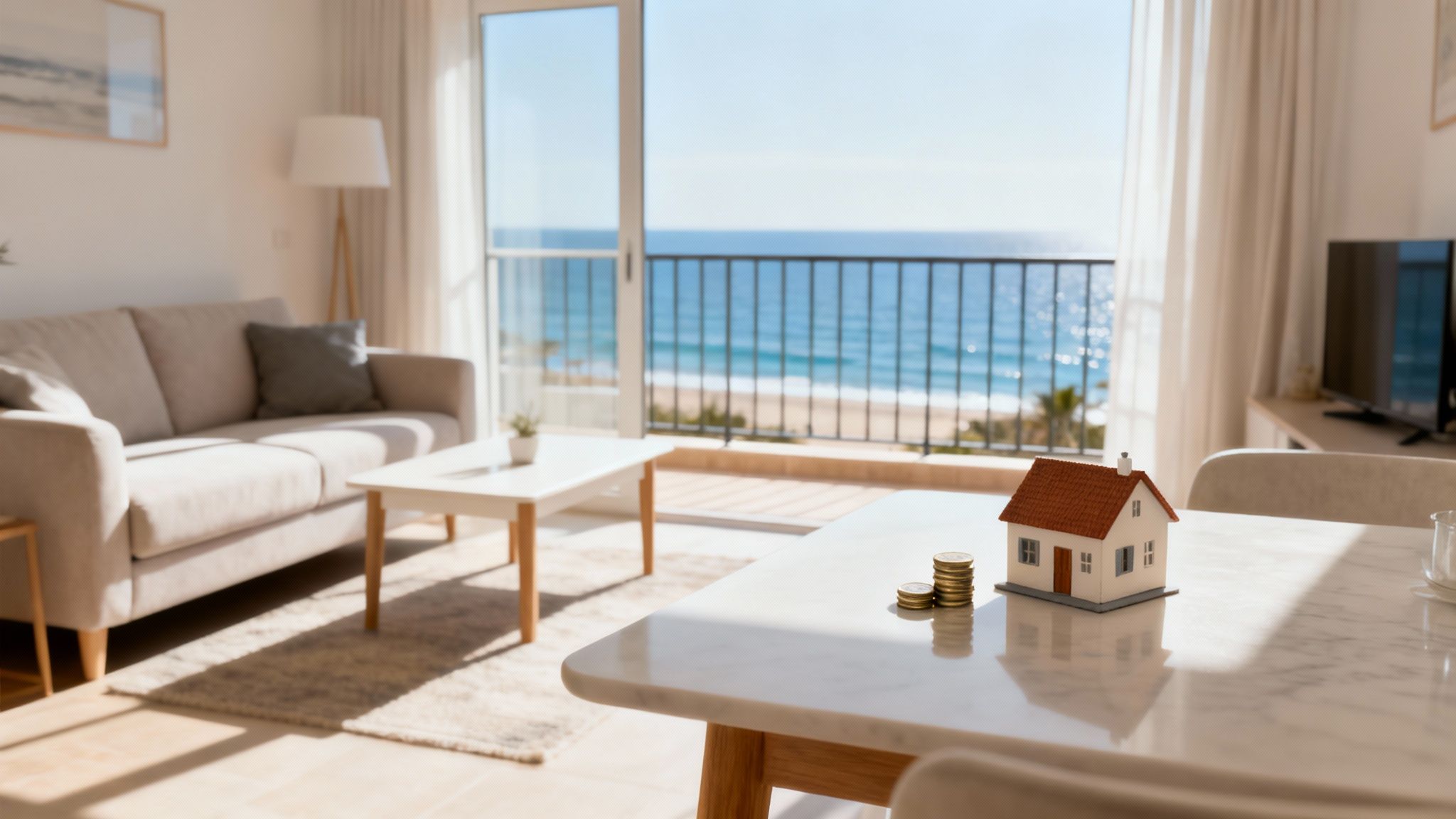
Buying a property in Andalusia isn't just about finding a sun-soaked retreat; it's a chance to own a hardworking financial asset. For savvy investors, the region offers a powerful one-two punch: the potential for your property's value to grow, plus a thriving rental market driven by year-round tourism and a steady stream of expats.
To get the most out of your purchase, you need to understand how to make the property work for you. This means looking beyond just rising prices and focusing on the steady income that rentals can bring in. It’s a shift in mindset—thinking of your property not just as a home, but as a business.
Capital Growth and Rental Yields
Andalusia's property market has proven itself to be impressively resilient and a consistent leader in Spain's real estate recovery. The region recently accounted for a massive 19.6% of all home sales in the country, backed by a sharp 13.4% year-over-year jump in prices.
When you add average gross rental yields of around 5.43% to the mix, the financial case for investing here becomes pretty clear. For a deeper dive into the numbers, the price history of the Spanish property market offers some great context.
What these figures really show is a market with two distinct strengths. Your investment grows in value over the long term (that’s your capital growth), while also putting cash in your pocket month after month through rent (that’s your yield).
Choosing Your Rental Strategy
The amount of income you can generate really boils down to your rental strategy. In Andalusia, you've got two main paths to choose from, each with its own set of benefits and drawbacks.
-
Long-Term Rentals: This is the classic approach—renting to a tenant for a year or more. It offers a stable, predictable monthly income and is generally a lower-maintenance option, which is great for investors who want a more hands-off experience. This works particularly well in cities with large local and expat communities, like Seville and Málaga.
-
Short-Term Holiday Lets: Renting your place out to tourists by the night or week can be incredibly profitable, especially in hotspots along the Costa del Sol. It definitely requires more active management, from marketing to cleaning and check-ins, but the returns during high season can blow long-term rental income out of the water.
A key piece of advice: when you're looking at a property, try to think like a renter. A two-bedroom apartment a short walk from the beach in Marbella is going to have a completely different rental strategy than a charming historic flat in the old town of Cádiz. Let the location and the property type guide your rental plan.
Before you jump into the holiday rental game, you absolutely must get the legal side sorted. You'll need a special tourism license, known as the Licencia de Turismo, to rent your property to tourists legally. This involves registering your property with the Andalusian Tourism Registry and proving it meets certain quality and safety standards. A good local lawyer can be invaluable here, walking you through the process to ensure your investment stays both profitable and compliant.
Got Questions About Buying in Andalusia? We've Got Answers
Dipping your toes into the Andalusian property market for the first time? It's natural to have a few questions swirling around. Let’s tackle some of the most common ones we hear from international buyers, so you can move forward feeling confident.
Do I Really Need a Spanish Bank Account and an NIE Number?
You absolutely do. Think of these as your two golden tickets for buying property in Spain.
The NIE (Número de Identificación de Extranjero) is your unique tax ID number, and you can't sign any official documents, open a bank account, or even set up utilities without it. A Spanish bank account is equally non-negotiable; it's where you'll transfer the purchase funds and handle all your ongoing local expenses like property taxes and bills.
What Are the "Hidden" Costs Besides the Asking Price?
This is a big one. It's smart to budget for an extra 10% to 15% on top of the property's price tag to cover all the necessary taxes and fees. No one likes surprises here, so let's break it down:
- Property Transfer Tax (ITP): This is the main one for resale homes, currently set at 7% in Andalusia. If you're buying a brand new property, you'll pay VAT (IVA) instead.
- Notary and Land Registry Fees: These are fixed official costs for registering the deed. They usually add up to about 1-2%.
- Legal Fees: Your lawyer is your best friend in this process. Their fee is typically around 1% of the purchase price.
Can a Foreigner Get a Mortgage in Spain?
Yes, it's very possible. Spanish banks are quite used to lending to non-residents, but they're a bit more conservative. You can generally expect to get a loan for up to 60-70% of the home's official valuation.
Just be ready for some paperwork. They'll want to see everything – detailed proof of income, your credit report from back home, and a full picture of your financial health. Our advice? Get the mortgage conversation started long before you find "the one."
If there's one piece of advice to take away, it's this: preparation is everything. Getting your NIE, bank account, and mortgage pre-approval sorted out before you start seriously house-hunting will put you in a much stronger position and make the whole experience far less stressful.
Ready to find your perfect home under the Andalusian sun? Explore a curated selection of properties across Spain with Residaro. Start your search today.